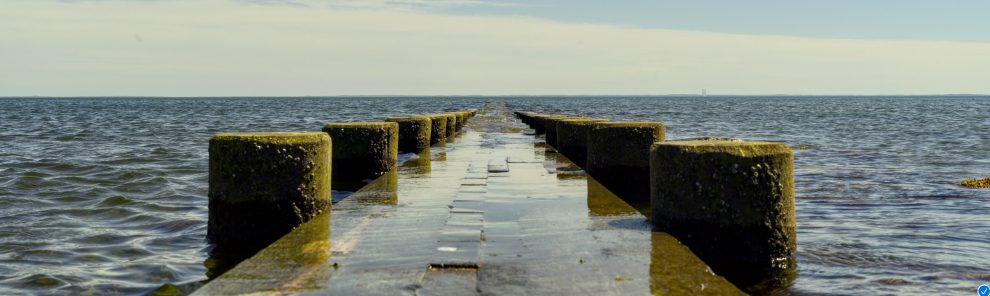
Today — dwarfed by a 40,000-square-foot office building — it’s hard to imagine that Gorham Island even is an island.
But the spit of land now joined to Parker Harding Plaza was once home to a gorgeous Victorian home. (Though — like many other structures in Westport — it apparently was built elsewhere, then moved.)
In addition to being a favorite subject for artists, the Gorham Island home was known for something else.
Early on July 4th morning of 1961, Brendan McLaughlin — a former Marine working as a New York advertising executive — shot and killed his father during a family argument inside the house.
McLaughlin fled. An hour before dawn he burst into the police station on Jesup Road. He pulled out a semi-automatic pistol and fired at 2 policemen behind the front desk, wounding Donald Bennette.
Officers chased him into the parking lot, where he shot officer Andrew Chapo. A shootout ensued; McLaughlin was wounded.
Chapo and Bennette recovered. McLaughlin died several weeks later.
It’s one of the little things that make Westport special.
Frederic Chiu has known Joshua Bell since they were kids in Indiana. So when Chiu — an internationally renowned pianist — asked the universally acclaimed violinist to help celebrate the 5th anniversary of Beechwood Arts & Innovation, Chiu’s innovative, immersive arts-and-culinary salon, Bell’s answer was “of course!”
Which is how last night, Saugatuck Congregational Church hosted an intimate concert of world-class music.
Joshua Bell, on the Saugatuck Church stage.
Chiu and his wife Jeanine Esposito hold most Beechwood events in their handsome 1806 Weston Road home (highlighted by a spectacular 300-year-old copper beach beech tree). But the Bell venue needed a somewhat bigger venue, and Saugatuck Church was happy to help.
Chiu and Bell (on his 1713 Stradivarius) performed Beethoven’s “Kreutzer” sonata and the rousing “Zigeunerweisen (Gypsy Airs)” by Sarasate. They were joined by soprano Larisa Martinez for numbers by Gounod and Puccini. The appreciative audience roared its approval after every piece.
Before they played, WQXR’s Elliott Forrest led a conversation with Bell and Chiu. They talked about their long friendship, the rigors of touring — and the importance of arts education for all.
Bell pointed to the balcony, where a number of young musicians sat. Their seats were sponsored by area residents, whom the violinist praised for their generosity.
Westporters sometimes wonder whether we’ve lost a bit of our arts heritage.
Chiu’s appearance last night with his friend — and their stunning performance — proved we’re still at the top of our game.
The other day, amateur historian Bob Weingarten published a story in Greens Farms Living magazine.
Read the previous sentence carefully.
The publication calls itself Greens Farms. Not Green’s Farms. Or Greensfarms.
Punctuation matters. And the punctuation of Westport’s oldest section of town was the subject of Weingarten’s piece.
I’m interested. From time to time, I’ve referred to that neighborhood in several ways. I never knew the answer — and never knew how to find out.
Weingarten quotes author Woody Klein, who called John Green “the largest landholder” among the 5 Bankside Farmers who in the late 1600s settled around what is now Beachside Avenue (the “banks” of Long Island Sound).
This is where the Bankside Farmers first worked the land. It looks a bit different today.
The area was called Green’s Farms. But in 1732 it was changed to Greens Farms because, Klein says, Fairfield — the town of which it was part — did not want “any individual landholder to become too independent.”
The plural form, Weingarten writes, could mean either that Green had more than one farm, or that it was “adopted from the multiple farms of the Bankside Farmers.” So Greens Farms it was.
Except in property deeds, which referred to “the Parish of Greensfarms.”
However, in 1842 — when the parish was incorporated into the 7-year-old town of Westport — the spelling became Green’s Farms.
The church of the same name adopted the apostrophe. Today it sometimes uses one, sometimes not. Sometimes on the same web page.
The church — with or without an apostrophe.
Confusion continued, though. For decades thereafter, official documents and maps referred to both Green’s Farms and Greens Farms.
Weingarten also mentions two streets: Green’s Farms Road and Greens Farms Hollow.
The state Department of Transporation has used both spellings — and a 3rd: Green Farms, for the Metro-North station.
Weingarten cites one more example. The post office near the train station uses the apostrophe spelling on one sign, the non-apostrophe on another.
This is definitely not one of the options.
Weingarten favors Green’s Farms. So do I.
But “06880” is a democracy. So — even though the zip code is 06838 — we’ll put it to a vote. Click the poll below — and add “Comments too.”
All you have to lose is an apostrophe.
Click here for “06880+”: The easy way to publicize upcoming events, sell items, find or advertise your service, ask questions, etc. It’s the “06880” community bulletin board!
Nearly 2 years ago, a pack of feral cats caused havoc near Compo Beach. Finally, police and PAWS came to the rescue.
Now the cats are back.
A few weeks ago, a resident found a cat in his garage. They thought the cute animal was exploring.
But it never left — because it was nursing 4 kittens in the back of the garage.
A feral cat mother in the back of a Compo Beach neighborhood garage.
The resident’s wife — who had volunteered for an animal welfare shelter in New York — knew she needed to get them help. She also had to act quickly: The beach home had been rented, and tenants were arriving in 3 days.
Dorrie Harris — co-founder of TAILS — arrived with another rescuer to safely remove the cats, which will be socialized and placed for adoption.
Dorrie told the homeowners that the cats were feral. Turns out, they came from the same Norwalk Avenue home as before.
Another neighbor’s cat was then attacked by a feral cat, and nearly lost an eye. Her owner is out $2,000 in veterinary fees.
The feral cat woman leaves food for the cats — and other neighborhood animals — with her porch door open.
A neighbor says she is breeding “bazillions” of kittens. They overrun porches and cars, and leave messes everywhere.
The feral owner has had issues with hoarding — and been helped by the town. Neighbors — who are sympathetic to her blight plight, but also fed up — find the cat problem tougher to solve.
Parking along Railroad Place is restricted to customers of shops facing the train station.
Apparently these 2 guys liked the spot in front of Suited.co — the high-quality, hand-crafted suit store — so much, they figured out a way to save it for a while.
The saga of 63 Turkey Hill Road South continues. Built in 1920, it’s one of 4 remaining Mediterranean-style houses in Westport.
Neighbors hope to save it from a proposed demolition. Right now, it’s under a 180-day stay. Lisa Fay appealed to the Historic District Commission. She wrote:
As a resident of the Greens Farms area, and a Turkey Hill Road South neighbor for 8 years, I have witnessed the demolition of many diverse homes in the area, and the subsequent building of new homes that share too many qualities of style, size and lot coverage. I feel strongly that buyers, our neighbors – and our town — need urgently to consider what we are losing by letting these demolitions happen.
Firstly, original homes – particularly antiques – reflect a town’s history, complexity and heritage. Just by driving down Turkey Hill Road, a tourist or resident witnesses the wonderful aesthetic and cultural history of Westport. With each demolition, we diminish our town’s unique character. To make matters worse, the new homes built on these lots share few variations in footprint, roof form, and materials.
63 Turkey Hill Road South. (Photo/Robinson Strong)
Secondly, many antique homes – although some in need of repair and updating – could never be duplicated with today’s costs. Antique homes possess a certain solidity, built from wood from 100+ year-old trees, not particle board. These homes have withstood decades of human life and natural disasters, and are still standing. By definition, this makes them, in some senses, priceless.
Thirdly, neighbors lose yet another year of peace and neighborly culture while living in a major construction zone. My Turkey Hill neighbors and I have withstood countless trucks, dust, dirt, traffic, noise and loss of hundreds of trees from lots that have been clear cut.
Thirdly, these demolitions exact a cost to our environment. Most of these materials from demolished homes end up in a landfill. Can’t builders try to work with what they have to minimize the impact on our environment?
Steps leading to the front courtyard at 63 Turkey Hill Road South. (Photo/Robinson Strong)
Lastly, demolishing this home reflects yet another lost opportunity to get our town antique preservation benefits right. While the demolition of any antique home upsets me for all the aforementioned reasons, I sympathize with any seller who is in a situation to sell urgently, without regard to the buyer’s intent. Giving antique owners – and potential buyers – incentive to keep antique homes could help stem the tide of demolitions.
Tax relief could provide such incentive. The Mills Act in San Diego provides an example of where tax relief has helped owners maintain the character of their neighborhoods by encouraging preservation. Owners of old homes sign a 10-year renewable contract to restore and maintain their antiques, and in turn receive a 50% discount in their taxes. If Westport intends to maintain its cultural heritage in part by protecting its old homes, it needs urgently to partner with owners in this respect.
Thank you for your leadership in helping to preserve our town’s heritage and character.
Years ago, alert “06880” reader/nature-and-lifestyle photographer Stacy Bass had an idea: For the next year, she’d take and share an image of whatever she happened to be doing at noon that day.
It was, she admits, “crazy and stupid.” The project lasted exactly 2 days.
Now, Stacy’s back. Her new idea is much more workable — and beautiful.
She was inspired by Kerry Long. Stacy’s friend and fellow photographer worked on her own 365-day project, shooting images of her young daughter Lucy. Kerry’s photos were “outstanding, stunning and wonderfully composed,” Stacy says.
Lucy Roth (Photo/Kerry Long)
Her own children — much older than Lucy — “would not be nearly as cooperative,” Stacy notes. Nor are portraits her specialty.
Stacy wondered what subject matter would keep her interested and motivated every single day, for a year.
Suddenly she knew.
Flowers.
Though she photographs flowers regularly, as part of garden shoots for magazines and private clients — check out her great Gardens at First Light book — Stacy knew she’d have to stay focused (ho ho) for a long time to find, take and share an image each day.
Stacy Bass. (Photo/Julie Bidwell for Wall Street Journal)
But she wanted to try.
Vacationing on Nantucket with her family last summer, she began.
Stacy Bass’s 1st flower.
Nantucket bloomed with flowers of all kinds. When Stacy returned to Westport, she found many more.
The daily challenge proved invigorating. The positive reactions her photos drew on social media kept her going. Friends and strangers thanked her for providing a daily dose of “beauty and positivity.” (Hydrangeas are the crowd favorites.)
Some days were easier than others. About 2 months in, Stacy hit a figurative wall. She wondered if anyone would notice if she stopped.
But the feeling passed. Now that she’s finished, Stacy is proud of her consistency. She’s also thrilled to have tangible proof of 365 flowers, with a beginning, middle and end.
(Photo/Stacy Bass)
She’s not quite sure what to do with all those images, though. Fans have inquired about buying a print of their favorite “day,” or of a special date as a birthday or anniversary gift.
Perhaps figuring out how to do that is Stacy’s next project.
(For more information on Stacy’s flower photos, email swbass@optonline.net.)
Click here to help support “06880” via credit card or PayPal. Any amount is welcome, appreciated — and tax-deductible! Reader contributions keep this blog going. (Alternate methods: Please send a check to “06880”: PO Box 744, Westport, CT 06881. Or use Venmo: @blog06880. Or Zelle: dwoog@optonline.net. Thanks!)
GET THE “06880” APP
The “06880” app (search for it on the Apple or Android store) is the easiest way to get “06880.” Choose notifications: whenever a new post is published, or once or twice a day. Click here for details.