Beaches and water in winter, by drone — thank you, Brandon Malin!

Cockenoe Island

Compo Beach

Old Mill Beach and Compo Cove

Burying Hill Beach (Drone photos/Brandon Malin)
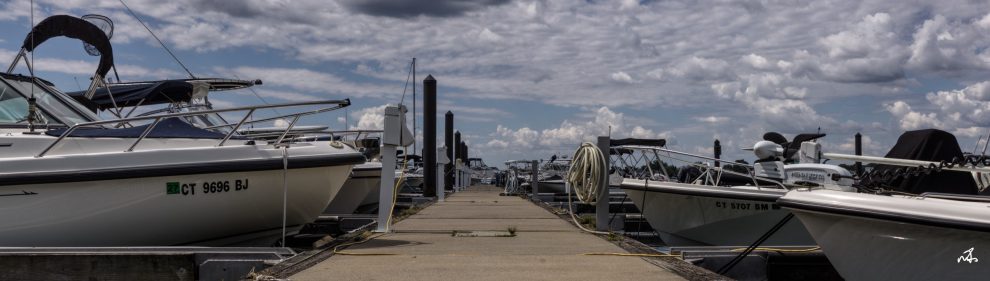
Beaches and water in winter, by drone — thank you, Brandon Malin!
Cockenoe Island
Compo Beach
Old Mill Beach and Compo Cove
Burying Hill Beach (Drone photos/Brandon Malin)
Posted in Beach, Pic of the Day
Tagged Burying Hill Beach, Cockenoe Island, Compo Beach, Compo Cove, Old Mill Beach
The Saugatuck Congregational Church mission statement includes a commitment to “welcome all people.”
Those are not just words.
The downtown congregation hosts a wide range of 12-step programs. Last year they sponsored a show of immigrant art.
In 2018, Saugatuck accepted an invitation from the Council of Churches of Greater Bridgeport to pair with a predominantly African American church. The goal was mutual learning about the impact of racism in our culture and communities.
Small groups from Saugatuck and St. Matthew Baptist Church met several times. A Westport participant said he was amazed to learn what he had not been aware of.
Saugatuck’s Rev. Alison J. Buttrick Patton and St. Matthew’s Rev. Aaron Best remain in touch. Their congregations will continue to connect.

St. Matthew Baptist Church
Dan Long participated in the exchange. An artist and member of Saugatuck’s arts committee, he helped organize last year’s “Art Beyond Borders” show, featuring works by Latin American immigrants.
The opening — with art, music and poetry — drew a very diverse crowd.
Dan wanted to organize more shows at his church, honoring diversity and fighting racism.
He died suddenly in June. His wife Priscilla and arts team members have taken up the cause.
A special exhibit — “Celebrating Color in Black History Month” — opens this Friday (February 21, 6 to 8 p.m., Hoskins Hall). Six area artists of color — Jeffrey Nelson, Amir Hines, Clyde Theophilus McLaughlin, Shanna Melton, Michael Brinkley and Lesley Koenig — will share their work.

Some of the work in the Saugatuck Congregational Church art show.
The show ends March 10. But Saugatuck Church’s commitment to multi-culturalism, and against racism, continues.
In May Rev. Donique McIntosh — minister for racial justice for the Southern New England Conference of the United Church of Christ — will be a guest preacher.
(“Art Beyond Borders” is open to the public, whenever the Saugatuck Congregational Church is open. Call first — 203-227-1261.)
Comments Off on Saugatuck Church Opens Black History Art Show
Posted in Arts, History, religion
Tagged Black History Month, Rev. Aaron Best, Rev. Alison Patton, Saugatuck Congregational Church, St. Matthew Baptist Church
For 40 years, Ruth Kuhn and her husband made sure that before tossing garbage bags into the transfer station pit, their keys were safely stashed in their pockets.
For 40 years, the precaution worked.
Last week though, Ruth was distracted. The instant it happened, she watched helplessly as her key chain — holding 4 car keys, house keys, garage key and mini-garage door opener — sailed all the way down, with her trash, into the dump far below.
She heard it all land. And then there was silence.
She feared all her keys were gone, forever.

The dump.
Other people came by. Unaware of her plight, they tossed their garbage onto hers.
Then a wonderful thing happened. Workers Mark Meyer and Buddy Valiante, and John Davis of Malone’s Refuse, noticed her distress.
Without hesitation, they offered to help. While easing her anxiety with good-natured reassurance and support, they used long-hooked poles — from “seemingly out of nowhere” — to locate her keys. They extracted them, then returned them to Ruth.
“For Bud’s steady assistance, and to Mark and John who made it happen, I extend my very deepest appreciations,” Ruth says.
“And not only for what each of you did, but as well for who you are. It would have been so easy to walk away. I owe you each a very considerable debt of gratitude.”
Bud, Mark and John would probably say “it’s all part of a day’s work.”
It wasn’t. It’s part of what makes our town a community.
Thanks, guys. You are Ruth’s — and our — Unsung Heroes of the week.

Buddy Valiante in 2018, helping at the transfer station. (Photo/Cindy Mindell)
(To nominate an Unsung Hero, email dwoog@optonline.net)
Posted in Environment, Local business, Unsung Heroes
Tagged Bud Valiante, John Davis, Mark Meyer, Westport transfer station
Alex Perdomo is an American success story.
He came to the US at 13, from Honduras. For his first 3 years here, he worked full time to support his parents. At 16 he went back to school.
He’s been married for 27 years. He has 2 beautiful daughters. The oldest just graduated from college. The other is pre-med.
Eleven years ago, Alex bought Bagel Maven. He also bought new equipment to upgrade the popular spot, in the mini-shopping center near Five Guys.

This winter has been tough. Alex fell behind by half a month on his rent. Now, he says, his landlord told him to leave by February 29th — and to leave his equipment too.
“People tell me I should raise my prices,” he says. “I’m not that kind of person.”
Alex asked me to tell his story. But he’s not sure what he wants.
“I don’t know what to do. I’m desperate. This store is my life,” he says.
“I’m 46. It would be hard to start from the beginning.”

Alex Permodo at Bagel Maven.
I suggested that if people stopped in to Bagel Maven, they could talk directly. Maybe someone could help him figure out next steps.
He thought that was a great idea.
Alex has always been there for Westport. He donates bagels and more to any school, organization or event that asks.
Now he’s asking us for help. This is a creative, compassionate community. Let’s see what we can do for Bagel Maven’s bagel maven.
Gambling is a tough illness.
It takes a gambler’s money, and pride. It’s got the highest suicide rate of any addiction.
It affects a gambler’s entire family, friends and colleagues.
And gambling impacts not just people with too little money to begin with. Connecticut has 50,000 problem gamblers. Plenty live in places like Westport.
We have neighbors who spend their weekends at casinos, where they’re treated like kings.
We have kids who are addicted to gambling via video games. It starts when they buy treasure chests, with their parents’ credit cards. Some become binge gamers.

Rob Zuckerman knows all that, and much more. He’s a recovering gambling addict.
A 1968 graduate of Staples High School with a BFA in photography from the Rochester Institute of Technology, he took over his father’s business after his death in a 1978 automobile accident.
Rob moved the studio to South Norwalk in 1981 — an early pioneer in the new SoNo real estate venture. He ran it successfully for 20 years, before relocating to Fairfield.
During the 2008 recession, and with the rise of smartphones and other technology, the photography business changed dramatically.
In 2009 his son Ben fell off his bike, and was run over by a UPS driver. In the year it took him to recover, Rob got addicted to online gambling.
He got himself clean, and has not gambled in a decade. Along the way, he learned a lot about the disease — and his own compulsive side.
He credits much of his recovery to Renaissance — a Norwalk-based treatment center — and Gamblers Anonymous in Darien.

Rob Zuckerman
To pay it forward, Rob became one of the state’s 5 peer counselor for people with gambling issues. He answers hotline calls, escorts people to GA meetings, and helps with gamblers’ denial, guilt, remorse and anger however he can.
Rob is also a recovery coach at Renaissance.
Now — with plans rolling along for a casino in Bridgeport — Rob wants Westporters to be alert to the dangers of gambling for young people.
Rob is proud that Renaissance is sponsoring a talk on “Youth, Internet Habits and Mental Health.”
Set for Sunday, March 1 (12:30 to 2 p.m., Unitarian Church, 10 Lyons Plains Road), it features Dr. Paul Weigle. An adolescent psychiatrist, he’ll speak about how gaming and screen habits impact physical and mental health of children.
The church’s addictions recovery ministry is a co-sponsor of the event.
He’s seen the effects of gambling first-hand. Rob has seen too the work that can be done — by community organizations and his own church — to help with recovery from addictions.
He’s betting this is an important event, for anyone who lives with or works with young people.
I try to stay away from pure “nature” Pic of the Day shots. Every image should have some identifiable part of Westport — or Westporters — in it.
I’m making an exception for this exceptional photo. Alert “06880” reader Morley Boyd wrote yesterday:
With the reasonably warm weather, our honeybees came out and quickly discovered all the wild crocus growing on Violet Lane. Shortly thereafter, they began returning to their hive with the pollen baskets on their legs loaded up.
For some reason, I always take comfort in these early signs of spring.

(Photo/Morley Boyd)
Alert “06880” reader Scott Smith is an astute observer of the many wonders of Westport. Today he writes about the dams that “block the migration of fish and otherwise stymie the natural ecology of the 57,264-acre Saugatuck River Watershed — a rich network of 242 miles of waterways that discharge into the Saugatuck River and Long Island Sound.”
The topic came to mind after reading a New York Times story, “It’s Fish vs. Dams, and the Dams Are Winning.” The article noted efforts underway in Connecticut to eliminate obsolete dams from rivers that connect with Long Island Sound,
“Connecticut has about 4,000 dams,” said Stephen Gephard, a supervising fisheries biologist for the state Department of Energy and Environmental Protection, “and the vast majority are obsolete.” The state owns about 100 dams and is reviewing the list to determine which should be removed. Gephard’s team has also identified 20 to 30 privately owned dams it would like to remove to allow fish passage.
That made me wonder if one of those dams under consideration of removal is the one on the Saugatuck that forms Lees Pond. It’s owned by the Westport Weston Family YMCA.

Enjoying the Saugatuck River, at Camp Mahackeno back in the day.
Lees Pond was long an integral part of Camp Mahackeno’s summer activities: swimming, rope swings, canoeing, even a floating pontoon.
In recent years, due to a confluence of factors – insurance, safety, the mythical fear of campers coming home covered by leeches – activities on the pond have greatly diminished.
Judging from the map of current renovations to the property, it doesn’t appear that Lees Pond factors much in that plan.
I wonder if Y leaders’ views of the pond have evolved over the years, and if as stewards of this vital stretch of the Saugatuck, they’d be interested in exploring options to unblock this key local natural resource (whose name literally means “river flowing out”).
I emailed Gephard, writing as a longtime resident of Westport who would like to see our local river rehabilitated as habitat for migratory fish. Of all our town’s jewels, especially natural ones, the Saugatuck seems the most underappreciated.
The river was once renowned for legendary runs of sea lamprey, alewife, blueback herring and American shad. In 1828 the Saugatuck Journal described as “the river of little fishes” because of the many smelt. Over time though, it’s been used and abused.

The Saugatuck River — shown here behind the Willows medical complex, near the Lees Pond dam — has been “used and abused,” says Scott Smith. (Photo/Danny Cohen)
Gephard’s response was impressively detailed, describing the status of dams on the Saugatuck from the head of the tide, just north of downtown, to the natural barrier at Devil’s Den.
He called the Saugatuck “a challenge….Dam 1 (at the head of tide) is the Wood Dam, owned by Aquarion. There is a steep-pass fishway, and we believe it is passing river herring.
“Dam 2 is Lees Pond. Removing this would be challenging. It is owned by the YMCA. Traditionally the Y has used the pond for recreational opportunities, though that may no longer be the case. Twice in the last 20 years, the Y has spent large amounts of money to repair the dam. Additional repairs may be needed. It is expensive to maintain such a tall dam in a heavily developed area.

One view of the Lees Pond dam …
“We own a fishway at the dam—or more accurately—in the dam. In fact, it is the oldest fishway in Connecticut. Back in the 1960s, the owner of the pond and dam drained the pond, created a large opening in the middle of the dam and began to mine gravel from the pond bed — without any permits.
“The state and town went after him. He divested himself of the dam, and the YMCA ended up as the owner. But the state got the right to build a fishway in the hole in the dam to close the dam, restore the pond and provide fish passage.
“The fishway is accessed by us via a catwalk through private property, and is not accessible to the public. As originally designed and built circa 1963, the fishway never worked and fell into disrepair.
“In the 1990s, I inherited the care of the facility. I used a grant to gut it and install a newer style fishway (steep-pass). It is still a little steeper than we would prefer (we had to use the space provided in 1963), but we feel it works for river herring and probably sea lamprey.

… and another.
“Dam 3 is Dorr’s Mill Pond at Glendenning. There are 2 fishways there, one at the spillway and one on a stream branch that weaves through Bridgewater’s office complex.
“The DEEP and Nature Conservancy built both, and they appear to be effective. Dam 4 is privately owned just upstream of Route 57. The owner did not allow us to build a fishway at the dam, but a natural channel bypasses the eastern side of the dam through someone else’s property. Many fish find it and circumvent the dam.
“Dam 5 is River Road Dam, immediately upstream of the River Road Bridge. It has a pool-and-weir fishway on private property, but it can be seen from the bridge.
“Dam 6 is the former Bradley Axe mill dam halfway up to Devil’s Glen and Trout Brook Valley. We had an agreement with the dam owner and spent considerable money designing a cool fishway for that dam. But the owner sold the house before it could be built, and the new owner did not want the fishway.
“The plans remain if the ownership ever changes. If fish get past that dam, they can reach Devil’s Glen, a natural chasm that historically stopped all fish.

Devil’s Glen, in Weston.
“Also, we worked with the Aspetuck Land Trust to have a fishway built on Trout Brook, on the Trout Brook Preserve. It does not pass anadromous fish, but helps brook trout move around and reach spawning habitat.” (NOTE: This is the only fishway accessible to the public.)
“Furthermore, the Aspetuck River joins the Saugatuck River just upstream of Dorr’s Mill Dam and Route 57. The North Avenue Dam, the first on it, has a simple pool and weir fishway. on private property.
“The second one, the Newman Dam, has a pool-and-weir fishway. It too, is on private property.
“The third dam, the Frankel Dam, was removed by a joint work team of DEEP crew and The Nature Conservancy. That allows anadromous fish to ascend as far as the next dam, a bit upstream of Bayberry.
“After that, there is a dam almost every 300 feet. We would entertain dam removals, but there are so many dams that the cost/benefit is low. We have not made it a priority.
“Farther upstream, we have worked with Aquarion to install a new gate at the Aspetuck Reservoir Dam in Easton. It allows mature silver-phase American eels to pass downstream, avoiding the entrance to the Hemlock Reservoir, which is a dead end for migrating eels. They all die in the treatment plant. These are the females heading out to sea to spawn, so diverting them down the Aspetuck where there are only small dams and no intakes is important.

Aspetuck Reservoir Dam.
“We have done a lot in this watershed, all in partnership with the Nature Conservancy. Fishways are not as good as a dam removal. With a good fishway, you get fish passage of the targeted species. With a dam removal, you get passage of all species plus many other ecological benefits that were outlined in the article, including lower water temperatures, natural stream habitat, natural sediment transport, etc.
“But in Connecticut, many dams are valued, often as aesthetic features in people’s backyards. We cannot force them to remove their dams. All of the work described above was voluntary (except for the Wood Dam, where the fishway was a condition of a permit that Aquarion needed from the DEEP to repair the dam).
“Our first choice is always dam removal. If owners don’t go for that, we fall back on fishways. Often, that works (we get grants and the fishways don’t cost dam owners anything) and sometimes it doesn’t (like in the case of dam 4).
“We do the best we can. When we first began on the Saugatuck, sea-run brown trout were a main targeted species, along with alewife and blueback herring. Since then we have added sea lamprey and American eel (separate passes). Sadly, the reports of sea-run brown trout are on the decline, likely a victim of climate change and the warming of Long Island Sound, and the Saugatuck River no longer hosts a significant run of brown trout.”
Deer are a common sight in Westport. But what alert “06880” reader Johanna Rossi saw yesterday, just before dusk at St. Vincent’s Hospital on Long Lots Road, was not.
At first she thought a light was shining, reflecting on its antlers. But when she got out of her car, she realized something was stuck on them.
She has no idea what it was, or how it got there. But another deer tried unsuccessfully to help get it off. “So sad,” Johanna says.

(Photo/Johanna Rossi)
Choral Chameleon is well named.
The New York ensemble works in a dynamic blend of genres and art forms — whatever type of choral music is called for, whenever they’re called to perform.
This year’s tour was inspired by the questions: “Regardless of whether we lean left or right, what if we could just leave the zoo? Would we find utopia, or go back to the never-ending search for meaning we humans have been on since creation?”
Cue: “If I Left the Zoo.”

Choral Chameleon
Using humor, animals and music ranging from the Beatles’ “Blackbird” and “I Am the Walrus” to the world premiere of Westport’s own Edward Thompson’s whimsical a cappella trilogy “Aphorisms of the Zookeeper,” Choral Chameleon returns to Westport’s Unitarian Church this Saturday for their only Fairfield County appearance.
The February 22 concert “explores the primal instincts in humans, and the stories and fables of earth’s creatures and transformations.”
For example, Thompson’s new work includes “Alligators.” It’s based on the saying “When I’m up to my neck in alligators, I remember that my intention was to drain the swamp.”
Animals can teach us about life — and with a bit of humor. Both are much needed these days.

Edward Thompson
Thompson — the church’s music director — has quite a resume. He earned a master’s degree from Juilliard, a doctor of musical arts from the University of Hartford, and did post-doctoral work at Notre Dame Cathedral in Paris.
He has composed dozens of pieces for youth, mixed, women’s and men’s choirs, as well as instrumental works.
But this is his first for — okay, about — animals.
(Choral Chameleon’s “If I Left the Zoo” tour is Saturday, February 22 at 7:30 p.m. For tickets and more information, click here.)
Posted in Entertainment, People, religion
Tagged Choral Chameleon, Edward Thompson, Unitarian Church of Westport
The Westport Library book sales are a wonderful Westport tradition.
Every July — and, in a smaller form, spring — thousands of book-lovers find countless treasures. And it’s not only books (in every category imaginable). CDs, DVDs, even sheet music are also on sale.
After more than 2 decades, the sales are taking a new step forward. Today the library announced the launch of Westport Book Sale Ventures.
The new entity has a dual mission: raising funds to support the library, while providing meaningful employment for adults with disabilities.
Starting next month, the Westport Library book sales will be operated by Westport Book Sale Ventures, Inc. — an independent 501(c)(3) non-profit.

A typical summer Westport Library Book Sale scene.
“The book sales are a beloved community tradition that provide essential support for Library programming,” says executive director Bill Harmer. “The sales are powered by a dedicated team of volunteers, and tens of thousands of book donations from our generous community.
“Facilitating meaningful employment opportunities for individuals with disabilities is squarely aligned with the Library’s mission to strengthen our community, motivate engagement and serve diverse constituencies, and we are incredibly proud to launch this new initiative.”
The new venture is coordinated by Jocelyn Barandiaran, Sharuna Mahesh and Linda Monteiro-Hopper, Westport residents with a passion for the Library and the expanded book sale mission.
Mimi Greenlee and Dick Lowenstein — who have led book sales for 2 decades — will provide guidance.

Dick Lowenstein, Mimi Greenlee and Suzy Hooper — longtime Book Sale stalwarts. (Photo/John Karrel)
Barandiaran notes, “The unemployment rate for Americans with disabilities is twice as high as the rate for people with no disabilities. For many young adults with disabilities there is a significant gap following high school, when individuals no longer have the support of the public education system’s transition services, and their social networks disburse.
“We hope this new venture will provide transferable job skills and opportunities for community engagement, and motivate our community and our businesses to be ever more inclusive of people with disabilities.”
The Annex, which was installed in the upper lot to receive book donations, will continue to function in the same way. Donations may be made at any time during the Library’s operating hours.
The first Book Sale Event managed by the new venture is set for Friday, March 13 through Sunday, March 15, in the Library Forum of the Westport Library. To learn more about Westport Book Sale Ventures, click here.
Posted in Library, Organizations, People
Tagged Dick Lowenstein, Mimi Greenlee, Westport Library, Westport Library Book Sale Ventures

Click here to help support “06880” via credit card or PayPal. Any amount is welcome, appreciated — and tax-deductible! Reader contributions keep this blog going. (Alternate methods: Please send a check to “06880”: PO Box 744, Westport, CT 06881. Or use Venmo: @blog06880. Or Zelle: dwoog@optonline.net. Thanks!)