
(Photo/DIane Lowman)
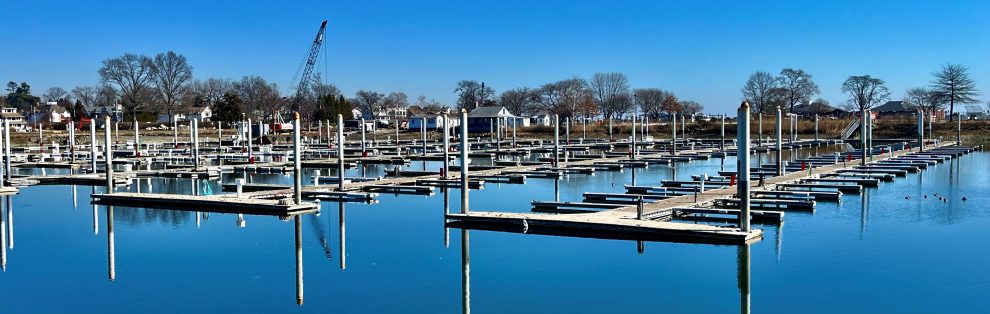
(Photo/DIane Lowman)
What do you do on a Christmas Eve Day that’s shattering centuries-old temperature records?
In the morning, head to Compo Beach. No reserving tables for that holiday barbecue!

(Photo/Chip Stephens)
A couple of hours later, take a nice stroll down Hillspoint Road. Be sure to wear a tank top!

(Photo/Fred Cantor)
An alert “06880” reader spotted this interesting new arrangement of benches yesterday, at Compo’s South Beach:

He wonders about the possibilities:
I have no idea. If you do, click “Comments” below.
For years, Westporters have marveled at the pop-up rock sculptures that appear randomly on the now-you-see-it, now-you-don’t marshland between Schlaet’s Point (the north end of Compo Beach) and the Hillspoint Road curve toward Elvira’s.
Eventually they collapse, from the effects of wind and tides. Nice while they last, they’re mostly the work of Jerry Kuyper.
The other day, alert “06880” reader John Karrel noticed a different type of stone structure at Burying Hill Beach. It’s sturdier — more wall-like — but equally mysterious.

Preparations for a winter solstice festival? An homage to the original Bankside Farmers? Nature working in wondrous ways?
If you have any ideas — or know the back story — click “Comments” below.
Westporters blog about many things: Work. Kids. “06880.”
Scott Smith blogs about his piles.
Okay, his compost pile. Still, it’s an interesting topic. It’s called “My Pile: A Year in the Life of a Backyard Compost Heap.” He covers fertilizer, leaves and lots of other, um, stuff. Like the compost pile itself, it’s a work in progress.
The other day, Scott sent this story along. He hopes it’s of interest to “06880” readers. Whether or not you compost, I think it will be:
Autumn is my favorite time of year to be a Westporter — especially when the weather gives us such a pleasant run of bright, shiny days to prepare for the dark, cold winter to come.
It’s harvest time. For a backyard gardener like me, that means dealing with our most abundant crop – leaves. Driving along our roads, I’m always gobsmacked to see so many tall brown paper bags stuffed full of leaves stacked along the way. What a lot of fuss!

An autumn sight: bags of leaves awaiting pickup.
All those leaves – 2 tons per acre, I’ve heard – add up to a hefty load for our town (and our tax dollars). Westport’s Public Works Department doesn’t break down the costs of the annual pickup, but similar towns spend upwards of $370 per mile of road to collect leaves each fall.
Add to that the noisy efforts of squadrons of leaf-blowing crews that suck up and haul away the season’s leaves from many other local yards, and that’s an awful lot of green going to waste (or brown).
My neighbors and I have another, less costly and more sustainable way to dispatch our yearly bounty of leaves — and get something worthwhile in return. We rake, mulch and scooch most of the leaves that fall each season over to the compost pile I keep in the back corner of my yard.
My compost pile is a community in every sense: both in and of itself, and because of how it brings neighbors together. I still have the thank-you card the lady across the street sent after a buddy and I swept her leaves onto an old sheet and dragged them over to my pile.

Topping off a compost pile.
My pile is awesome. Beyond generating nice neighborly feelings, the compost heap now takes in the bulk of leaves from nearly 3 acres of suburbia. That’s 4 homes that have largely gone “off the grid” of the town’s fall leaf cleanup.
Abiding by the old saw that a good compost heap is 80 percent dead brown organic material and 20 percent fresh green stuff, my goal each fall is to add a layer of something “green” to every load of leaves I put in my pile.
Easy pickings are grass clippings from the lawn, until they peter out with the waning autumn sun. Filtered coffee grounds from a local shop are loaded with nutrients and often free for the asking, as are bags of shredded paper brought home from the office. My pile also absorbs all the food scraps from my kitchen, and the family next door.
A certain amount of scavenging suits me and my pile. We live near the beach, where I bulk up with the greenest of green for my pile: seaweed.

Searching for seaweed on the shore.
I got the idea from a Westport Historical Society exhibit a while ago. “A Bunch of Farmers” detailed the area’s agricultural roots, beginning in the 1830s, which over generations developed richly with the maritime exportation of fish and produce to New York, Boston and beyond. By the Civil War, Westport was the leading onion supplier to the Union army. Onion farmers used nutrient-rich seaweed as fertilizer. There’s a certain symmetry to that, as my neighborhood was once an onion field.
Depending on the season, the weather and the wind, high tide usually leaves a long scraggly line of flotsam, most of it a musty salad of seaweed and raggedy reeds of salt marsh grass. Both are high in nutrients and the trace elements garden plants love.
Caught up in the tidal ebb and flow are dismembered crab legs and carapaces of baby horseshoe crabs. Shells of mussels, clams and oysters dot the mix, and in they go too. I love bringing this bit of the beach back home with me. The bucket smells like part wet swimsuit, part low tide, and all pure summer.

Scott Smith
The more green I can contribute to my pile in the fall, the hotter it will cook through the winter months. With some turning with a pitchfork, the sooner the mass of leaves and compostable whatnot will boil down into a finished batch of loamy new compost. Last summer I spread 50 wheelbarrows full of fresh compost across my garden beds and lawn. My neighbors always know where they can go to fill up a flower pot or top-dress their tomato garden.
I know that in the greater scheme of things my backyard compost pile doesn’t amount to much more than a hill of beans. But it’s a fun, low-tech hobby that provides me plenty of good ol’-fashioned outdoor exercise, costs next to nothing, and in a modest way allows me to act locally while musing about bigger issues like food waste, sustainability, carbon footprints and global warming.
I highly recommend it to anyone with the time and inclination. Lord knows there’s always plenty of leaves to go around!
This morning, I posted a 1913-era postcard of the original Staples High School.
It shows what I called a bell tower — a feature I’d never seen before, in any photo or painting of the brick structure built in 1884 (and torn down in 1967).
Several commenters — calling it a “cupola” — debated whether or not it existed. Some thought it was actually part of another building, in the distance.
Alert “06880” reader Neil Brickley — who grew up in Westport, loves its history, and regularly accesses the University of Connecticut photo archives, which include a fascinating 1934 aerial survey of town — found this view.

Staples High School is the dark building near the center of the photo. It’s situated about where the Saugatuck Elementary School auditorium is today — just southeast of the track and athletic facilities (variously called PJ Romano Field and Doubleday Field) that are still there.
It doesn’t seem to show a cupola/bell tower/whatever. And it sure does not look like there’s any building behind it either.
However, a similar photo from a February, 1914 edition of the Westporter-Herald newspaper — sent by another reader — shows almost exactly the same view:

The same reader sent along another postcard of Staples. This one is from a later date — you can tell, because there are post-1914 cars, and the plantings are fuller.

Perhaps the bell tower/cupola actually did exist once, but was demolished or destroyed prior to 1934.
Or perhaps this photo, and the postcard, were both embellishments.
I’m reminded of another old postcard. This one shows Compo Beach, just after the turn of the (20th) century:

None — not one — of the formally dressed beach-goers and bathers looks up at what must be a very new-fangled flying machine.
Rod Serling, where are you now that we need you?
Posted in Beach, Looking back, Staples HS
Tagged flying machine, PJ Romano Field, Staples High School Riverside Avenue
The back cover of Flesh & Wires — a new science fiction book just published by Jackie Hatton — reads:
Following a failed alien invasion the world is left sparsely populated with psychologically scarred survivors, some of them technologically-enhanced women. Lo, leader of the small safe haven of Saugatuck,…
Whoa! Does our little town star in a very intriguing work by that rare species: a female science fiction writer?
Yep.

Jackie Hatton
Hatton — an Australian who grew up in Tasmania, earned a master’s in American history in Melbourne, and a Ph.D. in the same subject at Cornell — landed here when her husband got a job in Stamford. They knew Westport was a beautiful town, and heard it was “open-minded and open-hearted.” They bought their 1st house on Treadwell Avenue in 1998, attracted by the nearby water.
Hatton was a freelance writer, which worked well. She wrote all morning, then had lunch on the beach. She wrote again in the afternoon, and grabbed dinner somewhere in the neighborhood. Some days, she gardened — and thought.
She and her husband planted a small apple orchard. She calls it “a charmed and charming period” in their lives.
“We spent perhaps too many happy hours in Viva’s and Dunville’s,” she laughs. But she volunteered at the Westport Historical Society, and met friends through New Neighbors.
With Turkish friends, they bought a boat and spent every summer weekend on the Sound.
When Hatton and her husband were bored, they played a game: “Looking for Keith Richards.” They’d head to lively bars with great music, like the Georgetown Saloon. They never found him.

Jackie Hatton’s beloved house on Treadwell Avenue.
They moved in 2003 for work reasons — first to a minimalist place in New York City, then to the magical old streets and canals of Amsterdam. They’re still in the Netherlands, but Hatton calls Westport “the most beautiful place I have ever lived.”
The town remained vivid in her mind. Hatton always wanted to set a story here. She began writing a murder mystery, but that genre in a New England setting seemed like a cliche.
One day, rooting around for a more original premise, she recalled the one thing she’d always found strange about Westport: “there are no men there during the day.” Suddenly, she wondered: What if all the men were not just at work in New York?
Then she realized: If the men never came home, the place would still run. Women already maintain the properties, organize the activities and run errands all day long.
They manage many shops, and the small businesses operating out of big homes: freelance consultancies, part-time practices and the like.
 Hatton kept thinking: How would women handle a real crisis? So she added aliens.
Despite their circumstances, the women in Flesh & Wires — who have created an oasis of civilization in Saugatuck — still care about home decoration, gardening, cooking, dancing and clothes. She included those details because she believes that making things beautiful can be a way of “dealing with darkness and difficulties.” How women spend their time is a serious thread throughout the book.
Of course, Hatton has a few laughs too. She turns a nail salon into a military training center. She also enjoys demolishing I-95.
Her book includes the cute little 19th-century cottage that was their old house; Saugatuck Rowing Club and Longshore; Mansion Clam House and Peter’s Bridge Market (both now gone).
The Bridge Street bridge — which may or may not be gone long before the apocalypse — serves as a major checkpoint into town. Downtown has been flooded into oblivion. And Cockenoe Island serves as a prison.

The Bridge Street bridge: While Westporters debate its future, Jackie Hatton turns it into a post-apocalyptic checkpoint.
“I’m interested to hear if Westporters find post-apocalyptic Saugatuck beautiful or horrific,” she says. “I love the new park I created, but I hate the idea of living in fear behind fortified walls.”
So what’s next, in the pre-apocalyptic real world?
“My great fantasy is that Hollywood buys the movie rights to Flesh & Wires,” Hatton says. “And then pays me to spend the summer on location in my favorite place in the world.”
More realistically, she hopes that promotional activities bring her back to Westport soon.
“There’s a margarita waiting for me at Viva’s,” she notes. “And a bar stool at Dunville’s with my name on it.”
(Click on www.jackiehatton.net to learn more about the author and her book — including a feature on how she uses Westport settings.)
Posted in Beach, Downtown, Local business, Longshore, Media, Organizations, People, Restaurants, Saugatuck
Tagged "Flesh & Wires", Bridge Street Bridge, Dunville's, Jackie Hatton, Viva Zapata's
Westporters had much to be thankful for yesterday.
Those living on the Sherwood Mill Pond appreciate scenes like this every day.
The rest give thanks that “06880” reader Jose Villaluz captured it for us, before sitting down to his Turkey Day feast:

Click on or hover over to enlarge. (Photo/Jose Villaluz)
For years, “Gloria” was a glorious sight.
Alan Sterling built the wooden oyster boat himself. He named it after an old girlfriend, and took it oystering on 150 acres of beds, between Compo Beach and Cockenoe Island. It was a tough job, but Alan — a Staples grad — loved it from the day he began, in 1964.
Alan moored Gloria in Gray’s Creek, between Compo Beach Road and the Longshore exit. Some winters, he lived on the boat. It was cold — but it was home.
On July 4, 2014, Alan died of a massive heart attack.
Since then, Gloria has just kind of drifted. She was Alan’s baby, and now he’s gone.
The other day, “06880” reader Bruce McFadden spotted Gloria abandoned, on the Gray’s Creek shore.

Gloria, on the Gray’s Creek shore. (Photo/Bruce McFadden)
He wonders if anyone has plans for the boat. The Honda outboard has value. Perhaps, he says, funds from its sale could be used to place a plaque or bench at Longshore’s E.R. Strait Marina, honoring one of Westport’s last commercial fishermen.
Posted in Beach, Environment, Longshore, People
Yesterday morning was the Davises’ last in Westport.
After 50 years in the same house, Bob (age 93) and his wife Agnes (87) headed south.
Nancy — one of their 5 born-and-raised-in-Westport kids — created a few dozen road signs. No, not the kind you grew so tired of during election season. These were much more personal.

They said things like:
Nancy placed them along Greens Farms Road, down South Compo to the beach, then back through Saugatuck. Mary Lou — another daughter — made sure her parents saw the signs as she drove them toward I-95, and on to their new life.

Bob and Agnes leave behind half a century of involvement here: Little League, Boy Scouts, PTAs, the Norwalk Hospital, mentoring, the Perkin-Elmer Retiree Club.

“I know I’ll miss my folks,” Rick — one of their sons — says.
“But I think they’ll miss Westport just as much.”


Click here to help support “06880” via credit card or PayPal. Any amount is welcome, appreciated — and tax-deductible! Reader contributions keep this blog going. (Alternate methods: Please send a check to “06880”: PO Box 744, Westport, CT 06881. Or use Venmo: @blog06880. Or Zelle: dwoog@optonline.net. Thanks!)