
Canal Beach (Photo/Gene Borio)
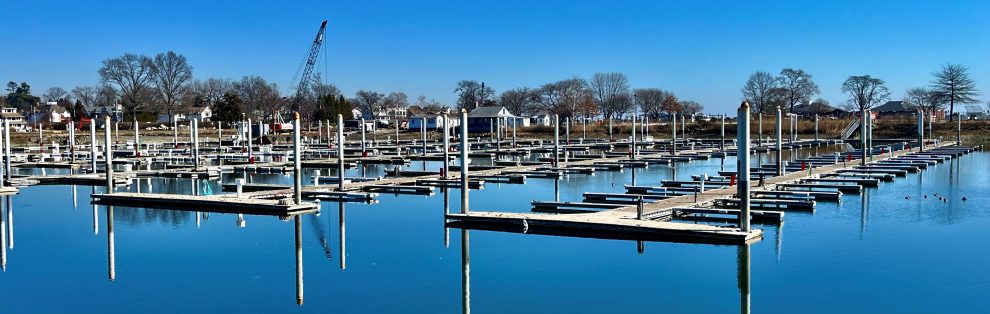
Canal Beach (Photo/Gene Borio)
June is Pride Month.
So “06880: The Podcast” is proud to feature Brian McGunagle.
The other day, the founder of Westport Pride stopped by the Westport Library’s Trefz Forum to chat about all things LGBTQ.
We talked about gay life in Westport; his own experiences here with his husband and 2 sons — and of course, the upcoming Jesup Green celebration June 4, the drag show at MoCA June 17, and more.
Click below, for a rainbow’s worth of info and insights.
Posted in Library, Media, Westport life
Tagged "06880" podcast, Brian McGunagle, Westport Pride
As chair of Westport’s Planning & Zoning Commission, Danielle Dobin keeps her eye on Hartford. The state legislature’s votes have a huge impact — sometimes unintended, sometimes very intendent — on our town.
A bill circulated yesterday — and voted on perhaps tomorrow — caught her eye. She writes here as a Westport citizen; she is not speaking for the P&Z.
A complex 87-page housing bill (House Bill 6781) was circulated late yesterday and could be voted on as early as tomorrow. If adopted, this bill would overhaul multi-family zoning in our state entirely, with the specific intent of spurring the development of substantially more apartment buildings — including in areas without sewers, like Coleytown, Red Coat and Long Lots.
Although Westport’s regulations have changed to thoughtfully encourage a diversity of housing types, many Connecticut towns have failed to do the same. However, legislation like this is not an appropriate response.
In the simplest terms, here are my concerns:
1) HB 6781 was drafted in a rush, and it shows. Portions are entirely nonsensical while others clearly have entire sections missing. I’ve been told a revised version may be released today.
2) By design, it is impossible to understand the exact scale of development required by this bill, so legislators will not know what they’ll be voting for exactly. The language demands that CT towns zone to address “the need” for affordable and extremely affordable housing without specifying any numbers.
Instead, all details are left entirely up to appointed bureaucrats who are to be advised by housing advocates and builders. Towns and cities will be forced to draft zoning codes to affirmatively incentivize the housing units allocated to their town.

1177 Post Road East includes affordable housing units. HB6781 could lead to more such construction.
How many affordable units will each town be required to deliver? No one knows. How many units overall state-wide? No one knows. What increase in overall density in market rate units will likely result from the allocation of affordable units to each town? No one knows.
Will towns like Westport, Simsbury and Ridgefield be required to double in size? No one knows. No legislator should vote for a bill that punts the actual ask of each town to an appointed bureaucrat to determine at a later date.
3) Instead of focusing on incentivizing proper planning including review of infrastructure constraints, major traffic issues, environmental concerns, historic preservation, wetlands and access to public transportation, the bill specifically requires that towns and cities zone for affordable housing in all areas equitably.
With language that purposefully liberalizes oversight over community septic systems, the intent of the bill is to ensure more intense development in more rural feeling areas like Coleytown, Long Lots and Red Coat.
Fairfield will need to zone for apartments in Greenfield Hill. Norwalk will be required to zone for multi-family in Silvermine. Stamford will need to do the same in North Stamford. Can you imagine multiple 2-acre lots in Coleytown with 40-units? This makes no sense from a planning perspective.
4) The proposed bill essentially requires towns like Westport to create areas around train stations allowing for the unfettered development of quadraplexes and townhomes, with no parking. Although our train station, like many along the New Haven line, is located adjacent to the flood zone, Conservation Commission review is expressly prohibited by the bill’s language. Failure to adhere to these standards likely results in adverse financial consequences for our town including the loss of state funds for bridge repairs and sidewalks.

The proposed bill could lead to multi-family housing near the train station. (Drone photo/Patrick Sykes)
5) If adopted, this proposal will set off a cascade of negative economic consequences for our state. New York is currently suffering through a budget crisis resulting from a net loss of high earning residents to other states. Many of those high earners moved to Fairfield County for our bucolic neighborhoods. These newcomers not only purchase homes here, but they have also moved their businesses here.
Westporters have been highly supportive of creating more multi-family where it makes sense in Westport. However, it requires no stretch of the imagination to recognize that folks will not remain living in a town where it takes 35 minutes to drive their child 3 miles to school or 45 minutes to get to the train to park their car for their lengthy commute to NYC.
The state income tax generated from high earners in Fairfield County, and our businesses here, is critically important for the fiscal health of our state. The state legislature needs to take this very seriously.
6) Like in New Jersey, where a similar proposal was adopted, this bill will result in massive waves of litigation against the state, towns and between residents. Why invite this colossal waste of time and money for all involved?
7) This entire process feels undemocratic. I’d expect this approach from Kevin McCarthy, but I’m deeply disappointed to see this type of gamesmanship from the Connecticut legislature. It is wrong to circulate 87 pages of complex text and then call for a vote only 2 days later. The right thing to do is to allow comments and feedback and then revive this conversation in the next legislative session.
This bill includes some smart changes to tenant rental protections and housing authority oversight, but it’s too much of a hodgepodge of concepts for even the most conscientious legislators to carefully review in such a short time. The updated bill text has not even been posted online as of this morning which is why I can’t link to it.
Our state senator Ceci Maher and state representatitves Jonathan Steinberg and Dominique Johnson have stated that they will vote against the bill, but Westport residents should reach out to friends and colleagues elsewhere in the state to ensure all members of the legislature truly appreciate the implications voting for this proposal.
Our legislative delegation can’t stop this bill on their own. Major changes like this should never be rushed.
Please share with your friends across the state and tell them to find their legislators here: https://www.cga.ct.gov/asp/menu/cgafindleg.asp,
The men and women who volunteer their time with Westport PAL — officers, parents, and those with those whose own children have graduated, or who have no kids at all — are true heroes.
But few have the longevity of Howie Friedman. The PAL writes:
“In 2000, Howie Friedman channeled his basketball experience into serving the Westport community.

Howie Friedman
“Noting that young basketball players in town were looking to develop their skills, he created the Westport PAL Basketball organization. This travel program offered a chance for youngsters to play at a more competitive level, through the Fairfield County Basketball League and various tournaments.
“Over the years, the PAL Basketball program has helped hundreds of young players build skills, learn team play, and instill values of sportsmanship.
“The PAL Basketball program is strengthened by a close partnership with the Staples boys and girls programs. PAL players are provided opportunities to interact with high school players, and meet their coaches.
“Over the past several years, PAL Basketball has also participated in events with the Westchester Knicks, Jr. Knicks and NY Knicks, through clinics and playing in pre-game and half-time scrimmages at Madison Square Garden and Bridgeport Total Mortgage Arena.
“After nearly a quarter century at the helm, Howie is proud of how the program has grown. He is ready to retire, and transition the program to a new president. He looks forward to seeing the program evolve even further.
“Please join us in thanking Howie for his dedication to the organization, and the countless hours he has volunteered to build the program.”
“06880” joins the Westport PAL in congratulating Howie: a true Unsung Hero!
(Do you know an Unsung Hero? Email 06880blog@gmail.com)
(Unsung Hero is one of many regular “06880” features. You can be a hero too: Please support your hyper-local blog. Just click here — and thank you!)

There are 2 ways to write this story.
1. The Memorial Day was a huge success for everyone. One of the many highlights was the Westport Police Athletic League float, featuring RTM member/PAL booster Andrew Colabella as a Revolutionary War “Minute Man.”
The float also included 4 large pots of geraniums, and an American flag.
Unfortunately, when the float was parked at Saugatuck Elementary School after the parade, someone took the flowers and flag. They must have thought no one else wanted them.
But the plants were borrowed from a local nursery. Unless they are returned, the PAL — a non-profit — must pay for them. (You can keep the flag!). Just email acolabella@westportct.gov, or emmarojas83@gmail.com. Or drop them off at the PAL clubhouse at PJ Romano Field. No questions asked.
Or this version:
2. There’s one in every crowd.
Thousands of people loved the Memorial Day parade. One of the highlights was the Westport PAL float, featuring RTM member/PAL booster Andrew Colabella as a Revolutionary War “Minute Man.”
But — and this is hard to believe, but welcome to 2023 — when the float was parked a few hours later at Saugatuck Elementary School, some asshat stole 4 beautiful pots of geraniums. Plus an American flag, which was zip-tied to the trailer.
It doesn’t get lower than that.
Stealing from a non-profit, which now must pay for the plants it borrowed from a local nursery.
Unbelievable.
However, there is one good part of this story.
“PAL” stands for Police Athletic League.
That’s right: Police Athletic League.
They’re coming to get you.

The PAL float, before the items went missing/were stolen.
=======================================================
Staples Tuition Grants does 2 things very well.
It raises money. Then it gives it away.
STG celebrated its 80th year last night at the high school auditorium. The organization awarded $405,000 in scholarships to 119 graduating seniors and students already in college.
That’s the highest amount ever.
The average grant is $3,400 — $650 more than STG’s 10-year average. It helps with 15% of net need. That’s not enough to fill the aggregate net need of $2.7 million.
But STG provides more than the federal government, which awards $312,000 in Pell grants.
The money goes to students with demonstrated financial need. Nearly 450 people donated to the general fund this year, or to named or endowed awards that honor Staples’ history — and support its future.
To learn more about Staples Tuition Grants, click here.

Staples Tuition Grants recipients last night, in the courtyard. (Photo/Pam Einarsen)
==================================================
Connecticut has some great art museums.
On June 6 (2 p.m.), the Westport Library’s Verso University launches an exploration of some of our best.
Connecticut Art Trail president and longtime Westport resident Carey Weber begins the program with an overview of the organization’s mission and member museums.
Future programs will focus on the Housatonic Museum of Art (July 12) and Weir Farm, the only national park service site dedicated to American painting (August 2).

Connecticut art museums.
==================================================
Speaking of the Library: Registration is underway for kids’ summer programs. They include:
Summer Reading Fun: Children of all ages (and their grown-ups) are invited to read anything, any time, anywhere. For every 100 minutes read, kids can decorate a sun for display in the library. 500 minutes earns a Shake Shack treat. And 1,000 minutes gets you a free book, to keep. Click here for details.
Summer Learning Clubs integrate math, literacy and STEAM activities into a thematic approach. Each class blends inquiry, design, research, writing and the arts. Click here for grade levels and dates.
Camp Explore returns for its 4th year of STEAM exploration. They include Microbit Makery (June 27-29; grades 6-8); African Mask Making (July 10-12; grades 5-6); Jewelry Making (Novel Necklaces) (July 25; grades 6-8); Matica Arts (August 8-10; grades 6-8). A Matica Circus performance (August 8; 10 a.m.) is open to all. Click here for details.

Iyaba Ibo Mandingo leads the African mask making class.
================================================
Save the Sound is sponsoring a beach cleanup at Sherwood Island State Park.
It’s this Saturday (June 3, 9 a.m. to 11 a.m.; just east of the Nature Center). Staff members will be there, to talk about STS’ “CT Cleanup” effort.
Questions? Email apaltauf@savethesound.org.

Sherwood Island State Park.
=================================================
Emmy-nominated composer/pianist Steve Sandberg headlines tomorrow’s Jazz at the Post (Thursday, June 1; shows at 7:30 and 8:45 p.m.; dinner from 7 p.m.; $15 cover).
His original music blends classical, world music and jazz. He’ll be joined by 7-time Grammy winner bassist Jay Anderson, fiery drummer Tim Horner, and saxophonist Greg “The Jazz Rabbi” Wall.
Shows have sold out early. Email JazzatthePost@gmail.com for reservations.
==================================================
The Small Car Company is doing big things in Westport.
The informal group of vintage VW and Porsche owners — the brainchild of former Westporters Tom Truitt and Dave Abelow, and named for a Post Road West dealership (now Carvan) that in the late 1960s sold more Volkswagens than any other in the US — helped partner Total Training & Endurance with Northeast Community Cycles. The deal brings the 10-year-old bicycle charity to Westport.
Their mission is to provide safe, refurbished bicycles to underprivileged children and adults in Fairfield County — at no charge. Like Total Training & Endurance, Northeast Community Cycles is all about community outreach and self-empowerment through the cycling.
The Small Car Company, meanwhile, has introduced a bicycle program to reach out to youngsters in need of direction. The goal is to create passion and responsibility through ownership of personal transportation.
Meanwhile, the organization is planning a bike tour October 8. The charity ride (hosted by TT&E) will raise awareness of and money for bicycle ownership for those with less means.

==================================================
You may think Ferdinand is a bull.
But George Bullwinkel’s Ferdinand is a dog. And he’s the very relaxed and comfortable subject of today’s “Westport … Naturally” feature.

(Photo/George Bullwinkel)
==================================================
And finally … happy 77th birthday to Jimmy Cliff!
(“06880” — your hyper-local blog — is also a non-profit. Contributions are tax-deductible. Please click here to support our work. Thank you!)
Popular looks change.
Over the centuries men have worn powdered wigs, crew cuts, “Beatle” haircuts and fades.
The Rubenesque female figure gave way to Twiggy.
So too with architectural styles. Within the past few decades Colonials, Cape Cods and split levels gave way — literally — to McMansions.

House on steroids.
Now we see a new trend. Gone are the steeply sloped roofs, jutting dormers and other architecture-on-steroid features that were must-haves for new construction.
In their place: the “modern farmhouse.” Its most distinctive feature: black window frames.

Westport’s new trend: farmhouse-style architecture, with black windows.
Where did this new style come from?
Scott Springer, his wife and son have lived in Westport since 2008. He is an award-winning architect, designer and preservationist with extensive international residential and commercial experience. His project list includes Manhattan apartment renovations, country and coastal retreats and 5-star hotels.
Scott is vice chair of the Historic District Commission, and a member of both the Architectural Review Board/Historic District Commission Joint Committee and the Westport Public Art Collections Committee.
The other day, I asked him about this latest trend. Scott says that although black windows have been seen here for the past decade or so, the idea is not new.
“For residential construction in New England and many other parts of the country, all-wood windows have been commonly used for hundreds of years,” he says.
“In the 1960s, the idea of cladding the exterior side of a wood window with what was believed to be a more weather-resistant, low maintenance material resulted in the development of the wood clad window.

Scott Springer
“A factory-finished layer of thin material — often painted aluminum — is wrapped around all exterior-facing components of a wood window. While the interior side of the window can be primed and painted any color on site, the exterior aluminum finish and color, once chosen, are intended to be the permanent finish.
“In theory, one can repaint the aluminum cladding in the future; in practice, the results of repainting these finishes are often not great. For a long time, white was the dominant exterior finish for wood clad windows as trim boards and other architectural elements were commonly white, and so white seemed to offer the most flexibility.
“In the 1970s and 1980s, all aluminum windows were popular, often in a dark bronze metallic painted finish. These windows gradually fell out of favor, however, primarily because they were not energy efficient and were subject to condensation and corrosion issues.”
In the early 2000s, Scott continues, a type of “retro-industrial” style started to become a popular trend in creative office and retail interior design.
“Often, these interior spaces were in former warehouse or factory buildings which featured exposed brick and steel windows that were painted in their original black. This might also be seen as a repeat of the 1970s residential loft and gallery aesthetic.”
While industrial steel windows are great, Scott notes, they became very expensive to manufacture. Eventually, the residential window industry realized that if they took a wood window, pre-painted the interior black, and then clad the exterior in black, they would have something that simulated (at least to some extent) the aesthetic of the steel window.”
As an architect, Scott says, black window frames — when properly used — can work quite well.
One example: a house painted a dark grey or black, or a more modern white stucco house with a flat roof and very large windows, could easily work with black frames.
An advantage of black interior frames is that they tend to blend in with the view of the outdoor landscape, thus better integrating the interior and exterior spaces.
However, Scott “would not generally specify black frames for a more traditional or transitional white house with a pitched roof and clapboard or shingle siding.
“Glass typically reads dark in a building elevation, so when a black frame is used, the window itself ends up reading as a large black rectangle. With a white frame, 6-over-6 window, the dark area is broken down into smaller areas.
“The now-popular 2-over-2 window (Window Diagram 2) also allows this reduction into smaller areas. A traditional 6-over-6 or 12-over-12 double-hung window painted white, which has either 12 or 24 divisions, integrates effectively with white trim and siding. This effect also works when a monochromatic approach is used with colors other than white.”

A now-popular 2-over-2 window.
In contrast, he says, “a black double-hung unit will read as a single large void in an elevation when the siding is white. This effect is made even worse when windows are ganged together.

Black double-hung unit.
“In traditional architecture, windows and doors are predominantly vertical elements in a façade that correlate to the verticality of an upright human form. Ganging windows — especially ones with black frames — can create a seemingly arbitrary pattern of horizontal dark rectangles that takes a traditional building form in a much more modern direction. Sometimes it can work, but most of the time it really doesn’t.

Ganging windows.
Scott notes that “a very high percentage of new spec homes in Westport are white with black window frames. It seems these houses are being snapped up even before they can be completed.
“One can assume there is a large pool of individuals who think these window frames look good. Of course, general popularity is not always the main criterion for quality, and aesthetic preferences are highly subjective.”
Part of the popularity is that platforms like Houzz, Instagram and Pinterest, plus design blogs, digital and print magazines, and television home design programs, are hot now.
“Good and bad ideas spread around very quickly, and the original concepts behind them can easily be lost or taken out of context,” Scott says.
As for history: “By the late 19th century, operable steel windows were commercially available in England, primarily for warehouse and factory applications. The use of such windows quickly expanded to other parts of the world.
“In Germany, Peter Behrens, and later Walter Gropius and other architects associated with the Bauhaus, utilized mass-produced steel windows and other building components to achieve innovative architectural concepts.
“From the 1920s through the ’40s, steel casement windows for multifamily residential and hotel projects from New York to London to Shanghai was common.
“For brick buildings, the steel windows were often painted black or dark red. In New York, the Starrett-Lehigh Building, completed in 1931, is a prime example of a building with black window frames. The windows in this building form horizontal bands that wrap the building, and they alternate with horizontal brick bands.
“Today, old steel windows are great candidates for restoration. It is possible to significantly improve their performance by using vacuum insulated glass in place of the original single layer of glass.”

Park Avenue restored steel casement windows. (Photo courtesy of Scott Springer Architect)
(Wherever you live in Westport — or elsewhere — please consider supporting “06880.” Just click here — and thank you!)

Gull says: Read the rules! (Photo/Laurie Sorensen)
Paula Leonard — a longtime Westport resident, active volunteer, well-known realtor, and a driving force behind the creation of both the Senior Center and The Saugatuck senior moderate housing building — died peacefully on May 25, surrounded by her family. She was 88.
The eldest of 3 daughters, Paula and her sisters moved frequently as children. Their father, Wendell Campbell was a CBS Radio executive who was often relocated. The Campbells lived in Ohio, Missouri, Minnesota and Illinois before arriving in Westport for Paula’s senior year at Staples High School.
After college, she attended the Katharine Gibbs School and was hired as the secretary for William Rudkin, son of Pepperidge Farm founder Margaret Rudkin.
Soon thereafter Paula met her future husband of 60-plus years, Dick Leonard. Local lore has it that when Dick asked if anyone wanted to dance on a table at Cafe Barna, Paula raised her hand.

Paula and Dick Leonard.
Married in 1957, Dick and Paula soon had 4 children born roughly 16 months apart: Rick, Jim, Anne and Carey. In 1970, they added a caboose, Colin, to the Leonard train.
The through line in Paula’s life was one of craft. Her ability to figure out how to make or do just about anything was well known. An extraordinary wife, mother, cook, needlewoman – and later in life, beader – Paula also became a leading real estate agent in Westport in her 50’s, with Merrill Lynch Real Estate and then Prudential Real Estate. She sustained her career well into her 70’s.
She specialized in antique houses, and sold the first $1 million house in Westport in the early 1980’s. She adored selling homes, and helping them settle in the town she and Dick loved. She always said, “I sold Westport. The house came with it.”
Her passion for all things Westport took many forms. A member of the Westport
Commission for Senior Services for more than 20 years, as chair Paula drove the concept, construction and opening of the Westport Senior Center on Imperial Avenue.
She helped lead the conversion of the former Saugatuck Elementary School into The Saugatuck, making moderate income housing available for aging town residents. She also helped create the first tax deferral program for seniors in the state.
Paula, with her Prudential colleague Jean Coleman, launched and sponsored for years the Westport Historical Society’s annual fundraiser, the Hidden Garden Tour, which showcased some of the town’s most beautiful gardens.
She was also active with the Westport WarmUp fund, helping income-quali1ed households with winter home heating expenses.
When her children were young, in her role on Westport’s PTA Council, Paula spearheaded the town’s first dedicated bike lanes to Compo Beach on Compo Road South.
An ardent cook, she was an early adopter of Julia Child and Elizabeth David. Paula enjoyed narratives around food and ingredients. She once carried a large potted basil plant to Martha’s Vineyard on her lap (via car and ferry), with young children in tow, to offer it to her hostess long before fresh herbs were available outside the garden.
In the 1970’s, she and fellow Westporter Pat Kessler wrote a cookbook, on how to transition from cooking for a large family to cooking for two without resorting to packaged or processed food.
In 1998, Dick and Paula built a second home in Biddeford Pool, Maine, where the family had vacationed for years. “The Boathouse” became a summer gathering spot for their children, their spouses, and a growing corps of grandchildren.
Paula spent her days body surfing, and taking long walks with their chocolate labs Pool and Abbie.
She took up golf, and hosted the children and their families at lively dinners, followed by memorable charades games with Dick’s Staples High School English teacher colleague Joy Walker and her husband Bill.

Paula Leonard (seated, center) and her extended family.
Preceded in death by her husband Dick in 2018, Paula is survived by her sisters Happy Van Sickle of Chatham, Massachusetts and Beth Lane of Newport Beach, California; children Rick (Amy) of Westport; Jim (Story) of Santa Fe, New Mexico; Anne Hardy (Jim) of Westport; Carey (Cheryl) of Stratford, and Colin (Kadie) of Fayetteville, New York, and grandchildren Lizzie Leonard, Will Hardy, Kelsey Leonard, Ned Hardy, Molly Leonard, Charlie Leonard, Amanda Leonard, Campbell Leonard, Megan Leonard, Annie Leonard and Sophie Leonard.
A celebration of Paula’s life is planned for Sunday, June 25 (3 p.m., Westport
Senior Center), with a reception following.
In lieu of flowers, donations to The Paula & Dick Leonard Memorial Award at Staples Tuition Grants are most welcome.
Posted in Obituaries
Tagged Paula Leonard, The Saugatuck Cooperative, Westport Senior Center
“06880” intern Colin Morgeson headed downtown yesterday, for the Memorial Day parade.
Why do people go? he wondered. And what keeps them coming back?
Colin intercut those interviews with parade scenes, and the stirring conclusion to Rabbi Greg Wall’s invocation.
Click below to see. Then scroll down further, for a few extra-special photos from noted Westport photographer Ted Horowitz.
==================================================

Grand marshal Ben Pepper earned a Purple Heart at the Battle of the Bulge. The former paratrooper turns 100 years old in July.

Korean War veteran Bill Vornkahl has organized over 50 Westport Memorial Day parades.

Another Memorial Day tradition: The Y’s Men of Westport and Weston’s float wins the judges’ top prize.

Former 2nd Selectwoman (and current float competition judge) Betty Lou Cummings.

Miggs Burroughs, Revolutionary War hero.

Proudly marching with Westport’s Community Emergency Response Team.

A small part of the large crowd. (All photos/Ted Horowitz)
Posted in Media, Westport life
Tagged "06880 On The Go", Bill Vornkahl, Colin Morgeson, Ted Horowitz
June arrives Thursday — and with it, Pride Month.
Westport Pride — our town’s LGBTQ+ organization — is celebrating with an array of activities.
June 1: Volunteers will install a temporary rainbow crosswalk at Taylor Place and Jesup Road. It’s sponsored by Dr. Nikki Gorman and Galia Gichon.
June 2: The Westport Public Schools’ Pride Coalition hosts celebrations at Staples High School, and Bedford and Coleytown Middle Schools.
June 4: Westport Pride’s 3rd annual celebration (12 to 4 p.m., Jesup Green). The community-wide event includes a few speeches, performances by members of the LGBTQ+ community and allies, kid-friendly activities, vendors and food trucks.
Following the celebration, Christ & Holy Trinity Episcopal Church hosts a Pride Eucharist (5 p.m.), in the courtyard. All are welcome to come together in a spirit of inclusivity and faith.
Temple Israel holds a Pride Shabbat later in the month, further emphasizing religious acceptance and unity.
June 15: Westport Pride and the Westport Book Shop present Jo Wenke, a prominent writer, social critic and LGBTQ+ rights activist. She shares insights from “The Human Agenda: Conversations About Sexual Orientation and Gender Identity” and her other works of fiction, non-fiction and poetry (6 p.m.).
June 17: MoCA hosts “All for Drag and Drag For All,” its family-friendly drag show “Light Up the Night.” Great talent — and food trucks (5 p.m.).
Throughout June, the Westport Museum for History & Culture will conduct an LGBTQ+ Oral History Project. Participants can book time slots for video or in-person oral history interviews with the museum’s staff. Email cmenard@westporthistory.org.

==================================================
One of the highlights of yesterday’s Memorial Day ceremony on Jesup Green was Rabbi Greg Wall’s inspiring, thought-provoking invocation.
Several readers asked me to reprint them. Great idea! Here they are:
Good morning friends,
I am truly humbled to be addressing you on Memorial Day, as I spent a great deal of my life ignorant of the significance of this day. When I was a child growing up in suburban Boston, Memorial day was the 30th of May. We would see parades of veterans, civic leaders, and even students marching to honor the fallen heroes of the United States Armed Forces. I was innocently unaware of the gravity of the day.
But in 1971, Memorial Eay was moved to the last Monday in May, and for me, like many Americans today, Memorial Day was now the beginning of summer, a day for relaxing with family, a day by the beach, or pool, or by the grill.
It wasn’t until much later, as a I developed an interest in the roots of my religious tradition and took my first trip to Israel, did I recognize the weight and intensity of a memorial day.
On Israel’s Yom HaZikaron, the solemnity of the day hits home, as just about every citizen has served in the army, most veterans have lost comrades, and there are few families that have not experienced their own parents, children, sisters and brothers making the ultimate sacrifice.
My tradition records the words of a biblical King named Solomon, who said
טוֹב שֵׁם מִשֶּׁמֶן טוֹב וְיוֹם הַמָּוֶת מִיּוֹם הִוָּלְדוֹ׃/ Tov shem m’shemen tov, v’yom hamavet miyom hevvaldo.
“A good name is better than precious oil, and the day of death than the day of birth” (Eccl. 7:1)
Although there is an element that loses something in the translation, as the Hebrew words for “name and “oil” are related, there is a strong parallel in English.
There are two names a person has- the name they are given, and the name they make for themselves.
A person’s birth merits a given name, but only at the end of a life can we learn of the name a person has made for themself.
Hero is the name that is earned by someone rising above all odds for the sake of the greater good, disregarding what is normal, expected, or even reasonable. In other words, exhibiting the courage that is the greatest possible display of our humanity.
In the digital age, the advent of AI, of artificial intelligence is perhaps the greatest challenge to our awareness of the unique power of human intelligence.
The first technological innovation in human history, the ability to create and control fire, was a double edged sword, capable of elevating mankind’s potential to improve the world, or in the hands of tyrants and dictators, caple of unleashing horrible firepower on civilian populations. With AI, we are witnessing the emergence of a yet another double edged sword. Yes, we now have the seemingly unlimited power of data, the power to instantly access the recorded wisdom of the world, from wherever we may be, at any time, on any device.
But this technological sword can be also be used as the weapon of conventional wisdom, resulting in the dulling of the creative spirit, and extending a hand to mediocrity.
It is at these times is incumbent on us to recognize the absolutely unique human quality of heroic action. A computer is incapable of making sense of what all of us are uniquely capable of appreciating, especially on Memorial Day.
Today our lovely Westport Village Green is a sacred space to honor the fallen heroes who represent all faiths and backgrounds. Let us remember the contributions of those who gave their lives, knowing that in their sacrifice, they exemplified the highest ideals of service, honor, and love for their fellow human beings. In short, we remember their humanity.
In their memory, we find inspiration and a call to action—a call to foster understanding, bridge divides, and work collaboratively for the betterment of our society.
I’d like to acknowledge the members of Veterans of Foreign Wars (VFW) Post 399, who have dedicated themselves to preserving the memories of our fallen and supporting those who have served. We honor their unwavering commitment to service and their tireless efforts to ensure that the sacrifices of our heroes are never forgotten.
As we remember the fallen heroes, we also recognize the families left behind, who have shouldered the weight of loss and grief. We pray for comfort and healing for all those who have lost loved ones in service to our nation. May they find solace in the knowledge that their loved ones’ bravery and selflessness have left an indelible mark on our community and nation.
We also extend our gratitude to the men and women who currently serve in our armed forces, risking their lives to protect our freedoms.
The essence of memorial day is not beaches, BBQ’s or bargains. The essence of memorial Day is memory. As Nobel prize winner Elie Weisel said, “Without memory there is no culture, without memory there would be no civilization, there would be no future.”
Finally, I want to acknowledge all of the volunteers who worked so hard at organizing today’s events, everyone who marched in the parade, those we are about to hear from in this program, and all of you here on the Green. You keep the memory in Memorial Day, and thanks to our collective memory of the past, our future is secure.
I’ll conclude with the words of the prophet Isaiah, who spoke of the day that “…Nation shall not lift up sword against nation, nor shall they learn war any more.”
==================================================
Today’s “Westport … Naturally” photo is a first: a pigeon.
Nancy Vener explains: “This double-banded homing pigeon stopped by and made himself at home in the middle of a family gathering this weekend. He just walked around the deck for 4 hours, had some water and left.
“Hope he won his race.”

(Photo/Nancy Vener)
==================================================
And finally … today is the birthday of legendary clarinet player and bandleader Benny Goodman. “The King of Swing” was born today in 1909, and died in 1986.

Click here to help support “06880” via credit card or PayPal. Any amount is welcome, appreciated — and tax-deductible! Reader contributions keep this blog going. (Alternate methods: Please send a check to “06880”: PO Box 744, Westport, CT 06881. Or use Venmo: @blog06880. Or Zelle: dwoog@optonline.net. Thanks!)