Tag Archives: Burr Farms Elementary School

[OPINION] “Westport Music Teachers Changed My Life”

Darin Brunstad grew up in Westport, and graduated from Staples High School in 1985. He and his husband David are raising 4 children in upstate Connecticut. Darin writes: 

Whitely, Lipson, Weigle: Westport music teachers who saved me.

I think of them often these days, as my own young kids wend their ways through public school music education: choir, sax, clarinet and trumpet.

I started out labeled “gifted” — an early program which sent us to help classmates learn skills we had already mastered.

I liked helping. But by 3rd grade my life settled into the reality of a bad check- writing, alcoholic, unemployed stepfather; a clinically depressed grandmother caretaker, and a mother who was gone 12 hours a day beating her head bloody against the glass ceiling on Madison Avenue.

I changed elementary schools 6 times (including Kings Highway, Saugatuck, Coleytown and Burr Farms). Each was a progression of barely tolerable experiences, save the last one, which was more “Lord of the Flies” than anything else.

Burr Farms was one of Darin Brunstad’s several elementary schools. (Computer image by Steve Katz)

I was chubby, dirty and unkempt. I combed my hair and saw fleas stuck between the teeth. I was afraid of bathrooms because of The Terrible Thing that happened in one. So much shame and fear to keep locked away.

I also had more concussions than a child is supposed to have. (Shoutout to the Assumption kids — that was me who starred the windshield when my Grandma hit your school bus head on).

This probably fried my brain a bit. But I think most of my academic apocalypse had to do with being the new kid too many times.

Mrs. Whitely was the music teacher at my last elementary school. She had long gray hair she wore up, and glasses on a chain. I don’t think I ever saw her smile.

She was mocked and derided by students, yet somehow managed to expose us to such amazing things: outdoor winter concerts, fiery depictions of “Night on Bald Mountain,” barbershop quartets. She pulled off an excellent performance of “Solomon Grundy,” with the composer in attendance.

My first time on stage singing in her choir, watching her hands guide us along with such intensity, changed me.

The rest of the world disappeared. There was only that moment of creation — something I didn’t quite understand yet, but enjoyed immensely.

I was a boy soprano who could sing higher than any girl. Taunts of “faggot,” plus recess bullying, made me quit. I withdrew further, and spent recess volunteering in the cafeteria.

Three years of a music desert followed, as things got worse both at home and school. Even my main tormentor started feeling sorry for me, knitting his brows and saying, “Are you depressed? You seem depressed!”

By Long Lots Junior High I was too skinny, and desperately tried to make my increasingly tall and lanky body fold into itself to remain completely unnoticed.

But into a cramped basement music room with arena seating, all the way in the dark back corner of our school, came Alice Lipson. She was petite, and had hair all the way down to her waist.

Alice Lipson (Photo/Lynn Untermeyer Miller)

She tried diligently to teach us heathens about music theory, using Mozart’s “Symphony #40 in G Minor” to illustrate codas, themes and whatnot. There were even handouts. None of that made much sense to me, but the music — the music — grabbed at me.

Mrs. Lipson corralled a gaggle of reluctant 9th graders, and built an immense choir with an ambitious repertoire.

We were rowdy and disobedient, but somehow she coaxed amazing sound out of us. Some teachers in the audience at our concert actually cried. This thing we were doing not only centered me in my chaotic world, but it could affect others too?

By 10th grade at Staples I was fiercely hiding in the closet, and numbing myself regularly with alcohol. I skipped school, lied a lot, and barely passed anything.

Darin Brunstad, sophomore year.

But high school brought George Weigle — an exacting and immensely gifted choir director.

We sang double choir magnificats, spirituals, and put on huge holiday productions. We sang in Latin, Hebrew, German. The professionalism he required of us made us capable musicians, and better people.

Dr. Weigle was nearing the end of his career. He had little patience for nonsense, and famously less for “mediocrity.”

Dr. George Weigle (Photo/Lynn Untermeyer Miller)

But you’d be wrong to mistake his constant look of intensity and focus as a scowl, even as he looked down at us over his glasses.

In December of sophomore year I came to school late, after a young man I knew took his life. I had spent the previous night trying my best to comfort his mother, and had helped clean up the mess so she wouldn’t have to see it when she returned from the hospital.

I wandered into his choir room and just stood there, still in shock. George Weigle quietly dismissed the 108-voice group and led me into his office. I think he talked to me for an hour.

1984-85 Orphenians.

More than anyone, George Weigle taught me the beauty of that intense moment of silence, after the conductor makes eye contact and right before he raises his baton.

Discipline, focus, intention. Then the sharp intake of breath as he raises it up.

What happens after is always a blur to me. After hours of rehearsals I get lost in the music, barely remembering anything before the final sweeping cutoff motion.

Lost in a beautiful way, though. I just go somewhere else. Somewhere happy.

Darin Brunstad’s senior portrait …

What would I have had if I hadn’t been given this gift of music by these teachers? What would have become of me? Yet my love of music endures, and is integral to my mental health. I can’t imagine life without it.

My husband and I adopted our kids from foster care later in life. l’ve witnessed how music smooths the rough places for them, but those will be their own stories to tell someday.

,,, and today, with a flower he found on the sidewalk.

So to all the beloved music teachers: If you see a kid who is struggling, music may be the answer. Maybe there’s a kid who acts out because they can’t read music and is embarrassed. That was me.

Don’t give up on them. Everything you do is important. It can even be life-saving. Every beginning squeak, scratchy string or flat note can lead to something profound and permanent.

Thank you Mrs. Whitely, Mrs. Lipson, and Dr. Weigle.

George Weigle conducts the 1984 Candlelight concert production number. Darin Brunstad is in the center; he played the father in “Yes Virginia, There is a Santa Claus.”

(“06880″s Opinion pages are open to all. Email submissions to 06880blog@gmail.com. To support this hyper-local blog with a tax-deductible contribution, please click here.)

November 22, 1963

Today is November 22, 2025.

If you were alive on November 22, 1963 — and were over, say, 5 years old — you understand how dramatically, and traumatically, America shifted that day.

If you weren’t, there is no way you can comprehend it.

The murder of President Kennedy was a horrific, galvanizing moment in time. It happened 62 years ago today, but I remember it like it was yesterday.

JFKI was in 5th grade. Since September my friends and I had walked to and from school. We gathered on High Point Road, cut through the Staples High School athletic fields and parking lot, sauntered down North Avenue, walked across open farmland, and arrived at Burr Farms Elementary.

We were like the “Stand By Me” boys: talking about kid stuff, reveling in our independence, figuring out each other and the world, in a world that would soon mightily change.

Minutes before school ended that beautiful Friday, the teacher from next door burst into our room. “Kennedy got killed!” she yelled. A girl broke into spontaneous applause. Her father was a leading Republican in town.

Our teacher slapped her face.

Usually, our teacher wished us a happy weekend. That day the bell rang, and we just left. No one knew how to interpret her reaction. We’d never seen a teacher hit a student before.

Then again, we’d never heard of our president being murdered.

JFK NYT

As my friends and I gathered for our ritual walk home, we suddenly had Something Big to talk about. For the first time in our lives, we discussed news. We had no details, but already we sensed that the world we knew would never be the same.

That vague feeling was confirmed the moment we walked down the exit road, into the Staples parking lot. School had been out for an hour, but clots of students huddled around cars, listening to radios. Girls sobbed — boys, too. Their arms were wrapped around each other, literally clinging together for support. I’d never seen one teenager cry. Now there were dozens.

At home, I turned on the television. Black-and-white images mirrored the scene at Staples a few minutes earlier. Newscasters struggled to contain their emotions; men and women interviewed in the street could not.

The president was dead. Now it was true. I saw it on TV.

Walter Cronkite on CBS, announcing the death of President Kennedy.

My best friend, Glenn, slept over that night. The television was on constantly. The longer I watched, the more devastated I became.

John F. Kennedy was the first president I knew. My father had taken me to a campaign rally in Bridgeport 3 years earlier. I could not articulate it then, but I admired JFK’s energy, was inspired by his youthfulness, and vowed to grow up and (like him) make a difference.

Now he was dead.

Bill Mauldin captured the grief of a nation.

Bill Mauldin captured the grief of a nation.

Saturday was rainy and blustery. I watched more TV. Like most Americans, I was obsessed by this unfolding tragedy. Like them too I had no idea that the impact of that weekend would remain, seared in my brain and heart, more than 6 decades later.

Sunday was the first day I cried. The raw emotions of all the adults around — in the streets of Westport, and on the television screen — finally overwhelmed me. I cried for the dead president, my fallen hero; for his widow and children; for everyone else who looked so sad and vulnerable.

Then — right after noon — Jack Ruby killed Lee Harvey Oswald. Once again I sat transfixed by the TV. I was stunned, and scared.

Monday was a brilliant fall day. President Kennedy was laid to rest under a crisp, cloudless sky. The unforgettably moving ceremony was watched by virtually everyone in the world with access to a television.

To my everlasting regret, I did not see it live. Glenn said we could not sit inside on a day off from school. Rather than risk being called a nerd (or whatever word we used in 1963), I chose playing touch football at Staples over watching history. I was in 5th grade. What did I know?

The coffin, at Arlington National Cemetery.

The coffin, at Arlington National Cemetery.

The next day we went back to school. The Staples parking lot looked exactly as it had before that fateful Friday. Our teacher never said a word about slapping the girl who cheered President Kennedy’s assassination.

Thanksgiving arrived on schedule 2 days later. At our dinner — like every other table in America — the adults tried to steer the conversation away from the awful events that had consumed us for nearly a week.

Life Magazine coverIn the days and months to come — as the country slowly, painfully, pulled itself out of its collective, overwhelming grief — I devoured everything about President Kennedy I could find. I saved Life, Look, Saturday Evening Post. I ordered the Warren Commission report. Like so many others I still have it all, somewhere.

In the years that followed, my admiration for the young, slain president grew, then ebbed. But it never died. He remained my political hero: the first president I ever knew, cared about, was mesmerized by, and mourned.

When President Kennedy was killed, journalist Mary McGrory said, “We’ll never laugh again.” Daniel Patrick Moynihan — who worked for JFK — replied, “Mary, we will laugh again. But we will never be young again.”

Sixty-two years ago this morning, I was a young 5th grader without a care in the world.

Walking home that afternoon, I could never not care again.

Pic Of The Day #2943

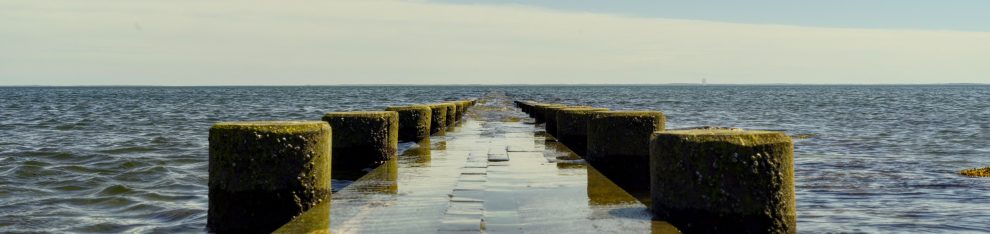
Back in the day, the area near the Burr Farms baseball field was a playground for an elementary school. In just 4 decades since it closed, nature has taken over. (Photo/Russell Sherman)

November 22, 1963

Today is Friday, November 22, 2024.

If you were alive on Friday, November 22, 1963 — and were over, say, 5 years old — you understand how dramatically, and traumatically, America shifted that day.

If you weren’t, there is no way you can comprehend it.

The murder of President Kennedy was a horrific, galvanizing moment in time. It happened 61 years ago today, but I remember it like it was yesterday.

JFKI was in 5th grade. Since September my friends and I had walked to and from school. We gathered on High Point Road, cut through the Staples High School athletic fields and parking lot, sauntered down North Avenue, walked across open farmland, and arrived at Burr Farms Elementary.

We were like the “Stand By Me” boys: talking about kid stuff, reveling in our independence, figuring out each other and the world, in a world that would soon mightily change.

Minutes before school ended that beautiful Friday, the teacher from next door burst into our room. “Kennedy got killed!” she yelled. A girl broke into spontaneous applause. Her father was a leading Republican in town.

Our teacher slapped her face.

Usually, our teacher wished us a happy weekend. That day the bell rang, and we just left. No one knew how to interpret her reaction. We’d never seen a teacher hit a student before.

Then again, we’d never heard of our president being murdered.

JFK NYT

As my friends and I gathered for our ritual walk home, we suddenly had Something Big to talk about. For the first time in our lives, we discussed news. We had no details, but already we sensed that the world we knew would never be the same.

That vague feeling was confirmed the moment we walked down the exit road, into the Staples parking lot. School had been out for an hour, but clots of students huddled around cars, listening to radios. Girls sobbed — boys, too. Their arms were wrapped around each other, literally clinging together for support. I’d never seen one teenager cry. Now there were dozens.

At home, I turned on the television. Black-and-white images mirrored the scene at Staples a few minutes earlier. Newscasters struggled to contain their emotions; men and women interviewed in the street could not.

The president was dead. Now it was true. I saw it on TV.

Walter Cronkite on CBS, announcing the death of President Kennedy.

My best friend, Glenn, slept over that night. The television was on constantly. The longer I watched, the more devastated I became.

John F. Kennedy was the first president I knew. My father had taken me to a campaign rally in Bridgeport 3 years earlier. I could not articulate it then, but I admired JFK’s energy, was inspired by his youthfulness, and vowed to grow up and (like him) make a difference.

Now he was dead.

Bill Mauldin captured the grief of a nation.

Bill Mauldin captured the grief of a nation.

Saturday was rainy and blustery. I watched more TV. Like most Americans, I was obsessed by this unfolding tragedy. Like them too I had no idea that the impact of that weekend would remain, seared in my brain and heart, 6 decades later.

Sunday was the first day I cried. The raw emotions of all the adults around — in the streets of Westport, and on the television screen — finally overwhelmed me. I cried for the dead president, my fallen hero; for his widow and children; for everyone else who looked so sad and vulnerable.

Then — right after noon — Jack Ruby killed Lee Harvey Oswald. Once again I sat transfixed by the TV. I was stunned, and scared.

Monday was a brilliant fall day. President Kennedy was laid to rest under a crisp, cloudless sky. The unforgettably moving ceremony was watched by virtually everyone in the world with access to a television.

To my everlasting regret, I did not see it live. Glenn said we could not sit inside on a day off from school. Rather than risk being called a nerd (or whatever word we used in 1963), I chose playing touch football at Staples over watching history. I was in 5th grade. What did I know?

The coffin, at Arlington National Cemetery.

The coffin, at Arlington National Cemetery.

The next day we went back to school. The Staples parking lot looked exactly as it had before that fateful Friday. Our teacher never said a word about slapping the girl who cheered President Kennedy’s assassination.

Thanksgiving arrived on schedule 2 days later. At our dinner — like every other table in America — the adults tried to steer the conversation away from the awful events that had consumed us for nearly a week.

Life Magazine coverIn the days and months to come — as the country slowly, painfully, pulled itself out of its collective, overwhelming grief — I devoured everything about President Kennedy I could find. I saved Life, Look, Saturday Evening Post. I ordered the Warren Commission report. Like so many others I still have it all, somewhere.

In the years that followed, my admiration for the young, slain president grew, then ebbed. But it never died. He remained my political hero: the first president I ever knew, cared about, was mesmerized by, and mourned.

When President Kennedy was killed, journalist Mary McGrory said, “We’ll never laugh again.” Daniel Patrick Moynihan — who worked for JFK — replied, “Mary, we will laugh again. But we will never be young again.”

Sixty-one years ago this morning, I was a young 5th grader without a care in the world.

Walking home that afternoon, I could never not care again.

Roundup: Selectmen, Mark Twain, Winslow Park …

=====================================================

Missed yesterday’s debate between the candidates for first and second selectmen?

No problem!

The event — sponsored by the Westport Weston Chamber of Commerce and Westport Library — is now online. Click below to view.

=====================================================

Domestic violence is real, and part of Westport life.

Next Monday (October 18, 7 p.m.), the Westport Domestic Violence Task Force, Westport Human Services Department and Westport Library will present an important webinar.

“When Stop Doesn’t Work: What is the Impact on our Children?” features Ann Rodwell-Lawton, associate director of the Domestic Violence Crisis Center. She and Liz Modugno — an alcohol and addiction counselor at Westport’s Aspire Counseling — will discuss the generational impact of trauma and family violence on children. Click here to register.

=======================================================

Westport native Bruce Michelson is now an English professor — and noted Mark Twain scholar — at the University of Illinois. He credits Burr Farms Elementary School 6th grade teacher June Jack with getting him interested in the famed author.

John Kelley — who sent along this interview with Michelson from the Mark Twain Circle of America newsletter — recalls a field trip to Twain’s Hartford home with that class. Michelson mentions the visit in the piece.

It took place more than 60 years ago. Who knows what youngster today will follow a career in the 2080s that started — perhaps today — in one of our elementary schools?

Bruce Michelson

=====================================================

Frank Sisson writes:

At Winslow Park. another dog owner told me he had seen a dead dog on the road just outside a North Compo entrance — one of several openings in the stone wall along the road. Why are those openings not gated to prevent such a tragedy? Dogs will be dogs, and one unauthorized squirrel chase in the wrong direction could spell disaster.

If the town can’t swing it, maybe a group of regular Winslow Park dog owners could get together with a plan to chip in and make this happen.

There are gates — though open on this part of the Winslow Park stone wall. (Nell Waters Bernegger)

=======================================================

Longtime Westporter June Fernie died recently. She was 94 years old.

A child of the Depression and World War II, she was the eldest daughter in a family of 7 children. She left her home in Guelph, Ontario, Canada at 17 for Toronto, where she worked as secretary at an advertising agency. Her life changed when John Fernie, a recently discharged RAF pilot and artist from Scotland, walked through the door looking for a job.

After a quick courtship they married and emigrated to the US in 1947, making their first home in a cold-water flat in Brooklyn.

A talented illustrator, John found work quickly at a prestigious Madison Avenue ad agency. Working together, the newlyweds earned success.

In 1950 they moved into their first real home in Westport. Their children Bruce, heather and Mitchell were born and raised there.

June and John enjoyed all that New York, Westport and London had to offer in the swinging ‘60s, socializing with creatives from the art and literary worlds as well as entertainers from movies and music.

June organized family skiing in Vermont every winter, and annual summer holidays in England and Europe. Supportive of John’s love of fast automobiles, she was an enthusiastic pit crew during frequent weekends at the racetrack.

In 1970 June and John moved their family to Vermont, before finally settling
in Kennebunkport, Maine in 1980.

June was a talented administrator who, in addition to managing her husband’s art business, worked for many years as an administrative assistant in Maine. Her years as a volunteer at the Kennebunkport Historical Society brought her a great deal of pleasure.

June is survived by her children Bruce (Katherine Walsh) of West Tisbury, Massachusetts and Heather Fernie McInnis (Craig) McInnis of Kennebunkport; daughter-in-law Barbara Borchardt of Cumberland, Maine; foster daughter Jill Deveraux of Oro Valley, Arizona; grandchildren
Alexander, Dana, Bowen, Avery, Mitchell and Trevor, and great-grandchildren Mae Fernie, Helena and Ollie.

June Fernie

======================================================

The Westport Library Book Sale earlier this month exceeded already high expectations. That’s due in part to over 200 volunteer who assisted with setup, the event itself and cleanup. Other volunteers work year long processing books, and helping at the Westport Book Shop.

Organizes give a special shoutout to organizations that supported the effort, including the Westport Young Woman’s League, Neighbors and Newcomers of Westport, Abilis, Westport Public Library staff, Staples Service League of Boys, Westport National Charity League, Builders Beyond Borders, and Staples High School National Honor Society.

All proceeds of the sale support the Westport Library, and the employment of adults with disabilities.

Staples Service League of Boys (SLOBs) at the Westport Library book sale.

=======================================================

Three attorneys at Westport’s FLB Law — Stephen Fogerty, Eric Bernheim and Joshua Auxier — have been named to the 2021 Connecticut Super Lawyers list. Brian Tims has been named to the publication’s Rising Stars roster.

Super Lawyers lists are generated by peer ratings.

======================================================

Today’s “Westport … Naturally” photo pays homage to our beloved fall ritual: Dogs are allowed back on Compo Beach.

This guy acts like he owns the place, all year long.

(Photo/Collette Winn)

======================================================

And finally … happy 63rd birthday to Marie Osmond!


Friday Flashback #251

Can you go back home again?

Staples High School Class of 1977 graduate Russ Gershon tried. Well, at least he visited his mother, and some of his old, ’70s-era stomping grounds.

Burr Farms Elementary School, the Westport Library, S&M Pizza, Remarkable Book Shop, Ye Olde Bridge Grille — all are now demolished, closed, relocated, or otherwise unrecognizable.

Burr Farms Elementary School then …(computer image by Steve Katz)

… and now.

Russ turned those memories into a clever, compelling video. Whether you remember the people (and making junior high jokes about “S&M Pizza”), or have absolutely no idea what Russ is talking about, you’ll love his film.

But the best part is his homage to a place that’s still around (and will be for the next 60 years too, god willing): Gold’s Deli.

Let’s just say, Russ’ takeaway is delicious.

Click here for the video.

Remembering Lou Dorsey

To generations of Westport students, Lou Dorsey was phys. ed.

The Saugatuck native, Staples High School graduate and longtime teacher died November 2, in Florida. He was 93 years old.

Dorsey was a member of Staples’ Class of 1943. He left school after the basketball season, to join the Navy. “It was more important to get in the war before it ended than to get my diploma,” he said in 2004.

Nine classmates (out of a graduation class of 100) also left school early, for the war. Dorsey received his diploma eventually, on leave, in a special ceremony with principal Douglas Young.

Dorsey served in the Pacific Theater, as a radioman third class. After his service he received his undergraduate degree at Arnold College (now the University of Bridgeport), and his master’s at Columbia University.

Lou Dorsey

He taught physical education for 33 years at Saugatuck and Burr Farms Elementary Schools, and Staples High School.

He was inspired to teach by his high school coaches, particularly Roland Wachob at Staples.

“Rollie would put me in charge of his 9th grade class when he’d go off on a baseball trip,” Dorsey said. “If you did that nowadays you’d get sued.”

Dorsey and his wife Pauline spent 60 summers in the western Maine mountains. They moved to Cocoa Beach, Florida 33 years ago, where Dorsey was an avid golfer.

He is survived by 4 children: Judith Dorsey and her husband Kenneth Gomberg; Kimberly Slimak and her husband Michael Slimak; Jiliane Dorsey and Louis Dorsey, Jr. and his youngest sister, Patricia Dorsey Wood, as well as 3 grandchildren and 3 great-grandchildren.

A memorial service will be held in Rangeley, Maine next summer. Click here to leave condolences.

Project Concern: 40 Years Later, Memories Live On

Eve Potts is a longtime Westporter. She’s been active in the arts, history, education and much more. Today, she shares a special encounter with “06880” readers.

Those of us who have been in Westport a long time remember vividly when there was a great deal of discussion (not all of it positive) about inviting a group of youngsters from Bridgeport to join classrooms in Westport. The program was known as Project Concern.

Over 40 years have passed since those first eager kids jumped off a bus from Bridgeport and were enrolled in Westport elementary schools. My 2 daughters were in the lower grades at Burr Farms. They were excited to welcome one of the girls, Anjetta Redmond, to stay at our house overnight each Tuesday so she could be part of the special early morning music rehearsals.

Eve Potts painted Anjetta Redmond’s portrait 40 years ago, when she was a guest in their home.

A couple of months ago — after all these years — we had a wonderful reunion with Anjetta Redmond Holloway and her close friend, Lisa Jones Mendenhall, who often joined Anjetta at our house overnight.

The conversation was lively. Besides getting reacquainted and sharing photos of kids, grandkids and husbands, we talked a bit about their Westport experience.

Both talked frankly — and enthusiastically — about what a great experience it had been for them. They were emphatic that coming to Westport, and learning about this other world, had impacted their lives.

We asked how they were treated back in Bridgeport after they enrolled here. They said there was teasing, and some pretty derisive comments from some of their friends.

Both women insisted that they honestly never felt any prejudice from their Westport schoolmates, even as talk of recalling the Westport Board of Education chair swirled and became reality here in Westport.

There was a lot of reminiscing — about funny happenings, and about Lisa’s brother Leonard who had been accepted into the program because an older sister had suggested it would be good for him. Leonard was a favorite at Burr Farms School for his incredible ability to walk on his hands and do other acrobatic feats.

The women mentioned the treats that were available in Westport, like Baskin- Robbins, that weren’t available in Bridgeport. Amy remembered how her Bridgeport friends brought Now & Laters — candy not available in Westport — to school to sell to kids here.

It was a wonderful morning: very loving, very happy, and very nostalgic.

Both Anjetta and Lisa have had very successful careers and marriages. Anjetta has had a long career at People’s Bank, and is a research representative. Lisa, who also worked for years at People’s Bank, is now employed by the Board of Education in Bridgeport. She is involved in discussions about the validity, balance and fairness of magnet school policies.

Here’s what Lisa posted on Facebook when she got home:

OK. So the year is 1971. There’s a program called Project Concern being introduced to inner city communities. Myself, along with my friends Anjetta Holloway and Wanda Thompson-Mosley, to name a few, were allowed the opportunity to attend.

We joined Brownies, then Girl Scouts. We played the flute and clarinets, mastered cartwheels and splits, and went to sleepaway camp. Arthur Treacher’s Fish and Chips was good eating (no Arthur Treacher’s in Bridgeport), and we were completely fascinated with Baskin-Robbins’ 31 flavors.

Fast forward. It’s 2019 and you receive a friend request from Amy Potts. Hmmm. Amy and Abby from Westport — could it be?  Yes, it was, and this morning after 40-plus years we met for breakfast with Amy, her mom, and her auntie.

What a great time we had reminiscing of how great life was way back then. Life is good. Always cherish each moment.

(For more “06880” stories on Project Concern, click here, here and here.)

Friday Flashback #142

The Westport Farmers Market opens next Thursday (May 23). The Imperial Avenue parking lot will be filled with vendors selling fresh fruits and vegetables, meats, honey, ice cream, even pet food.

Musicians will play. Food trucks will serve pizza and tacos. It’s a wonderful part of Westport — organic, sustainable, (mostly) healthy and fun.

We have Paul Newman (in part) to thank. Back in 2006, he and chef Michel Nischan created the first Westport Farmers Market, at the Westport Country Playhouse parking lot.

But that was not the actor/automobile racer/lemonade, popcorn and salad dressing king/philanthropist’s first farm stand experience.

For years, he was a customer at Rippe’s. Westporters pretended to be cool as cucumbers as they saw Newman — then “only” an actor — and his wife Joanne Woodward casually checking out ears of corn, or putting apples in a bag.

Rippe’s Farm Stand, in its early years. It later grew into a more substantial building. (Photo courtesy of Paul Ehrismann, via Mrs. George Rippe Collection)

Rippe’s was one of several farm stands in Westport. Produce came from orchards behind it — stretching eastward, from Turkey Hill North to behind Long Lots Junior High — and fields on North Avenue, behind Burr Farms Elementary School.

The North Avenue farm is gone (so is Burr Farms School). In its place is a private road — the strangely named Greystone Farm Lane. In a nod to the past, a few of the homes include silo-like architecture.

The Post Road orchards and stand are gone too. They’ve been replaced by what — at the time — were Westport’s first and only condos.

In another nod to the past, they’re called Harvest Commons.

The Little Red Gingerbread On Long Lots Road

It’s one of the most recognizable houses in Westport: the red “gingerbread” house at 55 Long Lots Road, just east of Hall-Brooke.

For the first time in 60 years, it’s on the market.

As befits a home built more than 150 years ago, it’s got a back story.

Plus a bit of mystery.

According to Tad Shull — a current co-owner and musician/writer in New York, who spent his childhood there — it was constructed as a caretaker’s cottage or gatehouse, elsewhere on Long Lots.

It was moved to its present site in the 1870s by William Burr, who inherited it from his father. Additions were built in the 1920s and ’60s. From the street, it still looks much like the original.

55 Long Lots Road. The entrance to Hall-Brooke is on the left.

It may (or may not) have served as a 1-room schoolhouse. But it has a definite connection to education: Burr Farms School opened in 1958 a few yards away. (It was demolished in the 1980s; all that remains are athletic fields.)

The most intriguing tale is this: Shull’s parents bought the house in 1957 from Elaine Barrie — the 4th (and last) wife of John Barrymore.

Shull had heard that the actor used the house as a “love nest.” It’s uncertain whether Barrymore lived there; Barrie bought it after he died in 1942.

Shull also heard rumors that Barrymore had an affair there with a married woman,  Blanche Oelrichs, who published poetry under the name Michael Strange. Shull found a book of her poems — with her handwritten annotations — on his mother’s bookshelf last fall.

More lore: Stevan Dohanos’ famous “Thanksgiving” painting may have used the red Long Lots house as its model/inspiration. (“06880” posted that possibility last year; click here, then scroll down for several comments confirming it.)

Stevan Dohanos’ “Thanksgiving” painting. Recognize this house?

And, Shull adds, he heard from Tony Slez — who once owned a gas station at the foot of Long Lots, where Westport Wash & Wax now stands — that his Polish relatives worked as onion pickers on the road.

Shull says that as a youngster he was teased for living “next door to a mental institution.”

But he calls his boyhood “a paradise. There were plenty of kids around. We had a pond with frogs. It was a great place.”

His family hopes that whoever buys the house will preserve it. And — even if only part of its history is true — the red gingerbread that everyone passes on Long Lots has quite a past.