
Early this morning, at Compo Beach (Photo/Ted Horowitz)
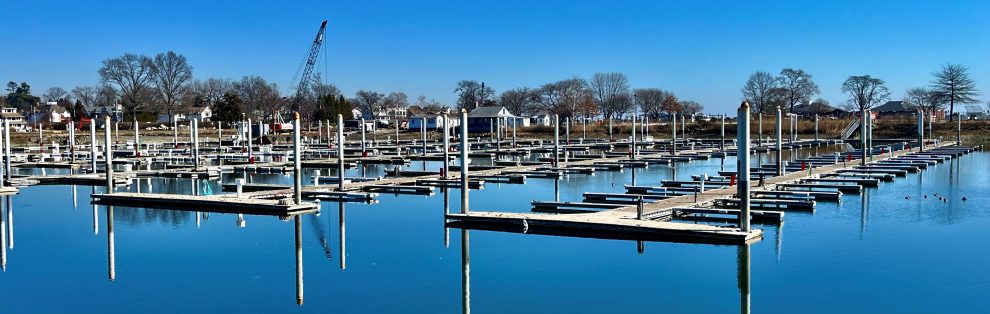
Early this morning, at Compo Beach (Photo/Ted Horowitz)
Everyone knows how to get to Carnegie Hall: practice, practice, practice.
But it doesn’t hurt to have a teacher like Joel Freedman.
The Hastings-on-Hudson, New York native — and, since 1992 a Westport resident — started playing the cello when he was 10. That’s 65 years ago.
“The cello is a way of life,” Freedman says. “It makes a beautiful tone. It’s the instrument closest to the human voice. And it informs all that we do.”
He studied with a student of Pablo Casals. He played in classical orchestras, and with jazz groups. He performed at — yes — Carnegie Hall.
Freedman went to New York University for filmmaking (where Martin Scorsese edited his first movie). But he also earned a scholarship to study music.
He’s still doing both. He’s a performing and recording artist. His film credits include work with Natalie Wood and Ned Beatty. Robert Redford narrated 2 of his movies about Native Americans; Joanne Woodward narrated one about indigenous Arctic culture.

Joel Freedman (Photo/Raymond Currytto)
Freedman first came to Westport in 1947, when his parents visited friends in “this beautiful little town.” When he moved here from New York 26 years ago, with his wife and daughter, he already had a storied career teaching — among others — Juilliard musicians.
In Westport, he expanded his student base. He’s worked with those as young as 11, and teenagers in local schools and orchestras (including Norwalk, Bridgeport and Stamford youth symphonies). Not long ago, one of his youngest students “fearlessly” entertained listeners at the Senior Center.
But he’s also taught an IBM executive, master plumber, hedge fund attorney and other full-grown, busy-with-other-lives adults.

Joel Freedman teaches students of all ages.
Whatever their age, Freedman’s mission is to get aspiring cellists to relax, feel good, get in “the zone” and not worry about anything else. Among the many endorsements on his website is this: “Joel is a Zen cello teacher.”
His style appeals, for example, to that IBM man, who decided in middle age that he wanted to play. He’s studied with Freedman for 13 years. He takes his cello on business trips — and in speeches, describes how music helps him focus.
When the hedge fund attorney arrives at Freedman’s Westport studio for lessons, “he forgets about work and meetings. He can relax,” Freedman says.
The plumber came to the cello when he was repairing a boiler. Hearing Freedman practice, he said, “I don’t know a thing about music. But I’d love to learn.” They bartered: the boiler for lessons. Now, Freedman says proudly, the plumber plays Bach suites and tarantellas. (He also started a rock group.)
Freedman says his oldest pupil is 75 years old.
Who is it?
“Me!” Freedman says joyfully. ” I’m always learning something from my students too.”

Any Westport resident or organization can rent the Ned Dimes Marina clubhouse for a party or function. The other day, the Westport Woman’s Club held a lobster bake there. (Photo/Gloria Smithson)
If you’re a Westporter in 2018, you don’t know what this is:

If you lived here in the mid- to late-1800s though, you’d recognize it easily.
It’s a sausage stuffer. The tin tube with interchangeable nozzle and wooden plunger made filling the animal-based casings much easier.
Industrialized tools for kitchen use became very popular in the 1850s onward. This early example was the most recent Westport Historical Society “mystery object.”
Part of the current “Westport in 100 Objects” exhibit, it changes every 2 weeks. If you stop in and identify it, you can win something from the gift shop.
The sausage stuffer stumped everyone. But a new mystery object is on view now at the WHS.
Comments Off on Mystery Object #8
Posted in Looking back, Organizations
If you see a monarch butterfly around town — at the Community Garden next to Long Lots Elementary School, Wakeman Town Farm or anyplace else — you’ll marvel at its beauty and grace.
You should also thank Alice Ely.

Alice Ely
The Westporter is a garden coach. She gardens “with you, not for you,” her website says. “Whether you are just beginning, want to take your skills to the next level, branch out or troubleshoot, I’m happy to help.”
She is a master gardener and a compost maven. But she holds a special place in her heart for monarchs.
Alice’s inspiration, design and transplanting skills helped create the butterfly garden at the Community Garden, across from the compost area.
That garden is now a registered monarch way station. Filled with milkweed and pollinator plants, it is flourishing.
Inspired Community Garden members help plant, water and maintain it.
Alice was also a driving force behind the habitat at WTF, and 2 others on Cross Highway. Beyond providing monarchs with homes, she helps ensure them a pathway of habitats on their migratory routes.
There’s a lot more to that than just planting milkweed and “letting nature do its thing,” Alice notes. It’s painstaking work — but it pays off in gorgeous, environmentally crucial ways.

A monarch butterfly, at the Westport Community Garden.
Monarch butterflies — and the rest of nature that they nurture — can’t thank Alice Ely.
But “06880” readers can. Which is why she is this week’s Unsung Hero.
(Do you know an Unsung Hero? Send nominations to: dwoog@optonline.net)
Posted in Environment, Organizations, Unsung Heroes
Tagged Alice Ely, monarch butterfly, Wakeman Town Farm, Westport Community Garden
In March, longtime and much beloved Staples High School choral teacher George Weigle turned 90 years old. Yesterday, he died peacefully.
In his long career, Mr. Weigle influenced thousands of students. Barbara Sherburne was one. On his 90th birthday, she offered this tribute. It’s reprinted here, in honor of one of Westport’s most beloved educators.
George grew up in Parkersburg, West Virginia. At West Virginia Wesleyan College he spotted a woman from Norwalk, Connecticut named Eleanor, singing in a talent show. He told a friend, “That’s the girl I’m going to marry.” It was love at first sight.
George graduated in 1950, 2 years before Eleanor. They married on August 21, 1954. After 63 years, their marriage is still going strong.
George studied for a year at Boston University after college. He taught school in West Virginia, then returned and earned his master’s in 1954 from BU. In 1980, West Virginia Wesleyan presented him with an honorary doctorate.
In 1954, George heard about an opening at Bedford Junior High. He got the job, and after 5 years moved on to Staples High School. He taught there until 1988. Eleanor taught at Bedford Elementary School from 1954 until 1961. Some years later, she began private tutoring.

George Weigle in a classic pose. (Photo courtesy of Ken Lahn)
George started the Orphenians in 1960. He named the group after his Orphenian quartet, led by his college music professor. Of course, Orpheus was a legendary Greek musician.
George continued the Candlelight Concert tradition, begun in 1940 by John Ohanian.
George and Eleanor bought a house on Robin Hill Road. They’ve lived there ever since. George told a fellow Westport music teacher — John Hanulik — about a vacant plot next door. The Hanuliks moved there in 1960, and John lived there until he died. Marie, his wife, still lives there. Having 2 incredible music teachers live next door to each other for so long is amazing.
I was a student at Long Lots Junior High, in a music class taught by Mr. Hanulik. One day, Mr. Weigle came to speak to us about Staples. He seemed very stern, and scared me. Mr. Hanulik had an incredible sense of humor. I thought, “Uh oh.” I needn’t have worried.

George Weigle took the Orphenians around the world — to Austria, Romania, Poland, Spain and many other countries. His first trip was to the Virgin Islands (above) in 1966. (Photo courtesy of Jon Gailmor)
When I was applying to colleges, Mr. Weigle suggested West Virginia Wesleyan. That’s where I went. He wrote me freshman year, “Don’t burn the candle at both ends.” I wound up getting mononucleosis. I guess he saw something coming that I didn’t.
George was also choral director at the United Methodist Church, for 43 years (1954 to 1997). I sang at the Saugatuck Congregational Church, just up the hill from the Methodist Church. George invited me to join his adult choir, when I was still in high school. I’d do both, running down the hill to get to the Methodist Church in time. I sang whenever I could under George’s direction. When my mom passed away in 1978, he was part of the quartet that sang at her service.
I’ve known George for a very long time. We communicated regularly all these years. He frequently sent me cassette tapes of Sunday services at the Methodist Church. He always sent a Christmas card, as did John Hanulik. They often arrived on the same day — and occasionally they chose the same card.
George was like a father figure to me. I have a hard time believing he is 90. You can send cards to him at 10 Robin Hill Road. I’m sure he would appreciate hearing from you. He touched so many lives in so many ways.
————————————————-
In 2004, I interviewed the retired choral director for my book Staples High School: 120 Years of A+ Education. Here are some excerpts:
In 1954 John Ohanian brought me in for an interview. He took me to meet [principal] Norm Flint about an opening at Bedford Junior High. No one told me the kids had driven 3 choral teachers away the previous year, so I took the job.
It was tough. Every morning Eleanor had to push me out the door. Every student had to take general music. My first 9th grade chorus had 50 girls. Gradually it got better. By my 3rd year we had boys singing in the chorus too.
I went to Staples the second year it was open. The only electives the kids were offered were art, music and home ec – not the zillions of courses they have today. John had established the choral program, and I was in the right place at the right time. It was a popular group, and I had the junior highs feeding me. Looking back, I didn’t realize how fortunate I was.

The Candlelight Concert is timeless. George Weigle directed these choir members in 1981 — as he did for 39 years.
We gave 4 Candlelight Concerts each year. I’d get called in between performances, and reamed out – maybe I didn’t interpret a piece of music as I should have. Looking back, I realize John was right.
He put me on a path, and guided me. I in turn demanded excellence from my students. I realize now that students understood what excellence was.
The program grew, and so did its reputation. The harder the music, the better they performed – and the more they wanted. I gave them stuff I didn’t think high school kids could do, like John Corigliano’s “L’Invitation au Voyage.” It’s an extended piece, very contemporary, a cappella with duos and solos. Paul McKibbins’ “Psalm 67,” which he wrote and dedicated to me and the Orphenians, was the second most difficult piece.
At the time I did not realize what we were doing, level-wise. Now I wonder how I taught it, and how they memorized it – extended stuff like Handel’s “Coronation Anthems.”
In 1960-61 I started a small group: Orphenians. We had auditions, and selected 24 to 28 singers. We met once a week after school at first, then twice a week. We did lose some of the guys to sports.

From its small beginning, George Weigle’s Orphenians grew enormously. In 2010, the elite group celebrated its 50th anniversary.
In 1966 we went to St. Croix, in the Virgin Islands, and in 1972 to France, Austria and Italy. We came in second in a choral festival in Italy. If I knew then what I know now, we would have been first. I didn’t recognize shadings of dynamics. From then on, I paid attention to it. We lost to a group from Oklahoma that met five days a week.
In 1975 we went to Romania. That was an adventure! A very poor country, with very friendly people. We had to be careful what we sang.
In 1978 we went to Poland. That was our first outdoor program. We sang the Polish national anthem. Afterward they told us that might have been too nationalistic.
In 1981 we went to Belgium, France, Germany, Holland and Switzerland. On July 4th we sang at Notre Dame – it was filled with Americans. They asked us to sing “The Star-Spangled Banner,” which we’d never prepared. It went off okay.
In 1983 we went to Spain. We sang concerts to packed halls at 10 p.m. – it was still light. And in 1985 we went to England, Wales and Scotland.

In 2010 — the 50th anniversary of Orphenians — George Weigle guest conducted the current elite group in the finale, “The Lord Bless You and Keep You.” (Photo/Lynn U. Miller)
Westport was growing, building schools, becoming more affluent. Parents wanted their kids to be in touch with the arts — not just academics. The quality of teachers was so high, because of who John hired – and fired. He made sure the right teachers were at the right levels. As a result kids attracted other kids, and it all just blossomed. Quality led to more quality. It was all because of John’s dream and perseverance.
I think students – particularly at the high school – need the arts, in order to be enhanced and broadened. Here in Westport we’ve got doctors and lawyers who have been exposed to the arts. Westport people perform, and they’re concertgoers, and they see plays. The arts are so important to a rounded personality. Singing and playing with other people is so important. You don’t always realize when you’re in high school how meaningful it is. Sometimes it takes decades to sink in. But it does. It does.
A lot of high schools have music. But not many have music at the level of Westport.
Everyone who ever sang for George Weigle remembers the experience. Jon Gailmor, who still writes, performs and teaches, offered these thoughts.
I was in the Class of 1966 at Staples. I was immersed in the performing arts, and they shaped my every waking moment in high school.

Jon Gailmor (Photo/Lynn U. Miller)
With the Orphenians, I got my first taste of the power of music. I’ll never forget watching the faces of school kids in the Virgin Islands as we wailed away. And I remember watching senior citizens in Norwalk and Bridgeport being moved both to tears and guffaws by our songs. In the Staples a cappella choir and boys’ glee club, I experienced the indescribable joy of making a large, harmonious sound and filling auditoriums with its beauty.
I loved a lot of things about Staples, but it was music where I really found out who I was and where my passion lay.
I know quite a few fellow high school performers whose lives have been similarly sparked by our unforgettable musical experiences at Staples.
Today I make and perform my own music, while helping other folks discover their creativity through songwriting residencies. I can honestly thank those three amazing years with George Weigle and my Staples brothers and sisters for the enormous role they played in helping me find my passionate life’s work.
Posted in Arts, People, Staples HS, Teenagers
Tagged Barbara Sherburne, George Weigle, Jon Gailmor, Staples High School Orphenians

Compo Beach solitude (Photo/Patricia McMahon)
You know that big wedding last weekend on Beachside Avenue?
The one that featured white tents on Harvey Weinstein’s property, for glampers — “glamour campers” — to shelter on Friday and Saturday night, roughing it with only wooden floors and queen beds?
The one where fireworks lit up the sky after the ceremony, and a ton of security (uniformed cops, plainclothes and more) patrolled the area?
Turns out it was pretty, um, glamorous.
Zach Lasry — son of billionaire hedge fund owner/Milwaukee Bucks co-owner/Beachside Avenue resident Marc Lasry — married Arianna Lyons. They work together in film production.
Among the guests: former President Bill Clinton, and former Senator/Secretary of State/presidential candidate Hillary Clinton.

President Bill Clinton at the Beachside Avenue wedding…

… and Hillary Clinton. (Photos courtesy of Instagram)
No word on whether they glamped, or decamped after the festivities to Chappaqua.
(Hat tip: WestportNow)
A private plane carrying 16 people — including the rap star Post Malone — blew 2 tires during takeoff this morning from Teterboro Airport in New Jersey, en route to London.
The pilot has been burning fuel for hours before attempting an emergency landing. The original plan was for Massachusetts; now it’s being diverted to Stewart International Airport in New York.
According to a screenshot sent by Bart Shuldman, the plane has been making loops around the tristate area — including many passes over Westport.

The flight is still in the air. Click here for the radar link.
By many measures (though not the weather), this has been a wonderful summer.
Parks and Recreation’s Compo Beach-calming plans minimized crowds, and maximized cleanliness. Innovations like the Mobi-Mat and reworking the entrance road drew raves.
A few more ideas are in the works. A walkway — similar to the one built last year between the pavilion and cannons — is set for South Beach. Bathrooms will replace port-o-potties nearby.
“Nearby” means close to the pickleball area. Constructed a few years ago, the courts have seen steadily increased use.

Compo Beach pickleball courts. Existing bathrooms are far in the background.
Recently, players put down their paddles, picked up pens, and protested Parks and Rec’s plans.
In letters to 1st Selectman Jim Marpe, Parks and Recreation Department director Jen Fava and Parks and Recreation Commission chair Charlie Haberstroh, the pickleballers cite several concerns:
One writer argues that moving the location “just 50 feet over would make a huge difference to the 100+ pickleball players in town (with more joining the sport every day!)”
Granted, this is a first world problem. Billions of citizens around the globe have no access to sanitation of any kind — let alone pickleball courts.
But it’s a reflection of the love Westporters have for Compo Beach that the location of new bathrooms creates such a you-know-what storm.

Click here to help support “06880” via credit card or PayPal. Any amount is welcome, appreciated — and tax-deductible! Reader contributions keep this blog going. (Alternate methods: Please send a check to “06880”: PO Box 744, Westport, CT 06881. Or use Venmo: @blog06880. Or Zelle: dwoog@optonline.net. Thanks!)