Category Archives: Looking back

Photo Challenge #336

You’d think a plaque honoring all of Westport’s veterans — “living or dead” — would be located in a prominent spot. Veterans Green, probably. The VFW, perhaps.

You’d also think that because it was dedicated in 1975, plenty of people would remember where it was.

You’d be wrong.

Wendy Crowther, Joyce Barnhart and Michael Calise were the only “06880” readers who knew where last week’s photo challenge can be found. (Click here to see.)

It’s not what our veterans deserve. The plaque is where Long Lots Road feeds into Post Road East, just west of Shearwater Coffee and One River Art (before that, Bertucci’s/Tanglewoods/Clam Box). A memorial flagpole once stood nearby. I can’t imagine many people ever see the plaque now.

Yet there’s a reason it’s there. For several decades, a Doughboy statue graced the median, between the restaurant and the hardware store across the way.

It was relocated 25 or 30 years ago to Veterans Green (though it was not called that then). It’s certainly a more appropriate — and accessible — spot.

Last week’s challenge was fitting: It was the day before Memorial Day. (And today is D-Day.)

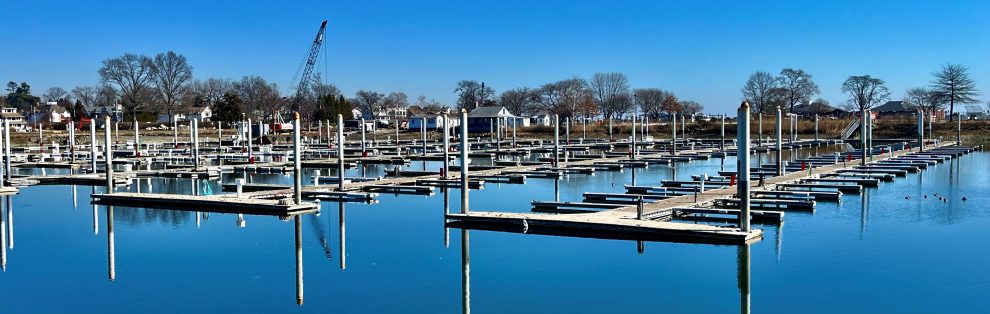
This week’s photo has no tie-in to anything — except it’s somewhere in Westport. If you think you know where it is, click “Comments” below.

(Photo/Dinkin Fotografix)

Sylvan Road House: From Gerber Baby To Historic Plaque

Alert — and preservation-minded — “06880” reader Bill Kutik writes:

Every house in Westport has a history. I’ve been lucky enough to learn about mine from a man who grew up in it — 91-year-old Peter Barlow.

It’s already somewhat famous as the “Gerber Baby” house off Sylvan Road North, though we never think of it that way. We already knew it was built in 1927 by an original New Yorker cover artist and cartoonist, Perry Barlow. Many of his colleagues settled in Westport in the 1920s and ’30s because they had to go into New York only once a week to show their work to the magazine’s art editor. Back then, many considered Westport too far to commute on a daily basis. Imagine that?

Perry Barlow (self-portrait).

Barlow’s wife, artist Dorothy Hope Smith, had a sideline to her book illustrating and advertising work: doing oil paintings of friends’ children. In 1928, Gerber held a contest to find a face for its new baby food. Dorothy sent a simple charcoal sketch of a neighbor’s baby, and offered to paint an oil.

The marketing execs loved the sketch, paid her $250 (in 1929 dollars), and starting in 1931 the Gerber Baby turned into the longest running advertising symbol in American history – 90 years and counting. Imagine, if instead, they had given her a small payment every time they used it?!

Dorothy Hope Smith’s “Gerber baby” sketch.

After buying the Barlow House in 1998, my then wife and I dithered over its 2 painting studios. The larger one is part of the house with a 2-story ceiling, a huge north-facing window made of 77 individual panes of glass, and a soaring brick fireplace. The other is a separate building with much the same (including a bathroom and kitchen), but a smaller north window with 25 panes.

We needed historical precedent: Which artist used which one?

I opened the Westport phonebook (remember those?), and found Peter listed. He cheerfully answered my question: “My mother used the studio in the house.”

It became my office, where I have been delighted to work at such a historic intersection of art and commerce. After 30 years in the software industry – as columnist, consultant and impresario – I am close to finishing my first book. It was written largely in Dorothy’s studio.

Bill Kutik, at work in Dorothy Hope Smith’s former studio. (Photo/Nancy Moon)

My wife Nancy Breakstone has made Perry’s former studio into her photography studio. She frames and displays incredible photos of abstract patterns she finds everywhere: in the volcanic sand of Costa Rica’s Pacific beaches, in coral and even in modernist buildings like the TWA Hotel at JFK. You may have seen them at one of the 50+ local art shows she exhibits in every year, or online.

Perry Barlow’s studio is now used by Nancy Breakstone Photography.

So the “artists’ studio” tradition of the Barlow House continues.

I lost touch with Peter when he left Westport after 70-plus years to move closer to his daughter Dorrie Barlow Thomas in Pawcatuck. But I thought of him when I contacted Bob Weingarten, house historian and plaque coordinator since 2003 for the Westport Historical Society (now the Westport Museum for History & Culture). He immediately did an incredible deep dive into historical research. and determined the Barlow House qualified.

Happily I saw Peter commenting on a blog in “06880.” I answered his comment with my email address, and began a voluminous correspondence. We found half a dozen things in common over the 20 years separating us, including boating and typography. That’s in addition to his childhood home, which we both love.

Peter has been a professional marine photographer his entire working life. He shot editorial and advertising pictures for leading magazines, including Yachting and Motor Boating, which also published his 1973 book The Marine Photography of Peter Barlow (still available). For 17 years, he created his own 2-page spread of photos and copy every month in Soundings.

Peter was involved in every step of the plaque approval process. When COVID restrictions eased and spring weather arrived, Dorrie drove them both 90 minutes to Westport. We spent a great few hours together touring the house and studio, hearing how everything used to be, having lunch outside, and hanging the plaque together.

(From left) Nancy Breakstone, Bill Kutik, Peter Barlow and Dorrie Barlow Thomas, with the newly hung plaque at the Sylvan Road North home.

But first we recreated what he most enjoyed as a teenager: driving at top speed the original and still-unpaved uphill driveway to the house. It sits on top of what I’ve been told is the second highest hill in Westport. Peter confirmed that 85 years ago, you could see Long Island Sound from his 2nd-floor bedroom. How can I start a deforestation program to my south? I drove us up the driveway at reckless teenage speeds. He roared with delight — and told me I should have gone faster.

Famed Art Colony Studio Up For Sale

Westport has been home to many famous residents. None was more famous than the Fraser family — well, that’s what James Earle Fraser’s 1953 obituary said, anyway.

He was a sculptor who designed the buffalo nickel, the “End of the Trail” sculpture of a Native American slumped over a tired horse, and the Theodore Roosevelt statue at the Museum of Natural History.

Two of James Earle Fraser’s designs.

His wife Laura Gardin Fraser was also an internationally known sculptor. She designed the Congressional Medal of Honor, featuring Charles Lindbergh’s likeness.

The couple knew everyone who was anyone, local historian Mary Gai says. Among the guests who visited were the wives of Theodore Roosevelt and Franklin Roosevelt, Edsel Ford, Harvey Firestone, Averell Harriman, and George Patton’s family.

The Frasers married in 1913, and moved to Westport the next year. They built a large studio off North Avenue, north of Coleytown Road, where they worked for decades.

The Frasers’ home and former studio, today.

They bought surrounding property to keep their neighborhood quiet. They then sold some land to other sculptors and painters — including former student Lila Wheelock Howard and her illustrator husband Oscar, and Kerr Eby, whose etchings are still sold today.

The Frasers’ foresight — and hospitality — helped make Westport a true 20th-century “artists’ colony.”

James Earle Fraser, at work on a bust of Theodore Roosevelt in his Westport studio.

The Frasers did not just sit home and create art, of course. They helped found the Fairfield County Hunt Club, Westport Beach Club (now Longshore), and Shorehaven Country Club.

But the studio was the center of their lives. It featured stone walls, large doors and windows, and a dark slate roof. Legend has it that the Frasers had bought a villa in Italy, had it disassembled and brought to Westport — along with Italian masons — where it was rebuilt, stone by stone.

Sculptures created inside — including some of the most famous works — were rolled out through 2-story swinging doors.

The original studio, today.

The Frasers’ studio was later bought by Ralph and Betty Alswang. He was a noted theater designer — and, decades after the Frasers, another key contributor to Westport’s artistic life.

The studio — at what is now 2 Fraser Lane — is on the market. Enlarged over the years to 5,650 square feet (and 5 bedrooms), it’s been renovated inside. But the exterior looks much as it must have a century ago.

Several homes with long artistic histories have recently met the wrecking ball. Will this be preserved — or, like James Earle Fraser’s buffalo nickel, become just a faded artifact of an earlier time?

Mediterranean influences are strong on the Frasers’ former house.

Nick Rossi’s Memorial Day Speech: Grandson Honors Grandfather

There is more than a parade to Westport’s Memorial Day celebration.

Every year after the last firefighter, float and Brownie has passed Town Hall, a simple ceremony takes place across the way at Veteran’s Green.

The first selectman honors Westport veterans who died the previous year. There’s a police honor guard and wreath-laying. “Taps” is played.

The grand marshal speaks too. This year, 98-year-old World War II veteran Nick Rossi asked his grandson — also named Nick Rossi — to deliver those remarks.

It was an inspired choice. Nick Jr. — who graduated from Staples High School in 2020, and just completed his freshman year at Boston College — awed the crowd with insightful, inspiring words. Speaking powerfully and from the heart, he said:

Good morning, Westport!

My name is Nick Rossi, and I am the grandson of the grand marshal. It is my honor and privilege to share the stage today with my grandfather, Nicholas Rossi, as we celebrate him and all the veterans we remember today, on this very special Memorial Day holiday.

As most of you know, traditionally the grand marshal is called upon to share some remarks at this ceremony. My grandfather asked me to help him do so this morning, as it is a challenge for him (at almost 99 years of age) to manage this kind of public speaking engagement. So, with Mr. Vornkahl’s blessing, I’d like to share with you a few things I know about Nick Rossi, Senior.

Nick Rossi delivers remarks as his grandfather — the grand marshal — looks on. (Photo/Dan Woog)

Nicholas Rossi was born in Oyster Bay, New York in September of 1922.
Soon after graduation from high school, he enlisted in the Army Air Corps during World War II and served from December, 1942 through March, 1945. When he enlisted, he was 19 years old ~ the same age that I am right now. It is unimaginable to me what it must have felt like to go off to war as a young man who had barely begun to live his life. It was a selfless sacrifice, not even a choice at that point in time, but an expectation that that generation of young men would enlist and serve our country.

While his parents, who were immigrants from Italy, were filled with anxiety and reluctance, they let him go. Initially drafted into the Infantry, he found his way to the Air Corps. Thinking this was a “safer,” perhaps more elite assignment, he soon learned that there was nothing safe about fighting the war from the skies.
His flight crew was part of the 305th Bombardment Group of the 364th Squadron, assigned to the 8th Air Force Bomber Command in England which flew the B-17 “Flying Fortress” bomber in the European Theater. A technical sergeant, he flew multiple bombing missions over Nazi-occupied central Europe. He sat behind the pilot and co-pilot, handling fuel and mechanical issues, and trouble-shooting any technical problems. He became an expert on the B-17 aircraft.

Technical sergeant Nicholas Rossi.

As my grandfather has gotten older, his memory at times fails him. Yet he can still  recount for us in amazing detail what it was like to be part of those terrifying missions, to be shot at relentlessly by the Germans, to watch his comrades fall from the sky under firestorm attack, and then to return from a mission to find that the airman who slept in the bunk above him never returned.

He talks about the attitude that eventually overtook these men — they were resigned to believe that there was a good probability that they, too, would eventually not make it back from the next mission…but they still climbed into their planes for the next flight, ready to go to battle to defend our country.

These recollections are unfathomable to me, and to this day remain disturbing to him. He reminds us how awful war is, and what the price for peace really costs in terms of soldiers’ lives lost. It is on a day like today when we remember, with enormous gratitude, what these men (and women), and all the fallen veterans of war, did to guarantee our freedom, liberty, and democracy. 

How do we even begin to thank them for their sacrifices? 

Nicholas Rossi was discharged from the Army in March, 1945 but remained in Liege, Belgium after the war for several more years. As a civilian, he was employed by the government to work with the American Graves Registration Command for the purpose of locating and identifying unrecovered dead military personnel. “It was not a nice job,” but for my grandfather, it was important work to do, to stay behind and help account for the lost soldiers, as it provided closure for their families, many of whom eventually traveled to Europe to reclaim their sons, husbands, and brothers. Perhaps it provided some closure for him, too, after living through the horrors of World War II. 

When we think about why Memorial Day was established in the first place back in the late 1800s, for the purpose of decorating the graves of the soldiers who died in defense of our country, it seems there is some kind of connection when I think of my grandfather working over the graves of his comrades – it was an emotionally devastating job, but it was his way of honoring them, of giving them dignity and respect, as these servicemen were the true heroes. We remember and honor them today. 

Grand marshal Nick Rossi (Photo/Ted Horowitz)

Upon returning to the States in 1949, my grandfather attended Hofstra University on the GI Bill, earned a master’s degree in Industrial Engineering, and embarked on a career in the furniture industry which he pursued with great success for the next forty-plus years. He met his wife Elizabeth on Long Island during the early years of his professional career and married in 1956, raising five children in the house that he built in Mill Neck, New York. He remained very involved in his community on Long Island, as a member of the Knights of Columbus, the American Legion, the Oyster Bay Italian-American Citizens Club, and the Brookville Country Club.

After my grandmother passed in 2018, my grandfather relocated to Westport to live with our family. While he still considers Oyster Bay his first home, he has truly enjoyed becoming a part of the Westport community. I have been lucky enough to spend more time with him, especially since the beginning of the pandemic, and I believe it’s nothing short of special that three generations of the Rossi lineage are under one roof. After many hours spent working out in the yard gardening or reading the newspapers together, I have picked up on some colorful Italian sayings — and insults — that I’ve brought back with me to campus, as my friends can attest. 

Now in his 99th year, he is delighted to be this year’s grand marshal of the Westport Memorial Day parade, and on his behalf — I would like to extend his genuine gratitude to everyone in this town who has welcomed him, embraced him, and now today — honors him.

The Rossi family stands proudly at today’s Memorial Day ceremony. (Photo/Dan Woog)

In closing, I will echo a prayer that we say in our church, something called the “Prayer of the Faithful”: “For all the men and women who served in the armed forces, for those who put themselves in harm’s way on our behalf, let us pray to the Lord.”

On behalf of this year’s grand marshal, my grandfather ~ Nicholas Rossi ~ Thank you for this honor! And thank you to all the brave men and women who have made the ultimate sacrifice for our country.

Grand marshal/grandfather Nick Rossi, and his grandson and namesake. (Photo/Dan Woog)
Family Sacrifices: Making Meaning Of Memorial Day

As Westport prepares to celebrate Memorial Day, it’s important to personalize all those who gave their lives for our country. Over 75 years ago, 2 local families did far more than their share.

It may be an American record.

During World War II, 8 of the 12 Cuseo sons left Westport, to enlist in the armed forces.

Fortunately, only one — James — was killed.

The Cuseo family in 1935 or ’36. Daughter Mildred is missing.  Father James and mother Lucy are in the middle.. (Photo courtesy of Woody Klein’s book “Westport, Connecticut.”)

But when the Cuseos’ mother, Lucy, died in 1943, her daughter said it was due to her “broken heart.”

Lucy was buried here with military honors. American Legion members served as pallbearers.

The Cuseos’ contributions to World War II were astonishing. But in terms of sacrifice, none made more than the Wassell family.

Four sons enlisted. All were pilots. Three were killed in action — all within 15 months of each other.

Charles P. “Pete” Wassell

Before the war, Harry — the oldest — helped design fighter planes in Stratford. He, his brother Bud and other Westport men started the Westport Defense Unit, to teach marksmanship.

He enlisted in the Army Air Force after Pearl Harbor. A 2nd lieutenant, he died in Iceland in 1943 while ferrying aircraft to the European Theater.

Frank L. “Bud” Wassell Jr.

Like Harry, Bud left college because of the Depression. The 2 sons worked with their father, Lloyd, in starting the Wassell Organization on Sylvan Road. A very successful businessman, he had worked as personal assistant to George Westinghouse, founder of Westinghouse Electric.

The company invented and sold production control equipment, becoming instrumental in expediting the efficiency of defense contractors. A 1st lieutenant flight commander, Bud was killed in 1943 in a midair collision, while a flight instructor in Florida.

Harry B. Wassell

Pete — a 1940 Staples High School graduate — left Middlebury College to train as a pilot in the Civil Air Patrol. He transferred to the Army Air Force, and was commissioned a 2nd lieutenant navigator.

He served in the China/ Burma/India Theater, and died in 1944 after his B-24 aircraft was hit by antiaircraft fire while attacking a Japanese cruiser.

The 4th son — George — was a member of Staples’ Class of 1943. But he left high school in 1942, to enlist as an aviation cadet. Appointed a B-17 aircraft commander at the age of 18, he was recalled from overseas duty when his 3rd brother Pete was killed. He served as a B-17 pilot instructor through the war’s end.

George Wassell with his parents, Lloyd and Georgene, by the Westport train station on Railroad Place in 1943 or ’44.

George turned down a full engineering scholarship to Cornell in order to join his father in the Wassell Organization.

Pete left behind a child, born 2 months after his death. Harry had a daughter, Patty, who lived in Westport for many years. George married Betsy Schuyler in 1945. They raised 6 children in Westport.

George and Betsy Wassell at Longshore, not long after the war.

When Lloyd moved his family to Westport before the war, he and his wife Georgene bought several acres of land on Mayflower Parkway. He built a large house (by 1930s standards), and planned to give building lots to his 6 kids: the 4 boys, and daughters Pat and Betty.

World War II sabotaged all that. But George and Pat did build homes there after the war. George added a pool, 3-hole golf course and tree house. The property became a great attraction for lots of cousins, and tons of neighborhood kids.

Longtime Westporter Jono Walker — George’s nephew — remembers those times fondly.

“The Wassells never dwelled on their tragic history,” he says. “At least none of us kids ever felt it. The house was constantly filled with great joy and life.”

As for George and Betsy: They moved to New Hampshire in 1974. He died in 2010, age 85. Betsy Schuyler Wassell is now 95, healthy and sharp and living in Maine. She looks forward to hosting her annual Wassell reunion in Kennebunkport next month, greeting offspring from as far as the Netherlands.

Pat Wassell McAleenan lost her husband Peter 18 months ago. At last report she was well, and at 95 living in Estes Park, Colorado.

Betty Wassell Watts died just over a year ago, at 100. Her children were by her side.

The Wassell brothers and their parents are all buried at Willowbrook Cemetery.

(Hat tips: Eric Buchroeder, Jono Walker and Bud Wassell)

Roundup: Christian Siriano, Hall & Oates, Joan Isaacson …

====================================================

“Antiques Roadshow” took its show on the road recently — to Westport.

The popular PBS series visited Christian Siriano in his New York showroom, then traveled to his Westport home.

His couch, chairs and brass palm tree were appraised by David Rago, and Siriano talked about his quiet suburban digs. He called his home his “sanctuary.”

Click here for the full episode. (Hat tip: Seth VanBeever)

David Rago and Christian Soriano, in the designer’s Westport home.

======================================================

Les Dinkin sent along this image (below) of Hall & Oates’ 2021 tour dates.

“Don’t see Westport on the list :)” he says.

Don’t get the joke? Click here.

======================================================

Longtime Westporter Joan Isaacson is a wife, mother, grandmother, world traveler and passionate cook. She was born in Naples, Italy, and migrated to New Jersey when she was 8 years old.

She rediscovered her love of writing after retirement. Now she’s a published — and debut — author.

“The Red Velvet Diary” is fiction — based on real life — told in the voices of 3 women. Her grandmother Maria, the daughter of a rabbi, goes to Greece as a young girl and is given a new identity. She takes the reader from her childhood home in Turkey to a girls’ school run by nuns in Athens, where a priest twice her age asks for her hand in marriage.

Isaacson’s mother Lula, Maria’s daughter, comes of age as she lives through World War II in war-ravaged Athens during the Axis occupation. She falls in love with an Italian sailor who is occupying her city. Her journey takes her to Italy and eventually to America, where the author’s story begins.

She studied at Rutgers University, married her high school sweetheart, and together they raised 3 daughters. Isaacson was a stay-at-home mom for several years. When she returned to the workforce she started and managed an international relocation company. She also served on boards for local charities, and remains an avid volunteer.

Isaacson hopes to finish her next book by the end of the year. Click here for a video interview with her, about her first one. Click here for more information, and to purchase “The Red Velvet Diary.”

=====================================================

This week’s “Friday Flowers” arrangement graces the Westport Library. Each week, the Westport Garden Club decorates another public space.

=======================================================

Speaking of the Library:

They’re holding a book sale Memorial Day weekend: Friday, May 28 (9 a.m. to 6 p.m.); Saturday, May 29 (9 a.m. to 5 p.m.), and Sunday, May 30 (noon to 5 p.m. — half-price day).

There are thousands of gently used books in dozens of categories: non-fiction and fiction, for adults and children, as well as antiquarian books, CDs, audio books and DVDs. (Vinyl is available at the Westport Book Shop, across Jesup Green.) Click here for more information.

=======================================================

And finally … today in 1934, bank robbers Bonnie and Clyde were ambushed by police and killed in Bienville Parish, Louisiana.


Remembering John Kemish

Former First Selectman John J. Kemish died April 25 in Boca Raton, Florida. He was 93.

Kemish served three 2-year terms as Westport’s chief executive, from 1967 to 1973. Prior to his election, beginning in 1958 he was the town’s first professional controller (now “finance director”). He improved Westport’s credit rating from A to AAA by establishing the town’s first Capital and Non-Recurring Expenditure fund. As controller he also played a pivotal role in the purchase of Longshore Country Club, under First Selectman Herb Baldwin.

John Kemish

Kemish earned a bachelor’s degree from Hillyer College (now called the University of Hartford), and a master’s degree in public administration and municipal finance from the University of Connecticut.

Woody Klein, in his book Westport Connecticut, The Story of a New England Town’s Rise to Prominence, called Kemish “a personable and highly competent public servant.”

At the time of his election, Westport “was about to face one of the most defining moments in the Town’s history.” United Illuminating Company, a statewide utility, had just announced its intent to build a 14-story nuclear power plant on Cockenoe Island, less than one mile offshore from Westport’s Compo Beach…. Kemish would soon become one of the key figures in the Cockenoe campaign.”

UI’s announcement galvanized the town, and sparked a “Save Cockenoe Now” campaign spearheaded by Jo Fox Brosious, editor of the Westport News.

The First Selectman’s Committee began a year-and-a-half environmental battle, with national coverage. The solution involved the purchase of the Island by the Town. MrKemish engineered the financing that made the purchase possible, and recouped 75% of the money from the federal government. Westport now owns Cockenoe Island in perpetuity.

Cockenoe Island. Thanks in part to John Kemish, it remains pristine.

MrKemish also spearheaded construction of the first solid waste transfer station (the current site of the Levitt Pavilion), effectively ending sanitary land filling of garbage in Westport. This was a landmark for Connecticut, and culminated in the formation of the State Resource Recovery Authority.

Among other important contributions to the quality of life in Westport, Kemish created Westport’s Beautification Committee. Chair Claire Ford and her organization gained the support of the Planning & Zoning Commission.  Significant changes included plantings and the restriction of signage along the Post Road.

Kemish was also responsible for the acquisition of the 38-acre Wakeman Farm, acquisition of the Nike Site on Bayberry lane, and a similar one on North Avenue (providing additional land adjacent to the Staples High School property, now the location of Bedford Middle School).

Bedford Middle School, on the site of a former Nike Missile Site.

During his years as first selectman, Kemish succeeded New York Mayor John Lindsay as president of the Metropolitan Regional Council, which was instrumental in improving services of the Metro-North railroad.

In addition, Kemish worked with Union Carbide and American Can Company on expansion of their municipal resource recovery and solid waste processing systems. In retirement he traveled extensively with his wife Gloria, and enjoyed family time in his homes in Connecticut and Florida.

He is survived by his wife Gloria Kemish, her family, and sons James and Steven.

Marpe Notes Death Of Former 1st Selectman John Kemish

First Selectman Jim Marpe says:

It was with deep sadness that I learned of the passing of former Westport 1st Selectman John Kemish on April 25, at the age of 93. John served three 2-year terms as Westport’s 1st Selectman from 1967 to 1973.

Prior to his election, John served as the town’s first professional controller (now the finance director), where he improved the town’s credit rating from A to Aaa. As controller, he played a pivotal role in the purchase of Longshore Country Club for the town under then-1st Selectman Herb Baldwin.

As 1st Selectman, John played a major role in the town’s campaign to save Cockenoe Island from United Illuminating Company’s plans to erect a nuclear power plant at that offshore site. Under John’s leadership, the agreement to sell Cockenoe Island to the town and eliminate the plans for the power plant proved successful. The town owes John a debt of gratitude, along with many others involved in that environmental fight to save the natural beauty and landscape of that island over 50 years ago,

First Selectman John Kemish (tie) is flanked by veterans at the Memorial Day parade.

According to Woody Klein in his book, Westport Connecticut: The Story of a New England Town’s Rise to Prominence, John is credited with the “acquisition of the Wakeman Farm as open space; he led the town’s effort to acquire the Nike Site on Bayberry Lane for the Westport-Weston Health District and Rolnick Observatory; he was responsible for the acquisition of the North Avenue Nike Site, providing additional land adjacent to the Staples High School property, (which became Bedford Middle School); he established the first major town beautification program by creating the Beautification Committee; and he played a role in the creation of the Transit District and the subsequent introduction of the Minnybus.” He also played an important role in the development of the original Levitt Pavilion.

Those accomplishments notwithstanding, I understand that John was a dedicated public servant who placed the issues and concerns expressed by many Westporters first. I know that generations of Westporters have and will continue to benefit from his due diligence, calm demeanor and leadership capabilities.

On behalf of the Town of Westport, I want to express my sincere condolences to his wife Gloria,  his sons James and Steven, and his entire family.

1st Selectman John Kemish (far right) with Westport YMCA director Matt Johnson (standing) and (seated from left) YMCA president George Dammon, and CBS News anchor (and Weston resident) Douglas Edwards.

Remembering Dave Reynolds

Dave Reynolds died on Saturday in Fairfield, after a long battle with cancer. He was 80 years old.

To generations of Westporters, he was the welcoming owner of Ye Olde Bridge Grille. Located on Post Road West, next door to National Hall (at that point, the Fairfield Furniture store), it was the “Cheers” of its day (though smaller and less well lit). Today it’s an interior design shop.

The Bridge Grille, around 1980. Fairfield Furniture Store is at right; today it’s been restored to its original look, as National Hall.

Bars like “the Bridge” — with a jukebox, bowling game, wooden tables, plenty of beer, and a mostly-but-not-entirely young crowd of regulars — no longer exist in Westport. In the 1970s and ’80s, it was legendary.

Dave — an excellent golfer — became a soccer fan thanks to several of his bartenders. He sponsored a Westport Under-23 team that was as legendary as the bar that sponsored it. His Bridge teams won numerous state championships, with a roster that included some of Staples’ best players ever, and top stars from around the tri-state area.

Dave Reynolds, at the bar.

A Brooklyn native, Dave played varsity basketball at Boston College. After graduating in 1963, he worked on Wall Street. Owning the Bridge Grille was his second career.

Dave was a devout parishioner of St. Thomas Aquinas Church in Fairfield. He was also active in the Knights of Columbus.

Dave is survived by his sister, Mary Anne Reynolds; 2 sisters-in-law, and several nieces, nephews, great-nieces and great-nephews. He was predeceased by his brothers Arthur, Frank, Robert and Paul.

A funeral service will be held Tuesday (April 27, 11 a.m.) at St. Thomas Aquinas Church, 1719 Post Road, Fairfield, with burial to follow in St. Thomas Cemetery, Fairfield. In lieu of flowers, memorial contributions may be made to the Knights of Columbus.

Dave Reynolds


Photo Challenge #328

Last week’s Photo Challenge showed a close-up of a bit of the Compo Beach playground. It was kind of obvious, even though I cropped Patricia McMahon’s image as closely as I could. (Click here to see.)

But leave it to Rick Benson — who has forgotten more about Westport than I’ve ever known — to provide the back story:

This is a wheel from the original playground, taken down in April 1989 to make room for the first Robert Leathers Community Built playground.

When that wore out and the current one was built, this was relocated again to the “new playground.”

The “original playground” Rick refers to was actually just a monkey bar, swing set and whirligig adjacent to the basketball courts.

The plan for the first Leathers playground created an enormous controversy.

Playground opponents — no, that’s not an oxymoron — feared a ruined beach vista. They worried the swings and ladders would be a magnet for out-of-towners, or taken over by beer-drinking, pot-smoking, sex-having teenagers.

The playground controversy brought the first — and only — death threat of 1st selectwoman Marty Hauhuth’s tenure.

Anti-playground activists obtained a court injunction. (They were not playing around.)

As soon as it was lifted, construction began. It was a magical weekend.

The playground quickly became one of Westport’s prime attractions. It did not ruin the view; it enhanced it. And the only problem now is that on beautiful days, too many people use it.

Congratulations to (besides Rick) Rich Stein, Totney Benson, Andrew Colabella, Evan Stein, John Richers and James Weisz.

All knew where to find last week’s Photo Challenge. Even if they didn’t all know as much about it as Rick does.

How about this week’s puzzle? If you know where in Westport you’d see this, click “Comments” below.

(Photo/Gene Borio)