
Jesup Green sculptures (Photo/Pam Docters)
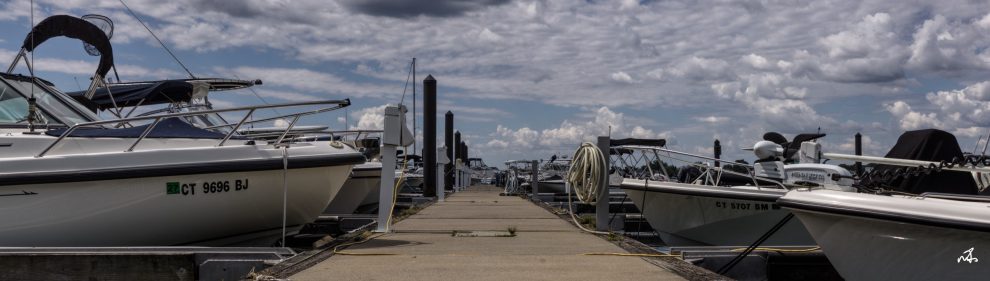
Jesup Green sculptures (Photo/Pam Docters)
A reader near Clinton Avenue has safety concerns. He writes:
“Drivers routinely exceed the speed limit, with the 2 existing speed humps proving far too low to serve as an effective deterrent. Motorists fail to stop at the stop sign further down the street.
“There are no sidewalks, forcing children, walkers, cyclists and pet owners to share the road with speeding traffic. Clinton Avenue’s proximity to Exit 21 off the Merritt Parkway makes it a commuter cut-through, compounding the problem
“The other day, a school bus stopped to pick up children during morning rush hour. Kids were crossing the street to board, but drivers still tried to squeeze around the bus. The only thing between those children and a tragedy was luck.
“We are asking the town to demolish and rebuild the existing speed humps to a greater height, introduce additional traffic calming measures, and increase enforcement on Clinton Avenue, at no cost to taxpayers. The response is clear: Residents want action.” Click here for the Change.org petition.

Clinton Avenue speed hump. A resident calls the height ineffective.
==================================================
Staples High School National English Honor Society members always look for ways to help promote literacy.
Four of them — Avni Krishna, Mika Smith, Soleil Dennebaum and Charlotte Brookbanks — have found a creative way to do that.
And much more.
Since the start of the year, they raised $400 for a Little Free Library.
They built it, painted it, and solicited book donations. Recently, they installed it at 122 Wilton Road, Homes with Hope’s 19-unit apartment building.
They’ll continue to stock it.
And residents will have easy access to books, all without leaving their lobby.

122 Wilton Road Little Free Library.
==================================================
Speaking of Staples: The robotics team is raising money for their trip to the national tournament, in West Virginia.
A GoFundMe page has already brought in over $1,600. Now Riko’s Pizza is helping too.
All day long, on May 6 and 13, they’ll donate 20% of all pre-tax dine-in sales to the team. Be sure to mention the promotion when ordering!

Staples robotics team. Buy pizza, and help them get to West Virginia!
==================================================
Over 150 people enjoyed great dinners and a powerful show, at last night’s “Supper & Soul.”
Vanessa Collier — who played the second-ever “S&S” event in 2018 — returned as the headliner. The Westport Weston Chamber of Commerce-sponsored “Supper & Soul” includes a pre-concert meal, a high-energy performance at the Westport Library, and drinks afterward.
The next show, featuring the Grateful Dead tribute act Spadastics, is set for November.

Last night’s Vanessa Collier show, on the Library stage and big screen. (Photo/DinkinESH Fotografix)
==================================================
Speaking of the Library: The Read to Grow Bookmobile will be in the back lot on Thursday (May 7, 3 to 5 p.m., back lot).
Families can hop in, and let their children choose a book to take home and keep.
Read to Grow is a non-profit, Their mission is to “support families as their babies’ first teachers.” The goal is for every child in Connecticut to have books of their own — from birth on.

=================================================
Just hours after she was born 9 weeks early, in June of 2022, Shea Greenfield’s heart stopped beating.
Doctors saved her life. But she was diagnosed with Long QT Syndrome. Her heart’s electrical system takes longer than usual to recharge between beats. She is at risk of fainting, seizures, cardiac arrest and sudden death.
There is no cure for the condition. And Shea’s condition is one of the most severe her doctors have ever seen.
Shea’s parents, Mark and Kira, had moved to Westport a year earlier. In addition to educating themselves about LQTS, they began helping the Mayo Clinic, where Dr. Michael Ackerman’s team does cutting-edge research.
In 2023, the Greenfields organized a fundraiser. Since then, they’ve raised over $1.7 million.
The 4th annual Shake It For Shea gala is May 14 (7:30 p.m., The Knowlton, Bridgeport). There’s live entertainment, delicious food and drinks, a night of dancing, and much more.
Click here for tickets, donations, sponsorships and more information.

==================================================
“06880” is “Where Westport meets the world.” And Chocolatieree is where Westport meets “The Devil Wears Prada 2.”
The downtown chocolate-and-more shop has just cooked up The Runway Edit. The limited collection of hand-painted chocolate bags comes straight from Miranda Priestly’s desk.
The first one featured — “The Miranda. That’s All” — comes in deep red, with black pyramid hardware and a gold Prada plaque. Every detail is rendered by hand in, chocolate.
Owner Laureen Hayes says, “It’s the kind of thing Miranda would leave on your desk, without explanation.”
The Runway Edit is available at Chocolatieree (66 Church Lane). Reservations are required: 203-939-7339.

“The Miranda,” at Chocolatieree.
=================================================
We’ve mentioned Westporter Nile Rodgers’ recent inclusion in the New York Times’ list of 30 Greatest Living Among Songwriters.
But he’s not the only artist with local ties.
Valerie Simpson and husband Nick Ashford co-wrote “Ain’t No Mountain High Enough,” “Reach Out and Touch (Somebody’s Hand)” and “I’m Every Woman,” among many others.
The couple lived for many years on Cross Highway. They were frequently seen around town.
And their 4th of July parties — with some of the Biggest Names in Entertainment — were legendary.
At least, that’s what I’ve heard.
Click here for the New York Times story. J(Hat tip: Jack Krayson)

Valerie Simpson
==================================================
May is AAPI Heritage Month. To celebrate, the Westport Library hosts Scott Kurashige.
On Tuesday (May 5, 7 p.m.), the historian discusses his new book, American Peril: The Violent History of Anti-Asian Racism with Jason O Chang, director of the Asian and Asian American Studies Institute at the University of Connecticut.
The event is co-sponsored by AAPI Westport. Click here for more information.

==================================================
Speaking of the Library: On May 19 (7 p.m.), they celebrate the theatrical release of the original “Shrek” film.
Roger Schulman, Oscar-nominated co-writer of the film, will be in conversation with Professor Todd Barnes, artistic director of the graduate film program at Sacred Heart University. Schulman is an artist in residence there. Click here for tickets, and more information.

==================================================
Westporter Sandra Krenzer visited her daughter Alexis the other day, at Northwestern University.
She also went to a Chicago Cubs game. It was fun enough to sit next to Jason Sudeikis and Brendan Hunt (aka Ted Lasso and Coach Beard).
But then they all appeared on the jumbo screen.
Sandra is to the right of Lasso. Hey: Why didn’t they include her name too?! (Hat tip: Dave Briggs)
 |
================================================
Longtime Westport resident Eve Clifford died peacefully at home on Thursday. She was 83.
A native of Tallinn, Estonia, she emigrated in 1944 to Malmö, Sweden following the Soviet occupation during World War II.
She and her family later settled in St. Catharines, Ontario. She was a 1965 graduate of the University of Toronto with a degree in nursing, and was a clinical nursing instructor and visiting nurse.
After the death of her husband Robert, Eve became a sales specialist for Macy’s in Stamford.
She is survived by her sons Michael and Christopher, of Westport.
A graveside memorial service will be held Monday (May 4, 11 a.m., Willowbrook Cemetery).
In lieu of flowers, memorial contributions may be made to the American Cancer Society, 38 Richards Ave, Norwalk, CT 06854.

Eve Clifford
=================================================
Another spring day, another colorful “Westport … Naturally” image.
This one shows Celia Campbell-Mohn’s Timber Lane yard, in full bloom.

(Photo/Celia Campbell-Mohn)
==================================================
And finally … speaking of Valerie Simpson (story above): She and her husband Nick Ashford wrote many great songs.
But this may be their crowning achievement:
(Ain’t no mountain high enough. And ain’t no reason not to support “06880.” Please click here to make a tax-deductible contribution. Thank you!)
In just a couple of months since its debut, our “06880” AI widget has fielded a few thousands queries.
But many readers are not getting nearly as much out of it as they can.
They use it like Google search, rather than the much more robust engine it is.
Queries like “Staples,” “Cribari Bridge,” “library” or “[insert your name here]” are not the best way to interact with our widget.
To get a much deeper answer — one that scrapes all 17 years of “06880” content, as designed by Westport-based Thought Partnr — you should ask things like:
Here’s a great example of a query: “I’m thinking of moving to Westport with a young family. What are the pros and cons I should consider?”
Think of it as a conversation starter. The widget will respond; you can then continue the conversation, refine it, or simply walk away more knowledgeable about a local subject.
We’re all used to typing in a word or two in a search engine. We get a list of links that we then plow through.
But that’s not our AI widget. It responds in complete paragraphs, and invites an ongoing dialogue.
Bottom line: Take a few extra seconds to frame your question — just as you would with a friend. Give your AI buddy enough information to offer a complete, detailed response.
The more you use it, the better you’ll get.
And the smarter our AI widget will become too.

The “06880” AI widget can be found on the top right of any page on the desktop and laptop platforms.

It’s on the far left (star icon) at the bottom of the “06880” app.
==================================================
The mother of all tag sales takes places tomorrow (Saturday).
Over 40 homeowners have signed up for the Nolan Team at Compass’ town-wide event. –
The hours are 9 a.m. to 5 p.m., though individual homes might have different times.
Click here for a map, with all locations. Each site it clickable, so you can see what they offer.
Plan your route — and happy shopping!

==============================================
The Westport Library is a special place for everyone, no matter your age.
On the weekend of May 8-9 though, it becomes extra special, for a special age group: young kids.
The children’s staff has planned several events. They include:
Stuffed Animal Slumber Party (May 8, 4 p.m.): Bring a stuffed friend to the Library for fun and crafts — then leave your stuffie at the Library overnight, for a special toys-only sleepover.
Return Saturday morning to pick up your friend. Enjoy a special story time together, and discover what adventures they had at the Library.
For kindergarten and up. Registration required; click here.
Library Insiders (May 9, 10:30 a.m.): Meet the children’s staff members. Get an inside look at upcoming programs for babies, toddlers and young children. Experience activities, story time moments and learning at home ideas. Designed especially for families with young children. RSVP by May 4: rpowell@westportlibrary.org.
Train Room grand opening (May 9, noon, Higgins Room): The train room is back! Children of all ages and their caregivers are welcome, to read, relax, unwind, and “blow off steam” with the train set. Drop-ins welcome.
Reading to Rover (May 9, 4:30 p.m.) Read aloud to a therapy dog. Both early and practiced readers are welcome.
(Hat tip: Christy Charise)

==================================================
Jonathan Greenfield — a photojournalist, film director, tea importer, athlete, world traveler, environmentalist and devoted husband and father, whose battle with ALS helped and inspired countless people here and around the world — died 5 years ago at his Westport home, surrounded by family and close friends. He was just 50 years old.
He left behind quite a legacy. Breathe4ALS — a charity that he and his wife Iris created — funds research, medical equipment, and essential services for families facing the devastating disease. His children Zach, Skye and Josie have joined in too.
Their work is inspired by approaches like breathwork and cold exposure popularized by Wim Hof.
On Saturday, May 16 (3 p.m., 10 Pine Tree Drive), Skye has organized a community meditation and ice bath event. Instructor Michael Christoforo will help guests focus on mindfulness, resilience, and coming together meaningfully.
No prior experience is needed. Participants can join the guided meditation, ice bath or both, all fully supported and optional based on comfort level.
The donation of $250 per person also includes a photo book of Jonathan’s life.
To register, and for questions, email skyengreenfield@icloud.com. If you can’t attend but want to support Breathe4ALS, click here.

Jonathan Greenfield, deep in an ice bath.
==================================================
When the Historic District Commission meets May 12 (7 p.m., Zoom), they’ll consider demolition permits for these properties, all at least 50 years old:
Background material on those homes may be found here.

4 Woods Grove Road
==================================================
Westport Country Playhouse audiences have raved about “Primary Trust” — the current production.
Last night’s theater-goers got a special treat: a post-performance talkback.
All 4 cast members gave insights into the Pulitzer Prize-winning show, from their own roles as actors to the impact they have on each audience.
The final 3 performances are tonight (Friday, 8 p.m.) and tomorrow (Saturday, 3 and 8 p.m.). Click here for tickets, and more information.

From left: Actors Jasminn Johnson, Greg Stuhr, Lance Coadie Williams, Alphonso Walker Jr., and moderator Ben Frimmer. (Photo/Dan Woog)
=======================================================
Speaking of the Playhouse: In 2020, longtime benefactor Paul Newman’s daughter Melissa and graphic artist Miggs Burroughs — both longtime Westporters — repurposed a 1960s-era photo of the actor, urging “Young Citizens for Johnson” (as in, LBJ) to register and vote.
This time, the message was “Research. Register. Vote.” Melissa handed out copies of the poster on Main Street.
Now — with midterm elections around the corner — she’s at it again.
This time, Melissa has created a series of t-shirts. Paul Newman is on the front; one word — “Vote” — is on the back.
Click here for all the styles. The ordering deadline is May 30.

Paul Newman wants you to vote!
==================================================
Attention, young artists!
Westport’s One River School of Art + Design is gearing up for another season of immersive, hands-on summer camps.
Programs spark creativity, while helping students build skills, confidence, and a deeper connection to their artistic voice.
Offerings include Art Explorers, and Storybook Art (grades K-2); How to Draw a Dragon, Pour Painting, and Plushie Pals (grades 3-5), and Character Design, Fashion Design, Cosplay, digital art and portfolio development (grades 6-12).
Morning and afternoon sessions are available. For more information and registration, click here.

==================================================
Speaking of One River: Staples High School’s Advanced Placement Art & Design students will showcase their work in a special exhibition there, later this month.
The show’s works reflect a wide range of ideas, materials, and personal expression.
During the year-long class students explore a central idea, question or theme.
Featured artists include Cole Cummings, Alexandra Emmert, Dylan Endich, Eliza Greenspan, Piper Grove, Matthew Jahn, Chloe Jordan, Aurelia Laitmon, Isabella Larson, Emersyn Miller, Sydney Minervini, Sally Nathan, Olivia Schiavone, Benjamin Serfaty, Jessie Zhang, Charlotte Booth, Dexter Chadwick, Jonathan Deitch, Natalia Garment, Kaya Halper, Nina Katz, Ava Kindt, Risa Mass, Harry McLaughlin and Penn Videler.
An opening reception is set for next Friday (May 8, 4 to 5:30 p.m.).

Chromatic work, by Matthew Jahn.
================================================
Terrain celebrates the season tomorrow (Saturday, 11 a.m. to 4 p.m.), with a special “Dig Into Spring” event. It includes:
==================================================
Can you spot the robin — star of today’s “Westport … Naturally” featured photo?
He’s camouflaged in a nest, in Richard Fogel’s intriguing image.

(Photo/Richard Fogel)
==================================================
And finally … David Allan Coe — the country singer whose outlandish exploits, prison tales and obscenity-laden performances earned him notoriety as perhaps the most transgressive exponent of the outlaw country movement of the 1970s and ’80s,” according to the New York Times, died Wednesday. He was 86.
He is perhaps best known for writing Johnny Paycheck’s hit, “Take This Job and Shove it.” Click here for a full obituary.
(Unlike David Allan Coe and Johnny Paycheck, we love our “06880” job. But we couldn’t do it without reader support. Thanks for clicking here, and helping us keep working here some more!)
This year, America celebrates 250 years of the Declaration of Independence.
It’s a lot older than TEAM Westport. But it was a perfect topic for the town commission’s 13th Annual Teen Diversity Essay Contest.
Last night at the Westport Library, 2 high school students — younger even than 23-year-old TEAM Westport, the town’s multicultural commission — were honored as winners of that contest.
This year’s prompt asked students to reflect on the relevance and value of the Declaration of Independence in their lives; their duties or obligations to uphold its principles, and opportunities that Westporters have to reinforce those principles. (The full prompt is below, followed by the winners’ essays.)
Judging was done by producer and screenwriter Shonda Rhimes, the Westport Museum for History & Culture’s Michelle Rubin, and the Westport Library’s Alex Giannini.

Staples High School junior Kaila Patel won the $1,000 1st prize. She noted that although people like her — females and immigrants, were “never imagined as part of (its) promise … that flaw does not weaken the Declaration; it strengthens it.” To Kaila, “the Declaration was never the finished product. It was the catalyst.”
As a Korean and Indian girl growing in Westport, she recognizes “a luxury I can only live because of Jefferson’s ideals, because of women and men across America centuries ago, using the themes of the Declaration of Independence as a template, creating equality so people like me can go to school, claim independence, and live their lives freely.”
One of her own ways to give back, Kaila says, is by becoming an EMT. She looks forward to not simply “inheriting” the Declaration’s promise, but building on it.
Staples sophomore Liam Harrison, who earned $750 for his 2nd-place essay, wrote about the rights of minorities, and the “solemn duty of all members of society to ensure that everyone is heard and understood…. It is everyone’s obligation to fight against social injustices, regardless of who you are. We have forgotten that even if it is not your fight, you can either be an upstander, bystander, or aggressor.”
Though not a minority, he feels “just as responsible as anyone for making sure that all voices are equally appreciated.”
Locally, Liam adds, “embracing the values laid out in the Declaration of Independence today means addressing microaggressions in school where they show up; it means being the person who stands with the new kid in class instead of the one who giggles and points out their differences behind their back. Only once the atmosphere of slight but meaningful separation has dissipated can true democracy, true equality roam free. That is how anyone can play a part in ensuring liberty and justice for all.”

From left: 1st Selectman Kevin Christie, Staples High principal Stafford Thomas, winners Kaila Patel and Liam Harrison, TEAM Westport chair Harold Bailey, essay contest chair Maggie Mudd, Westport Library director Bill Harmer, judge Michelle Rubin.
This year, the United States will celebrate the 250th anniversary of the signing of the Declaration of Independence, a document which Abraham Lincoln called “a rebuke and a stumbling-block to tyranny and oppression.”
The Declaration of Independence was a product of its time, drafted to rally the colonists to defy Great Britain, support the creation of an autonomous and independent nation and attract allies to its cause.
Nonetheless, its claims have been universalized and imbued with fresh meaning by people here and around the world who have regarded it as an enduring beacon of hope in their own work to seek equal rights, freedom and self-determination.
The famous words in the Declaration’s preamble proclaiming as a self-evident truth that all men are created equal and have inalienable rights endowed by their Creator, including life, liberty and the pursuit of happiness have been widely employed to assert the inherent dignity and fundamental human rights of each person.
The Declaration of Independence is a foundational document in American political and social life that also inspires TEAM Westport’s mission: to build a community where diversity is welcomed, and inclusion, respect, and belonging are actively extended to all who live, work, attend school, or visit in Westport — regardless of ethnicity, gender identity, race, religion, and sexual orientation.
In 1,000 words or less please comment on the following:
1) The relevance and value of the Declaration of Independence in your everyday life and your duties or obligations, if any, to uphold its principles for all people living within our democratic society;
AND…
2) Opportunities, if any, you believe town leaders (including fellow students, school officials, community members, and TEAM Westport) could create to act differently or additionally to reinforce the principles of the Declaration of Independence.
=================================================
Sophomore year. U.S. History Honors with Mrs. Lynch. The lights in the classroom had been turned off as she read the Declaration of Independence, sentence by sentence. One after the other: “that all men are created equal”, that they “are endowed with certain unalienable rights”, that among those rights are “life, liberty, and the pursuit of happiness”. I remember thinking how powerful those words were. How strange and bold it must have felt 250 years ago to challenge an empire and declare that human dignity mattered more than authority. But even as I admired it, another thought crept in quietly: something was missing.
The document was revolutionary for its time, but to me it was also incomplete. When Thomas Jefferson wrote “all men are created equal,” women were excluded. People of color were excluded.
Immigrants and people who looked like me, Korean and Indian, were never imagined as part of that promise. Yet that flaw does not weaken the Declaration; it strengthens it. To me, the Declaration was never the finished product. It was the catalyst.

Kaila Patel
I view the Declaration as a template, one that later generations have been asked to build upon. The founder drafted the foundation, but it has been the responsibility of the American people to build upon it. Over time, the country has continued to add new chapters to the original promise of liberty and freedom, such as the 13th Amendment abolishing slave1y, the 19th Amendment granting women the right to vote, and the Civil Rights Act of 1964 prohibiting discrimination. Each of these efforts was an attempt to move reality closer to the ideals set forth in the Declaration. Each generation added another layer to the structure Jefferson began.
As a student at Staples High School, I see that same idea eve1y day. Our school gives us the foundation, such as knowledge, skills, and the framework of an idea, but they expect us to build something more with it. A history lesson becomes a topic at a debate. A science concept becomes a research project. A small idea becomes a passion project, a chance to make real change. The Declaration works the same way. It gave America the framework. What we do with it now determines its true meaning.
For me, I want to do my part to reinforce the principles of the Declaration of Independence. As a Korean and Indian girl growing up in Westport Connecticut, a place full of opportunity and strong education. I am reminded eve1y day that this is a luxury. A luxury I can only live because of Jefferson’s ideals, because of women and men across America centuries ago, using the themes of the Declaration of Independence as a template, creating equality so people like me can go to school, claim independence, and live their lives freely. 250 years ago, someone like me would not have been included in that vision of equality. Yet today, I sit in a classroom studying the very document that helped create the system that allowed me to be here. That realization carries weight.
The ideals expressed in the Declaration are part of my everyday life, whether large or small.
Because of that, I feel a responsibility to uphold those principles. The Declaration does not simply grant independence; it challenges each generation to prove it deserves it. If I claim the right to liberty and opportunity, then I must also embody the ideals of freedom and equality. For me, that means working hard, standing confidently, and not shrinking myself to fit in someone else’s view of who they think I should be. It means proving that our independence is not simply something that we were given, but rather that we take through action.
I plan on doing that by giving back to my community. Currently, I am in the process of becoming an EMT, as I believe that independence also means that one should be willing to give back to their community. Being an EMT and helping people in their time of need is one way that I can turn the abstract ideas of the Declaration into action.
However, it is not just an individualistic duty to advance the principles stated in the Declaration.
Our town leaders, schools, and organizations must also help advance the principles stated in the Declaration. If the Declaration of lndependence is a template, then our town, Westport, has the chance to build upon it.
One way to do this is to provide students with more opportunities to be in charge of actual projects that will benefit the community, whether it be in terms of the environment, health, or outreach.
When students are given the opportunity to be proactive, they will realize that democracy isn’t just something that’s written in history books; it’s something they are actively a part of.
Town leaders can also improve upon the idea of the Declaration by encouraging students to become active citizens by providing opportunities for internships, volunteer work, and other such leading roles. When students are given a voice, they begin to realize that the future of democracy lies in their hands.
Now, when I think back to that day in Mrs. Lynch’s classroom, I realize why the Declaration felt so powerful to me. It was never meant to be absolute. It was meant to begin something. 250 years later, that ideal continues. Now it is our turn. As a female, Korean, and Indian student in Westport, I do not simply inherit the Declaration’s promise; I build on it.
==================================================
“… Governments are instituted among men, deriving their just powers from the consent of the governed” — The Declaration of Independence
The Declaration of Independence, when written, was intended to protect the rights of and establish a better nation for a group of revolutionary citizens. Since its creation, the ideals of life, liberty, and the pursuit of happiness have become cornerstones of what it means to be an American. The understanding that “all men are created equal” has embedded itself in the hearts of those oppressed or struggling today to experience that equality.
Owing to the increased need for recognition and empowerment of the oppressed, it has become more relevant than ever as a beacon of equity for those without said rights than as simply history for the ones who initially had them-the white, patriarchal society.
Unfortunately, the oaths promised by the Declaration are not given. There are still millions of Americans today living in inhumane conditions, struggling fruitlessly for their entitled liberty. Even in Westport, one of the most well-off communities in the country, I’d need at least ten hands to list the racial, gender, or ethnic microaggressions I’ve seen this year at Staples alone. Whether as a truly hurtful comment or a joke in passing, it doesn’t matter. So what happens when the Declaration is abridged? Can citizens ensure that the promises of our founding fathers are met, or are the voices of the minority weak without a ‘savior’ standing behind them?

Liam Harrison (Photos/Dan Woog)
Minorities are not weak. The powerful speeches of Dr. Martin Luther King, Jr. and the tireless efforts of activists like Susan B. Anthony or Elizabeth Cady Stanton are proof. But no matter how hard minority groups may fight for representation in Congress and in communities in general, the rigid gears of oppression will refuse to budge without a representative voice.
The fact is that it is impossible to gain representation in Congress or town hall if you are prohibited from doing so, as many groups were in the past, and as some still are. In that way, it is necessary — even mandatory — that all minorities gain a proper footing in our society today so that they can make systemic changes and defend their own rights.
But what am I getting at here? The efforts of activists have always been the catalyst, the driving force behind justice. Yet an unfortunate but manageable reality of American democracy is the necessity for majority recognition for popular reform. As a community, it is our responsibility to ensure that all groups are not only seen, not only heard, but recognized, and perhaps most importantly, understood.
On the national scale, the failure of the country to embrace the Declaration of Independence can look like not recognizing those in Guam as US citizens, denying Puerto Ricans the right to vote in presidential elections, or any other instance of American’s voices being tossed aside. These struggles have not been resolved yet, and they will only be once those currently in power support and recognize those efforts.
Even in Westport, a town well renowned for its education quality, it’s obvious that there is a large gap in education between students with access to private tutoring versus those without.
Furthermore, embracing the values laid out in the Declaration of Independence today means addressing microaggressions in school where they show up; it means being the person who stands with the new kid in class instead of the one who giggles and points out their differences behind their back. Only once the atmosphere of slight but meaningful separation has dissipated can true democracy, true equality roam free. That is how anyone can play a part in ensuring liberty and justice for all.
I am not a member of any minority, by any and all definitions. My own personal struggles are not connected to the grand fights for equity in the United States. But it is disquieting to me that the current community practice is to leave the activists to fend for themselves, standing on the sidelines and acting as a spectator in the field of equality — for what?
I believe that as people and as a community, we have forgotten that it is the solemn duty of all members of society to ensure that everyone is heard and understood. Quite frankly, it is irrelevant that this is not a struggle that touches me personally. It is everyone’s obligation to fight against social injustices, regardless of who you are. We have forgotten that even if it is not your fight, you can either be an upstander, bystander, or aggressor. To act as a bystander is almost as criminal as being the aggressor, because you are turning away from the injustices at hand; devaluing and silencing the voices of the minorities. I may not be a minority member, it’s true, but I’m just as responsible as anyone for making sure that all voices are equally appreciated.
The purpose that connects all Americans in the caretaking of the Declaration of Independence is the responsibility to ensure that all members of our community are empowered, heard, and understood. Even if you don’t have a grievance, a battle to fight in society, it is your responsibility as a member of our Westport community to make sure that those with struggles and grievances can be equal members of society, and truly benefit from the equality of opportunity that our founding fathers intended.
With this common goal, nobody is excluded. Nobody is downtrodden. Nobody is denied not only the right to speak, but the right to be seen and heard. Once all Westporters unite in this aim, we can act as a beacon of light, hope, and equality in these dark times. It starts with a single choice; the one decision to uplift instead of put down, to open our minds instead of closing our hearts, to bring in instead of push out. From there, the possibilities of a fully united, multicultural, inclusive society are simply endless.
(“06880” reports regularly on Westport’s youth — what they’re thinking, as well as their activities and accomplishments. If you like stories like this, please click here to support our work. Thank you!)

Posted in Library, Politics, Staples HS, Teenagers
Tagged Kaila Patel, Liam Harrison, TEAM Westport
TEDx is coming to town!
The project — created in the spirit of TED Talks, bringing passionate speakers with compelling stories and thought-provoking ideas to local communities — debuts at the Westport Library on Sunday, September 13 (4 to 6 p.m.).
A planning group headed by Sholeh Janati is identifying 8 presenters, to speak for 10 minutes each. Potential topics include the human mind, body, soul and health, creativity, communication, the environment, dreams, music and art, money, housing, sobriety, competition, technology and artificial intelligence.
Speaker applications are welcome, through May 5. Click here to submit.

================================================
The fun feelings still linger from Saturday’s Fashionably Westport show.
The 6th annual Westport Downtown Association event — a benefit for Homes with Hope — packed the Westport Library.
But whether you were there or not, there’s still time to bid on dozens of auction items. Categories include art, beauty, entertainment, experiences, fashion, food and wine, health and wellness, jewelry, sports, travel and more.
The online auction ends Thursday (April 30). Click here to view, and bid.

The Homes with Hope team, at Fashionably Westport. From left: Katharine Murray, Thomas Samaranayake, Sarah Carusone, Mary Ann Hendrick, Helen McAlinden (president and CEO), Paris Looney, Katie Weldy, Jocelyn Boursiquot, Carmen Ayala. (Photo/John Videler for Videler Photography)
==================================================
Happy 75th anniversary to Westport Little League!
The organization — which has expanded greatly since its beginnings with a few boys baseball teams — now includes a robust softball program.
More than 150 players and their families kicked off the 2026 Westport Little League Softball season Saturday, at Meyer Field.
Two special guests were honored: Jeff White, chair of Westport Baseball & Softball, and Jen Bonitata of ASF Logo Wearhouse.
Together, they threw the first pitch to 8th graders Farrah El-Gamal and Luna Symon.
Joining the event were many sponsors, including Anderson Septic, ASF Sports & Outdoors, Headliners Salon, Keeler Automotive, NAYA, Office Evolution and Sasco Pediatric Dentistry.

Jeff White and Jen Bonitata flank Farrah El-Gamal and Luna Symon. (Photo/Regina Calderone Photography)
=================================================
Yesterday’s Minute Man races were competitive. They were fun.
They were also very important for a group of people who don’t always get a chance to compete.
The myTeam Triumph community was there for the 5K, delivering not just a race but a powerful reminder of what inclusion, teamwork and community spirit look like.
MyTeam Triumph pairs individuals with disabilities (“captains”) with able-bodied athletes (“angels”), to participate together in endurance events. It is a way to ensure that everyone has a chance to cross the finish line.
Sixteen captains took part in the Women’s League of Westport event, including first-timers Gene and Jenn.
They were joined by over 70 angels — runners who push, guide and support the Captains. Many also participated for the first time.
Among the new faces were Levi and Ryan, who brought friends and family as part of their bar mitzvah service project.
Staples Service League of Boys (SLOBs) again lent their hands.
Ahead for myTeam Triumph: the Boys & Girls Club of Stamford Corporate 5K, Bloomin’ Metric bike ride (registration TBA), and the Athletic Brewing Company Fairfield 5K.
To learn more or get involved in an upcoming event, click here.

Captains and angels smile, at the start of the Minute Man 5K. (Hat tip and photo/Todd Ehrlich)
=================================================
The great Weston photographer Alison Wachstein offers today’s “Westport … Naturally” image — and a haiku to go with it.
Tiny pink petals
Driven by the springtime winds
Cherry trees rejoice

(Photo/Alison Wachstein)
==================================================
And finally … Wayne Moss, a guitarist and producer who played on well-known recordings by Roy Orbison, Tammy Wynette and others, died last week in Madison, Tennessee. He was 88, and suffered from chronic obstructive pulmonary disease, was confirmed in a statement from his family.
The New York Times says, “He was one of the three guitarists who played the indelible staccato riff that ignites (Roy) Orbison’s ‘Oh, Pretty Woman’ …. He also improvised the filigreed guitar phrasing on Bob Dylan’s ‘I Want You’ (and played on Tammy Wynette’s crossover smash ‘Stand By Your Man.'” Click here for a full obituary.
(Three very different songs — all connected. Just like “06880” — we deliver great variety every day, all part of our shared community. If you like our this local blog, please click here to support us. Thanks!)
What can’t the Westport Library do?
What doesn’t the Westport Downtown Association do for the town?
And what better cause than Homes with Hope?
The Library’s Trefz Forum was transformed into a models’ runway last night.
The WDA’s 6th annual Fashionably Westport show — a benefit for the town’s supportive housing and food pantry programs — drew nearly 100 models.
Dressed fashionably in outfits from nearly 3 dozen local retailers (and with hair styling and makeup donated too), local celebrities, friends and neighbors strutted their stuff.
The women were gorgeous. The men looked as good as we could. The kids stole the show.
TV journalist Dave Briggs and CBS weatherman Lonnie Quinn — both Westporters — served as high-energy MCs.
A silent auction raised even more funds. (Bidding ends April 30; click here for items.)
The food and drinks were wonderful.
And — in keeping with the evening — The Home Cook donated extra food to Homes with Hope’s Gillespie Center, a few yards away from the Library.
Staples High School junior Ryan Allen — “06880”‘s superb photographer — captured all the action. Let the fun begin!


(All photos/Ryan Allen)
Posted in Library, Local business
Tagged Fashionably Westport, Homes With Hope, Westport Downtown Association

Westport Library Riverwalk (Photo/Jonathan Alloy)
Jackie Robinson is a towering historical figure. Thanks to Major League Baseball’s ongoing efforts, every young fan today knows he was the first man to break the sport’s Black barrier.
He went on to become a business executive, political advisor, bank and housing development company co-founder, and equal justice advocate.
But only older Americans have first-hand memories of the Brooklyn Dodgers star (and longtime Stamford resident). They were youngsters or adolescents when he played, or had recently retired.
In an effort to keep his memory alive, reach younger residents and inspire dialogue, the Westport Library Common Ground Initiative recently sponsored its second Jackie Robinson Essay Contest.
Along with the Westport Center for Senior Activities and Meryl Moss Media, “Dear Jackie Robinson” challenged individuals and inter-generational pairs to write a personal letter to him. The goal was to explore how his courage, dignity and perseverance continue to shape their lives and relationships.

First-place winner Marty Erdheim’s deeply personal and collaborative submission did just that. The 85-year-old retired business owner (and former captain of the Columbia University basketball team) collaborated with his 10-year-old grandson Dylan Henschel. The Saugatuck Elementary School 4th grader plays lacrosse and tennis, and practices jiu jitsu.
Their letter bridged generations, while offering a shared reflection of Robinson’s impact. (His and the other winners’ full letters are below.)
Erdheim received 4 tickets to a New York Mets game, and commemorative items.
Mark Rosenblatt, who spent his career in radio broadcast tech, earned second place — along with 2 tickets to the Jackie Robinson Museum, and a $100 gift certificate — with a powerful letter.
Tobias Slavin took third, and gets a 1955 Brooklyn Dodgers yearbook. A Staples High School 9th grader who plays football, basketball and baseball, he wrote his letter with his 82-year-old “god-grandpa,” Phil Wexler.
Finalist AJ Battersby receives a 1955 Dodgers stamp collection. He’s a 4th grader at Coleytown Elementary School who plays Little League and travel baseball. He collaborated with his grandfather Greg Battersby, a semi-retired attorney who in 40-plus years in Westport has coached over a dozen Little League and Babe Ruth teams (and headed the Babe Ruth program). He invented and patented a baseball pitching machine called the ProBatter pitching simulator, and serves as its CEO (with A.J.’s dad Adam, who is president).
Winners were also recognized by the Library on Friday — the 79th anniversary of his MLB debut — as part of their Jackie Robinson Day programming
“These essays show that Robinson’s legacy is not something we simply remember,” says Library executive director Bill Harmer.
“It lives in how we treat one another, and how we choose to show up in the world.”
=================================================
Dear Jackie:
I was one of your very first fans. You came to Brooklyn and I was there, among so many others, to welcome you. I was there when our Dodgers lost the 1951 pennant race as well as the 1952 and 1953 World Series. And of course, I was there when you brought us our first World Series in 1955. Jackie, you changed me, changed Brooklyn and changed the world.
My grandson Dylan Henschel recently asked me about you, Brooklyn and the impact you had on this world. And so began a series of questions and answers.
Dylan: Poppy, you keep on telling me about how great Jackie Robinson really was. So explain to me why he was so great and what was it like growing up in that era?

Marty Erdheim
Poppy: It was magical! Brooklyn was a safe, multi-ethnic borough, with one common adhesive holding us all together: the Brooklyn Dodgers. Actually, I do not recall any Brooklynite, child or adult, who did not root for the Dodgers. And into this mix, a genuine hero emerged. A hero who would change America spiritually but also lead the Dodgers to several National League pennants and finally to a World Series championship.
Baseball was so important to Brooklyn, that when the Dodgers played in the World Series, the games were broadcast over the public schools’ speaker systems and afternoon classes were postponed; this delay would last until the World Series ended.
Dylan: Who introduced him to you?
Poppy: I don’t recall one person who specifically told me that we had a great new player, but I do recall that was the focus of our conversations. We discussed how the Dodgers had never won the World Series and that Jackie just might be the guy who would help get us this championship. We talked about his having to play a position he had never played before, first base. And we of course were aware that he would be the first Black player to play Major League Baseball.
Dylan: What was the greatest thing you think he ever accomplished?
Poppy: This is easy! By singlehandily integrating baseball, he changed the world. The athletic world now viewed athletes solely by their ability to perform, rather than the color of the skin. Jackie began this! Martin Luther King’s powerful admonition at the Washington Monument to judge people by the content of their character, rather than the color of their skin, needs a bit more time for full implementation. But it’s coming and Jackie opened this door.
Dylan: What are some lessons that you learned from him?

Dylan Henschel
Poppy: I learned some very simple lessons from Jackie Robinson! First and most significant in my view, was the importance of striving for excellence. And Jackie was the epitome of a man or woman who focused on excellence. He won varsity letters in 4 sports at UCLA: football, basketball, track and field, and baseball. This didn’t just happen. The coaches at UCLA didn’t put Jackie on their teams because they liked him. It took a focus on excellence plus strong athletic skills to accomplish this. That’s why so few people have accomplished this.
Dylan: How did he make such an impact on everybody?
Poppy: First of all, for us Brooklyn kids of Jackie Robinson’s Brooklyn, he provided a genuine hero and a world championship. Never before in Brooklyn! But for our nation he brought us the wisdom to recognize each other by who we are, not what we are. Eighty two years after the Confederacy and slavery were eviscerated, this man was sent to finish the job. We as a nation are still putting finishing touches on this job, but without Jackie, this existential endeavor would not have begun.
Jackie, I am so grateful that I was there, living in your Brooklyn, to bear witness to your impact on America’s most vital dream!
==================================================
Dear Mr. Robinson:
I write to you as a Westport resident, a guy who grew up in Brooklyn in the 1950s, a lifelong baseball fan, and a student of American history. Mr. Robinson, before I shuffle off to Buffalo, I have a question for you about your life and your career, on and off the field.
Let me frame my question for you. In 1968 I was a freshman at Brooklyn College and would walk off campus between classes to a nearby Chock Full o’ Nuts store, with its serpentine sit-down counters, good coffee, and a staff of Black women wearing Chock Full o’ Nuts uniforms.
On the shop walls were large black-and-white photographs of other Chock Full o’ Nuts shops in New York, and I recall that there was a large photo of you at work at the Chock Full o’ Nuts offices on Lexington Avenue wearing a suit, seated behind a desk, with a phone in one hand and a pen signing papers in the other.
At that time I was 17, and I knew all about your baseball career, your civil rights work for fair employment alongside Dr. Martin Luther King Jr. and your management position at Chock Full o’ Nuts, a major New York coffee company that had a chain of coffee shops all over New York City. My family drank Chock Full o’ Nuts at home. You were Jackie Robinson. ‘Nuff said.
Staring at your photo at that Chock Full o’ Nuts shop, I wondered whether it was more important to the women working in this shop and the customers coming in that you became in 1957 the first Black vice president of a major U.S. corporation, Chock Full o’ Nuts, than your breaking the MLB color barrier in 1947. So, I ask you as a longtime admirer, what do you think? What’s more important to you? Your MLB career, or your work after your Dodger days were done?
Here’s some background to that question. I was born in 1951 and grew up 3 blocks away from where you first lived when you came to Brooklyn in 1947. I first learned about your Dodger career because my dad would point to Ebbets Field and recite your name and the names Roy Campanella, Pee Wee Reese, Duke Snyder and Don Newcombe, all fellow Brooklyn Dodgers, and how much the Dodgers were Brooklyn, as we took family drives on Flatbush Avenue to Prospect Park.

Mark Rosenblatt
By 1958, I thought it perfectly natural that baseball players were white and Black and Caribbean and South American. Why? Because the baseball cards I collected displayed faces that were white and Black and so on and so forth. When I became a Yankees fan, I realized that the only Black Yankee in 1958 was Elston Howard, although I recall that Harry “Suitcase” Simpson was acquired by the Yanks in a mid-season trade.
In early 1959, and in 2nd grade, my family moved to Hicksville in Nassau County, and I looked around at my new classmates and noticed there were no Jackie Robinsons, no Hank Aarons, no Ernie Bankses, no Luis Aparicios, no Roberto Clementes, no Willie Mayses, and certainly no Elston Howards. All of my classmates were Mickey Mantles and Whitey Fords, and I had little hope for a midseason trade to bring in a Harry “Suitcase” Simpson.
During the summer of 1959, my family moved again to Riverhead, in eastern Suffolk County, where I soon started 3rd grade. At that time, Riverhead was the end of the line for many farmworker families who traveled across the U.S. to pick crops, and in Suffolk County, cabbage and potatoes were farming mainstays and were harvested in the Fall.
Most of these itinerant farm worker families were Black, and their kids went to school with me, and in the spring played Little League baseball with me before heading west with their families.
In 1961 I discovered The Baseball Encyclopedia, a book that contained countless baseball statistics and a definitive history of baseball. From this book I learned that you, Mr. Robinson, were the first Black major leaguer, but only a little bit about the stoicism you had to publicly display on and off the field. When I learned that there were Negro Leagues before you broke baseball’s color barrier, it reminded me of an absurd parallel universe portrayed by Bizarro Superman in DC Comics.
So now it’s 2026, and I have a 9-year-old granddaughter who plays Little League baseball, and much to my eternal dismay, is a Baltimore Orioles fan. She’s an avid reader, and I sent her a book on your life, and my question about your life and work came back to me.
What’s more important? Your MLB career, or your achievements afterwards? When my granddaughter’s done with your book, she and I can talk about you.
Respectfully,
Mark Rosenblatt
=================================================
Dear Mr. Robinson,
I am a 15-year-old high school student attending Staples, playing baseball, basketball and football. As you know, competing in multiple sports takes discipline and determination.
In reading about you, you did far more than play baseball. Both on and off the field you encouraged Americans to reassess what was keeping us apart and showed us how courage, dignity and persistence could unite us. When you showed up, society stepped towards justice and decency.
I am lucky enough to have a “God-Grandpa” named Phil Wexler who, at 82, is a fellow sports fanatic. We love to talk about all kinds of sports, teams and players. Phil comes to my games since my grandparents live across the country. (Phil is the father of my Godmother, which is how I came up with the name God-Grandpa). Since I knew he would love this topic, I asked Phil about you over lunch and here is what he shared:
“I was 4 years old when Jackie Robinson made his Major League debut with the Brooklyn Dodgers (1947). I was too young to realize the momentous impact he would have on baseball, professional sports and, more importantly, on segregation and the civil rights movement.
“Growing up in Los Angeles, I loved playing Little League baseball. My coach taught me the fundamentals of hitting, bunting, base running, often referring to Jackie Robinson as a great example. Coach also gave me a ‘Jackie Robinson comic book that I still have.

“In the 1950s, I worked at the Parasol, a local ice cream and sandwich shop. The sandwich maker, Frances, often talked to me about her idol, Jackie Robinson. I adored Frances, and this was my first real understanding of the impact Jackie had on people beyond the playing field.
“Later, I attended the University of Southern California. In 1963 I was a counselor for a summer teen tour around the U.S. In Birmingham, Alabama, I first encountered the shock of segregation. City buses, bathrooms and drinking fountains were marked ‘Black Only.’ I was jolted to my core.
“Safely back at USC, I began to realize how Jackie Robinson paved the way for other athletes. My fraternity brother Mike Garrett became the first Heisman Trophy winner at USC, and later played in Super Bowl I for the Kansas Chiefs vs. the Green Bay Packers. After his football career ended, Mike went into education administration and became the athletic director at USC. We stayed in touch and became life-long friends.

Tobias Slavin
“In 1925 Brice Taylor was USC’s first Black player and first All-American in football. In 1970, 45 years later, I listened to a radio football broadcast of USC defeating Alabama on the road 42 –21. Featuring an all-Black backfield of Sam Cunningham, Jimmy Jones and Clarence Davis, the USC team was a stark contrast to the (then) all-white Alabama team. After the game, Paul ‘Bear’ Bryant, the legendary coach of the Crimson Tide, brought Cunningham into the Alabama locker room and said to his team, “this is what a football player looks like, and next year we will have Black players too,” an important and enduring change for the sport.
“Many exceptional players were able to further shape and grow the foundation of those who came before: Willie Wood, Mike Garrett, O.J. Simpson, Ricky Bell, Lynn Swann, Charle Young, Anthony Davis, Charles White, Marcus Allen, Rodney Peete, Chip Banks, Reggie Bush, Tyron Smith, Robert Woods, Leonard Williams, Adoree Jackson, Amon-Ra St. Brown, and Caleb Williams, among many others.
“When the Dodgers moved to Los Angeles, it was exciting to watch Willie Mays, Henry Aaron, Frank Robinson and Maury Wills play in person. Similarly, the Lakers showcased Elgin Baylor, Wilt Chamberlin, Kareen Abdul Jabbar, Shaq, Magic Johnson, and played against Oscar Robertson, Julius Erving, Willis Reed, and more.
“I’ve seen Muhammad Ali, Tiger Woods, Carl Lewis, Rafer Johnson, Arthur Ashe play live. I’ve attended 3 Super Bowls, NBA championships, NCAA championships in football and basketball, the Olympics, world skiing championships, and more. As a role model and pioneer, Jackie Robinson influenced a different life in America and the world, and I can’t think of a better or more meaningful legacy. I only wish he would have gone to USC instead of our archrival, UCLA. But, even with that, he is still the ultimate winner for all of us.”
I couldn’t say it better myself. Your work ethic and confidence were extraordinary. On top of your athleticism, you carried the weight of history on your shoulders. From you, I learned that personal values make a big difference, both in sports and in the classroom. I am working hard to improve the person that I am every day, and your legacy is a large part of what inspires me most.
Sincerely,
Tobias Slavin (and Phil Wexler)
==================================================
Dear Mr. Robinson,
This is a thank you letter for not only what you achieved on a baseball field but, more importantly, for being a role model for young athletes. You taught us all how to live our lives and be prepared to overcome those obstacles placed in our paths on the road to success. The fact that you did it for our favorite baseball team, the Dodgers (even though they were in Brooklyn at the time), makes it that much more important to us.
Your talent as an awesome baseball player as well as being a great guy sets you apart from most athletes, no matter how young or old they may be. Your accomplishments despite the hardships you faced serve as a personal inspiration for every young athlete. You were a great example of how to overcome hatred, bigotry, and prejudice to achieve your goal.

A.J. Battersby
When we think of you, the first thing we remember is your Hall of Fame career with the Brooklyn Dodgers, playing in several World Series where you performed at the highest level of the game. Watching you play the game we love, whether in person for my dad or on videos for me, was an exciting experience. The time you stole home in the World Series against the Yankees was a particular highlight. Few, if any, players ever attempted to steal home, let alone in a World Series game. You not only tried, but you succeeded. What was particularly exciting and gratifying as a Dodgers fan, was seeing the umpire call you safe and the Yankees catcher Yogi Berra, jumping up and down complaining. We have a framed photo of that play in our office at ProBatter Sports.
There is no question that you were one of the greatest baseball players of all time, but what set you apart from others is what you had to overcome to reach that level. In today’s world, great athletes are adored or revered. In contrast, you were hated and despised by bigoted fans, not only for being on an opposing team but because of your heritage. Playing baseball at the Major League level is difficult enough for any athlete….playing under those circumstances was something few, if any, other athlete ever had to face.
You played at a top level in front of fans at opposing ballparks, many of whom lacked your skills, intelligence, or grace. Nevertheless, they hurled racial barbs without even knowing you. That made a difficult task almost impossible. Lesser men would have slinked down in a corner and never even tried. Yet you did and succeed. You managed to hold it together and perform at a Hall of Fame level, which is a tribute to you and serves as a model to all players. It is difficult to imagine that any person could achieve what you achieved under those circumstances.
The lesson you taught us was that if you have a dream and the talent to achieve that dream, you should go for it. You must ignore the haters, most of whom lack your talent but are full of hatred. Haters will hate — that is what they do. Being able to deal with those people as you are trying to climb the ladder of whatever career you choose is the challenge. You were a great role model on how to deal with those types of people.

Greg Battersby
It is hard to imagine the amount of bigotry and hatred you experienced when playing for the Dodgers. I hope and pray that we as people have come a long way since the 1940’s and people are now more accepting for who and what you are rather than what they look like or the color of their skin. Aas a society, we have hopefully come a long way, but there is still room for improvement. Your career and the dignity you showed during your years while “climbing the ladder” went a long way in moving us in the right direction but there is still room for improvement.
You have served as a role model for every young person and an example that they should be evaluated based on their abilities and performance as well as their grit and determination rather than on their appearance. You are an example of the idea that anyone with the ability and determination can achieve their dream regardless of how they look or where they come from. Your efforts have allowed me and my friends to play baseball and other sports with others, regardless of their race, creed or color which has improved all of our talents and abilities.
Sincerely,
A.J. Battersby and Greg “Pop Pop” Battersby
(“06880” highlights the accomplishments of Westporters of all ages. We cover sports, the Library, Senior Center, and much more. If you enjoy these stories, please click here to support us. Thank you!)
Governor Ned Lamont spoke to over 150 people at the Westport Library yesterday.
It was the 4th “Your State, Your Business” event, sponsored by the Westport Weston Chamber of Commerce.
Lamont covered a lot of ground, from the stability of Connecticut’s economy and energy costs, to affordable healthcare and housing.
But the audience was interested in local issues too.
The first question — from Representative Town Meeting member Kristin Schneeman — concerned the future of the Cribari Bridge.
The governor said he was getting up to speed on the subject. He said he understands that residents are concerned, and will look to put people — including 1st Selectman Kevin Christie, and the state Department of Transportation commissioner — together to figure out a solution.
A video of the event will be available later today.
After lunch at Nômade, Governor Lamont spoke to a smaller group at the Senior Center.

Governor Lamont answers a question from moderator Matthew Mandell, director of the Westport Weston Chamber of Commerce. (Photo/Lindsay Katz)

At Nômade, Governor Lamont posed with Chef Zoli Kovacs. (Photo/Sal Liccione)
==================================================
After 4,000 people voted in 11 categories, CTBites has announced semifinalists for their “It’s a Woman’s World” contest.
Two are from Westport and Weston.
Alison Milwe Grace (AMG Catering & Events) is nominated in the Catering category. Melanie Pabon (The Cottage) is a finalist in the Server/GM category.
Winners — the tops in Connecticut’s culinary world — will be announced April 27 at Hotel Marcel in New Haven. Click here for tickets, and more information. Click here for the full CTBites story.

================================================
Those are not the only local connections in this week’s CTBites newsletter.
There’s also a feature story on Gruel Britannia.
It’s a deep dive into the popular Cross Highway spot (and her first location, in Southport).
There are also hints about a few innovations owner Karen Hubrich has planned for her Westport space. Click here to read the full story.

Lunch menu at Gruel Britannia.
=================================================
One more restaurant item: Hey Taco! has opened on Post Road East, between the Shell station and ASF.
It replaces Border Grille, which itself replace another mostly-takeout Mexican place, Tacos or What?
Chris Dobransky — aka FairfieldFoodDude — recently visited. He loved it.
He wrote about the “authentic, made-with-love tacos done right. Between the bold flavors, generous portions, and obvious passion behind the food, this place is already making a name for itself.”
Click here or below for the full writeup.
==================================================
Book lovers, take note: The Westport Library’s big spring book sale takes place May 15-18.
There is something for everyone — toddlers through adults — with thousands of gently used books in over 50 categories of non-fiction and fiction, including antiquarian, comic books, and vintage children’s books.
Plus a huge assortment of DVDs, CDs, vintage vinyl, jigsaw puzzles, ephemera, and framed artwork, from small desktop pieces to large wall pictures.
Hours are:
For more information, click here. To volunteer, email volunteers@westportbooksales.org.

A small part of the large Westport Library book sale.
=================================================
Yesterday was the first day of the Westport schools’ spring break.
Many families have already skedaddled out of town.
But bright and early, Andrew Colabella spotted these 2 boys, at Riverside and Treadwell Avenue.

(Photo/Andrew Colabella)
“It’s 7 a.m. School is off for the week,” Andrew writes.
“Your buddy meets you at your house, fishing pole and gear ready to go. Take the long haul across the bridge to the fishing spot.
“Two kids, living in the moment. Reminded me of when I was a kid. I love this town!”
=================================================
Atla DeChamplain — a jazz vocalist, lyricist and educator known for her expressive phrasing, vocal control and authenticity — headlines this Thursday’s Jazz at the Post (April 16, VFW Post 399; shows at 7:30 and 8:45 p.m.; dinner at 7).
She’ll be joined by her husband, pianist Matt DeChamplain, plus bassist Sameer Shankar, drummer Ben Bilello and saxophonist Greg “The Jazz Rabbi” Wall.
Click here for tickets, and more information.
==================================================
Speaking of the VFW: Rock star/soul singer/multi-instrumentalist Eliot Lewis — a longtime member of the Average White Band and Hall & Oates’ band, and who has performed with legends like Joe Walsh and Todd Rundgren — brings his many talents to the VFW this Friday (April 17). He’s joined by special guest artist, Weston’s own Owen Daniel.
The doors open at 6 p.m., for an opening set by Ecoustic Rock Monster.
Tickets are $15 online, $20 at the door. Light bar food and drink specials are available.

===============================================
The daffodils — and the daffodil photos — keep on coming.
Today’s “Westport … Naturally” image shows the colorful scene, from the lower Imperial Avenue parking lot up the steps to the back of the Westport Woman’s Club.

(Photo/Laurie Sorensen)
==================================================
And finally … on this date in 1912, Titanic hit an iceberg in the North Atlantic. It sank a few hours later.
1,501 passengers and crew members died; 707 were saved.
(Was there room for Jack on the door frame? Why didn’t Rose beg him to try? Who knows? But here’s one thing we know for sure: You can click here, and support “06880.” Our hearts will go on. Thanks!)

Westport Library: Saugatuck River reflections (Photo/Michael Chait)

Click here to help support “06880” via credit card or PayPal. Any amount is welcome, appreciated — and tax-deductible! Reader contributions keep this blog going. (Alternate methods: Please send a check to “06880”: PO Box 744, Westport, CT 06881. Or use Venmo: @blog06880. Or Zelle: dwoog@optonline.net. Thanks!)