Tag Archives: Clarence Hayes

Electric Vehicles: What Drives Westport

Clarence Hayes is a Representative Town Meeting member, and an ardent environmentalist. He says:

I’ve written here before about Westport’s outsized contribution to greenhouse gas emissions.

On a per capita basis, Westport is among the very worst polluters on the planet – higher even than the worst country: Qatar.

Some emissions are direct – driving big cars, heating big houses, flying to Florida. Others are indirect, like our high consumption of goods and services, each with its own carbon footprint.

I’ve also written about the town’s progress in adopting electric vehicles. Below is this year’s update, based on 2024 data, and the last 5 years.

The analysis uses the motor vehicle grand list, EPA data, and a VIN matching tool I built which leverages a National Highway Traffic Safety Administration database. I determined the greenhouse gas emissions for every distinct model registered in Westport over 5 years: 34,246 models.

(NOTE: I created this tool, because I was unable to find any government or private tool. I will soon offer it to other towns in the state.)

The GHG rmissions include both “tailpipe CO2” – what comes out of the car — and “upstream” emissions. For an EV, upstream means the emissions produced in generating electricity. For a gas vehicle, it means those produced in extracting, refining and transporting oil-based fuels.

The average EV, which gets 3.6 miles per kwh, generates 80 gCO2e per mile. The average gas car in Westport generates 482 gCO2e per mile – 6 times more.

Between 2022 and 2023, Westport added 275 EVs; between 2023 and 2024, 323. The total is now up to 6.5% of all registered vehicles.

But we have a long way to go. It is easy to notice an EV, and assume they’re everywhere. But one tends to not notice all the non-EVs.

An electric BMW 17.

We still emit 5.3 tons of CO2 per Westporter from cars only. In France, meanwhile, 6 tons per person is emitted from every CO2 source – the total carbon footprint.

I didn’t own an EV myself until recently. My gas car was old, but in good condition.

And building any new vehicle carries a GHG cost. Manufacturing a Tesla Model Y emits 14 tons of CO2 — more than the 9 tons for a comparable BMW X3.

It’s the battery. It takes 16,500 miles of driving to break even in CO2 emissions. Unless you have a gas guzzler, keeping your current gas car is greener than buying anything new.

But my wife recently started a new daily activity in Redding, and one car was no longer enough. So I finally got an EV. I was surprised – it’s great!

For only $15,800, I got a mint condition used 2024 Nissan Leaf with only 5,000 miles on it, and full factory warranties. A 5-seater, I easily fit both my grandkids in the back seat and have plenty of cargo space.

Driving an EV was a revelation. Instant acceleration and engine braking make it fun to drive. It’s low maintenance, and as quick as my 2002 BMW 325i. EVs have caught up. Even the Leaf is terrific.

The market is mature. There are EVs for every type of driver, from minimalist to luxury. You can drive to Stowe or DC on one charge. And EV prices continue to come down.

Due to our high electricity prices, unfortunately, EV fuel costs are only slightly lower than those of a gas car — for example, 8.0¢/mile (at $0.29/kWh and 3.6 miles/kWh) vs. 9.7¢/mile for a gas car getting 32 mpg, at $3.11/gallon.

(Your electricity rate may differ by a cent or two. depending on your usage. Eversource offers a $300 annual credit if you program your EV to charge anytime other than noon to 8 p.m. weekdays.)

Here is a cost comparison for 2025 new cars for a range of vehicle types:

Click on or hover over to enlarge.

EVs match gas cars in size, features and performance.

If you regularly take 400+ mile trips and worry about charging, get a plug-in hybrid. Much of your driving around town will be electric; on long distance trips they get far better mileage. You will at least emit half of what you would with the average straight gas car.

Here are more EV examples – still just a subset of what you can get now:

The 86 worst-polluting cars in Westport emit the same CO2 as the 1,000 cleanest.

The choices of 70 households cancel out the gains made by the 572 others who chose EVs. And they weren’t compromising. These are nice cars: Lucid Air, BMW i4, Genesis G80, Mercedes EQ450, Audi Q4 eTron, etc..

Make your next car electric.

(Questions or interest in the source data? Email Clarence: chayes@westportct.gov)

(“06880” regularly covers the environment, transportation, and much more. If you enjoy stories like these, please click here to support our work. Thank you!)

[OPINION] Sidewalk Shoveling Should Be Residents’ Role

Winter seems to be slowly slipping away. (Though temperatures will struggle to reach freezing today.)

There’s no snow in the forecast.

But even if we don’t see another flake this season, this is New England. In less than a year, we’ll shovel again.

Well, some Westporters won’t.

That’s the topic of Clarence Hayes’ “Opinion” piece today. The Representative Town Meeting member writes:

Westport is an outlier. Out of 169 municipalities in Connecticut, it is one of the very few (if not the only one) whose Public Works Department has the responsibility to clear residential sidewalks after a snowstorm.

In nearly every other community, this responsibility falls to the adjacent property owners. While Westport’s DPW does its best to keep up, it’s time to acknowledge that this system is unsustainable.

Cross Highway, after a snowfall.

Currently, our town has 26 miles of residential sidewalks. That number will grow, as new sidewalks are added.

The highway crew of 16 workers already puts in grueling 12- to 30-hour shifts clearing and salting roads during storms. After tackling streets, parking lots, and even hauling snow out of downtown, they are then expected to begin the long, labor-intensive task of clearing sidewalks.

Depending on the severity of the storm, it can take up to a week before all sidewalks are passable. If storms come back-to-back, sidewalk clearing may not happen at all.

By that time, snow has often hardened into “snowcrete” — a dense, icy layer that is far more difficult to remove than fresh snow, and creates even more hazardous conditions.

“Snowcrete” on Hillspoint Road, between Hillandale and Prospect Roads. (Photo/Clarence Hayes)

This means that even when sidewalks are cleared, they may still be icy, uneven or impassable in spots. And when storms come in quick succession, sidewalk clearing may have to be delayed or skipped altogether as crews focus on keeping roads safe.

Meanwhile, residents understandably want safe walkways immediately after a storm. Pedestrians, including schoolchildren and commuters, rely on these sidewalks to get around safely. But the reality is that the town simply cannot provide immediate service to sidewalks while prioritizing road safety.

The solution is simple and fair: Update our town ordinances to require property owners to clear sidewalks adjacent to their property, as is standard in most Connecticut towns.

Prior to storms, in addition to salting their driveway and front steps, homeowners would take a few more steps out and cover their sidewalk. This would dramatically ease the burden on our public works crews, while ensuring sidewalks are cleared faster for everyone.


There will, of course, be pushback from some who do not want to take on this responsibility. But Westport is a community that values walkability and safety. If we want our sidewalks to be clear and accessible after a storm, this ordinance change is a necessary step.

It’s time for Westport to adopt a sidewalk snow removal ordinance that aligns with the rest of the state. Doing so will improve safety, support our public works department, and ensure that our growing sidewalk network remains usable all winter long.

(If you’ve got an opinion, “06880” wants to hear it. And if you like reading these stories — and any others — “06880” wants you to support your hyper-local blog. Please click here. And thank you!)

OPINION: Scratching Heads Over Schools’ Lice Response

Clarence Hayes, who represents RTM District 4, is very engaged in local issues. He recently retired from a career in information technology. He is an avid amateur naturalist, gardener and walker, and enjoys hanging out with his 5 grandkids.

He writes:

The lice problem is “out of control.”

This was stated in letters and in person, by several parents at the Board of Education meeting last month.

This is not being exaggerated by a couple of annoyed parents. I have grandkids in elementary school, and am part of the parent gossip grapevine. It’s everywhere, in all the elementary schools.

Head lice: a familiar sight.

What should be done? At the BOE meeting parents were told “the district follows state regulation. Lice has been a persistent issue for many years in many schools.”

What are these “state regulations”? Information posted on the Westport Public Schools website states the school should do nothing, and rely entirely on parents to inspect their children at least weekly, then treat appropriately.

The “Head Lice Management in Schools” section states:

  • There should be no screening of students at school
  • No child should be excluded from school due to the presence of nits or live lice
  • If lice are discovered by a nurse, no one is to be notified other than the parent.

It adds that school nurses should educate parents on how to identify and treat lice.

Why do nothing? The WPS website says:

  • “A head lice infestation is not a communicable disease and no health risks have been associated with head lice … It is merely a nuisance, not a health issue.”
  • “Exclusion from school can adversely affect students emotionally, socially and academically.”
  • “Decrease stigmatism of these children”

11% of the total population of Westport (elementary age students), residing in perhaps 25% or more of the housing of Westport, goes to an environment every day, where they are mixed together.

Being active children they tussle and roughhouse, and share hats. brushes, helmets, masks, hair bands, play outfits, etc.

To sum up: Lice are rampant. Kids like to play. Parents don’t tell the schools or other parents when their kids have lice, so others cannot act in response. This cycle cannot be broken without common shared intervention. It will go on forever. The BOE says as much, stating it’s been a problem for years.

School is the only institution in a position to do anything substantial enough to resolve this problem. That is where transmission happens, and that is the only place where all transmission vectors are gathered.

My proposal: Bring back school lice inspection, but do not exclude students from school if lice are found.

The district can periodically hire inspectors who will work with school nurses, to inspect students. This might need to be done annually, at the start of the school year.

If it is too expensive, a GoFundMe campaign could collect sufficient funds from parents. Initially everyone must be screened multiple times, over at least 9-12 weeks.

Confidentiality and effectiveness can be combined. Every child will be inspected by a professional, one at a time. If nits or live lice are present, that information would be provided only to that student’s parents. The child would still attend school. Any concerned parent will treat their child immediately.

However, that student will have to be inspected again to determine if treatment was actually done, and was effective. To mask this, there could be a random lottery of “re-inspection,” and those with nits would be included.

Or we could not worry about the supposed stigma, and just re-test as needed those initially found to have lice. If they are still going to school they will not lose academic time, nor will parents need to take off work to watch them at home.

This is common sense. I think the CDC and others have gone overboard in their attempt to “avoid stigma.” Their documents focus primarily on what not to do, due to concern about exclusion, rather than outlining ways that public institutions can solve the problem.

I call on the Westport schools to play a more active role in solving a problem only they are positioned to solve, instead of pushing it off solely on parents (who cannot solve it independently), in an effort to avoid any appearance of “stigmatizing.”

(“06880” is your hyper-local blog. Opinion pieces of all kinds are always welcome. So are tax-deductible contributions, to help us continue our work. Please click here — and thank you!)

[OPINION] Westport Making Zero Progress Toward “Net Zero 2050”

Clarence Hayes joined Westport’s Representative Town Meeting in 2023. He serves on its Long Range Planning, Environment, Transit and IT committees.

He recently retired from a career in information technology. His final position was senior vice president of global networks at Bank of America.

Clarence Hayes

Clarence has 2 daughters and 5 grandchildren (2 are at Kings Highway Elementary School). 

An avid amateur naturalist and walker, he is concerned about the future of the planet — and the environment’s effects on Westport.

In May, Clarence wrote an Opinion piece for “06880” on electric cars, hybrids and SUVs in Westport.

It was not very encouraging. Despite a small drop in emissions from 2018 to 2023, it was like trading in your Hummer for a Suburban – a little less polluting, but nothing to brag about.

Today, he addresses greenhouse gas emissions. Clarence writes:

As part of my volunteer work in support of the RTM Long Range Planning Committee, I am analyzing Westport’s greenhouse gas emissions.

This analysis is on emissions generated by home heating. Unfortunately this situation is worse than my previous one. If cars get a “D” on the NetZero report card, home heating gets an “F.” Emissions have gone up.

Even though there has been a strong movement from oil heat to gas, it has been overwhelmed by the massive increase in the size of house

From 2014 to 2024, the percentage of Westport’s total occupied building area heated by oil dropped from 64% to 50%, an encouraging transition of 3.5 million square feet. Oil heat generates roughly 39% more greenhouse gases than natural gas for the same heat energy result. So this represents sizable progress.

However, accompanying this was a total net addition of 3 million more square feet to be heated. So even though all the new living area uses natural gas, the total net new emissions are greater than the reduction from the drop in oil heating.

This 7-bedroom, 8 1/2-bathroom home near Compo Beach is 10,061 square feet. It was built in 2014. 

Additionally, there has been only a trivial increase in electric, geothermal or solar assisted heating in the same 10 years, moving from 3.7% of the town total to a mere 4%.

How can we be going backwards?

The answer is obvious. Look around at the enormous white boxes with black windows, popping up all over town. Every renovation or teardown replacement results in a new structure which has at least doubled the living area of the one it replaced.

In the past 3 years, there were 179 teardowns, with an average increase of 222% in size. The average living area went from 2,567 square feet per property to 5,704.

Although the new structures are generally better insulated and sealed than those they replace, the improvements would have to cut energy consumption in half just to get back to the status quo ante.

Efficiency reductions of 30% or more are possible with new structures. Let’s say I have a house with 139 units of GHG emissions using oil to start with. I convert to gas and go down to 100 units.

Now I build bigger and increase the size 222%; we get 222 units of GHG. Then assume a 30% reduction in energy required due to improved seal/insulation in new structures. We drop back to 155 units of GHG – which is more than the 139 units of GHG we started with.

These results are based on the Westport Grand List at the end of 2014, and as of February 2024.

 Westport is making zero progress on its “NetZero 2050” objective.

The people with the largest GHG emissions in the world are those who can most easily make a meaningful contribution. It is much less impactful on one’s quality of life to make a 3 tons per person reduction, if your starting point is 28 (like Westport, -10.7%), as opposed to say 15 (like Bridgeport, -20%), or 7 (like China, -43%).

Much of Westport energy consumption is for show – a big, largely unoccupied house; big, impressive cars; large properties manicured by small armies of landscapers, etc.

If any town can afford to do something for the greater good of the global climate, it is Westport.

(Please contact me at chayes@westportct.gov with any questions on the analysis, or for access to the data.)

(Got an opinion about the environment, education, government, or anything else? “06880” welcomes your input. But remember: We rely on reader support. Please click here to donate. Thanks!)

[OPINION] EVs, Hybrids, Our Future — And Our Kids’

Clarence Hayes joined Westport’s Representative Town Meeting in 2023. He serves on its Long Range Planning, Environment, Transit and IT committees.

He recently retired from a career in information technology. His final position was senior vice president of global networks at Bank of America.

Clarence Hayes

Clarence has 2 daughters and 5 grandchildren (2 are at Kings Highway Elementary School). 

An avid amateur naturalist and walker, he is concerned about the future of the planet — and the environment’s effects on Westport.

He sent this to “06880” in an attempt to join his efforts with “other like- minded residents, to nudge Westport at least a tiny bit towards more environmentally friendly policies and outcomes.” Clarence writes:

As part of my volunteer work in support of the RTM Long Range Planning Committee, I am looking into ways to establish metrics on Westport’s greenhouse gas emissions (GHG).

The first area I analyzed was cars. There is a good data source: the town’s motor vehicle Grand List.

I compared the 2018 and 2023 Lists to determine the level and trend in GHG emissions, and to understand buying habits.

8.6 % of Westport vehicles are low emission hybrid or electric, which is slightly above average for the US. However, Westport has 2.3 cars per household — more than the national average of 2.1.

The latest amenity: a 4-car garage.

And Westport has a higher proportion of large luxury cars and SUVs. This more than offsets the benefit of the higher percentage of hybrids and EVs.

The emissions of the average Westport car are those of a Ford Mustang, Jeep Cherokee or Audi A6: nothing special.

(Click here to look up your car’s emissions.)

Two-thirds of all motor vehicles in Westport were replaced in the last 5 years. Excluding new registrations due to changes in residence, Westporters made 13,591 purchases in this period – 10 cars every business day, non-stop.

And only 1 out of 10 buyers chose a low emission hybrid or electric vehicle.

Our decisions have impact.

  • 2023 was the hottest year since records have been kept. The first 4 months of 2024 are the hottest January  to April ever recorded — exceeding 2023.
  • From January through April, CO2 concentrations increased at a faster rate than they have in the first 4 months of any year since the start of accurate CO2 measurement in the 1950s.
  • The Intergovernmental Panel on Climate Change objective set in 2015 of limiting global warming to 1.5C degrees was breached in 2023.

Westport is among the world’s top climate polluters – higher even than Qatar!

The chart below shows per capita tons of CO2 equivalent per year.

Westport can do better.

Your next car is an easy way to make a difference.

You now have far more choices. There is an EV or hybrid for every need, from a single person driving only locally, to a family with 3 kids and a dog that goes up to Vermont every weekend to ski.

Do you really need a Ford Expedition, GMC Yukon or Chevy Suburban? Will your teenager be emotionally crippled if they don’t get a Jeep Wrangler?

The latest safety research shows that the high hoods of these big vehicles directly correlates with an increase in pedestrian deaths – the opposite of the “Safe Streets and Roads for All” program that our town touts.

Plenty of 7-seaters which are lighter, less polluting, and safer for our streets. Get your teenager a used Nissan Leaf, and make the EV a new status symbol at Staples.

If you want to show off with the biggest, coolest, most expensive car on your block, you can do so in a less polluting manner. You have options!

Mom, 3 kids and a dog can go electric. Be the first on your block — or with a plug-in hybrid.

So, please: With your next car, make a difference … for the climate, and your grandchildren.

(If you have questions, or would like a copy of the data and analysis, email chayes@westportct.gov.)

======================================================

PS: Though what I’ve written above is not the most climate-friendly approach, it is better than nothing.

However, it does not take into account:

  • Upstream emissions: CO2 emissions from electricity generation, and the extraction/refining of petroleum.
  • Manufacture/materials: CO2 emissions from energy consumed in the extraction of materials and manufacture of new cars.

What you should really do to help the climate:

Keep the old car – or buy a used hybrid or EV.

If you have a gas car in good running condition, don’t get rid of it. Take good care of it and keep it as long as possible.

The manufacture of a new car creates CO2 emissions typically equal to at least 50% of the lifetime tailpipe emissions of the car. The longer you keep it, the greater the amortization of those emissions, and the lower total impact to the atmosphere over time.

I have a 22-year old gas car. I maintain it well, and I only drive locally. Manufacturing a new car creates a huge new injection of CO2, vs. the much smaller repeat incremental CO2 from my driving.

Buy the minimum needed.

Whatever you do buy new, fit it to your real transport needs — and keep it as light as possible. For example:

  • The Rivian EV creates 122 gmCO2/mile in “upstream emissions” —  the same as a Volvo SUV hybrid. The Nissan Leaf EV creates only 88 gmCO2/mile in upstream emissions.
  • The Rivian weighs 7068 pounds, versus 3509 for a Nissan Leaf –  double the emission impact from manufacture.

(“06880” wants to ensure an environmentally sound future for Westport — and a financially sound one for our hyper-local blog. Please click here to support our work. Thank you!)

Nissan Leaf.

Community Gardens: RTM Candidates’ Views

Like many Westporters, Don Bergmann has followed the controversy over the future of the Westport Community Gardens and Long Lots Preserve.

Last week, he wrote to every candidate running in November’s election for the Board of Education, Board of Finance, Planning & Zoning Commission, and Representative Town Meeting. 

He said: “All of you are to be thanked for your civic interest and commitment to Westport. Your responses to this e mail may result in an ‘06880’ story authored by Dan Woog. I am of course copying Dan.

“All are familiar with the matter of the Community Gardens and a new Long Lots Elementary School. Each of you is probably more than  familiar with the issues and the dramatic tension that has arisen. That tension focuses on the desire to preserve the Gardens and the Preserve as is.

“My belief is that all of you have a personal opinion as to what should occur, i.e. should the Gardens and Preserve be retained in place or should the Gardens and Preserve be dismantled. Some of you may believe those are not the choices but, rather, the relocation and reconstruction of the Gardens and Preserve on a new site, whether at Long Lots or elsewhere in town, is also relevant. My view is that the choice is binary, either preserve or destroy.

“As candidates for elected office, I think it is reasonable to receive from each of you your views, your positions on this issue of preserving the Gardens and the Preserve. I believe that you are obligated to publicly set forth your thinking.  The fact that you may be serving either before or after the November election in a position that has a role in the Long Lots and Gardens process should not be seen or used as a reason not to express your views. 

Westport Community Gardens & Long Lots Preserve 

“Many times, elected officials will take positions as citizens, not as a member of an elected body. Whether you choose to express your views as a citizen and not as a member of an elected body is up to you. What is crucial is that you inform all those who will or will not vote for you, your views on this issue of the Gardens. 

“I ask that you e mail me with your views. I leave it to each of you what form that will take or details to be provided. If you want to include your thinking on other important town issues of which your constituents should be informed in order to cast a thoughtful vote in support of your candidacy, that would be up to you. The more you convey, the better will be the election outcomes and the better for Westport.

“I will be convey your written responses to Dan Woog for him to use or comment upon as Dan thinks best. We all know of Dan’s integrity. I have zero concern that anything you write will be treated in any manner than with respect.”  

Don gave a deadline of last Friday. He received responses from 10 RTM candidates. There were none for any candidates for the other offices. Their unedited, verbatim responses are below.

================================================

Andrew Bloom (District 1): I recognize the importance of this issue and would defer to the building committee’s recommendation while hoping that an amicable compromise can be reached. However, as a father of 3 elementary school aged children, I would personally favor outcomes that prioritize the school and fields. 
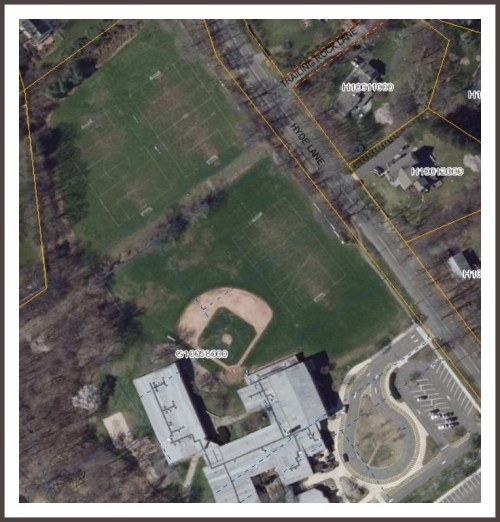
Long Lots Elementary School and adjacent fields.

==================================================

Clarence Hayes (District 4): I have been a gardener much of my life. While a student at Deep Springs College I was responsible for a garden and orchard feeding a community of 40 people.

Today I live in a condo with a 360-sf front yard in which I built two 12′ x 6′ raised beds where I grow tomatoes and basil which I use for pasta sauces I store up. These are surrounded by pollinator friendly plants such as milkweed and goldenrod which I transplanted from nearby highway margins. Attached is a picture of end of season tomatoes picked yesterday. So I certainly am sympathetic to the community gardeners.

However, regarding preserving the community gardens in the current location, my response is: “It depends.”

I have not yet digested all the relevant detail in terms of requirements, building costs, potential regulatory limitations, etc.

Regardless, from what I have been able to find so far,  the publicly available information appears insufficient to allow for a fully informed recommendation.

And not having been a committee member at an early stage, alternate designs I might prefer are not on the table  (e.g. a parking garage and minimal access roads in order to maximize usable land). Until I have access to such detail — and the opportunity to directly influence the recommendation committee — it would be mere sentiment on my part to claim the gardens absolutely must be preserved exactly as they now are, regardless of other competing interests.

I also played baseball in high school and am sympathetic to the views which the local baseball associations cogently presented in a post yesterday regarding the challenges they face.

My commitment is to do my best to listen to all Westport constituencies and to balance as intelligently as possible conflicting interests as we attempt to make decisions which maximize the long term value of town property for all of Westport.

=================================================

Candace Banks (District 6): I have visited the Community Gardens and they are visually stunning.  The hard work and care of the gardeners and volunteers are evident.

I also learned from a recent “06880” podcast that this is not the first time the Gardens have faced displacement due to school construction; the Gardens were originally located on the site that became the present day Bedford Middle School. I am sure this fact only adds to the gardeners’ apprehension and frustration about the imminent Long Lots school construction.

The RTM is not going to get an up or down vote on what exactly to do with the Gardens. It will get an up or down vote on appropriating money for LLS school construction which I enthusiastically support. I hope that vote happens as soon as possible because a new elementary school  for the school aged children zoned to LLS from Districts 6, 7 & parts of 9 is much needed and long overdue. I hope the candidates for local office feel the same so that LLS gets the rehabilitation it needs asap. If they don’t, they owe to their constituents, particularly those who have young children, to say so now.

I understand even if the Gardens remain in its current location that they will be inaccessible during the 24 month construction period. That fact seems to weigh in favor of finding other (perhaps larger) spaces in Town for it so the gardeners  can maintain their community, expand their mission and their contributions to the pollinator network as well as add to their membership. 

==================================================

Jessica Bram (District 6): As a mother of 3 sons who attended the Westport Public Schools, one of them Long Lots, I am a fierce advocate for the Westport Public Schools.  In my last three terms on the RTM I have voted in favor of every appropriation request brought to the RTM by the Westport Public Schools. In this case, there is no question that a new elementary school for the school-aged children zoned to LLS from RTM District 6, the district I represent, is badly needed.

However, I am dismayed that current proposals require the dismantling or relocation of the Westport Community Gardens. I believe that other Long Lots locations might have been identified, including the school’s athletic and ball fields, in any Long Lots construction design.

The Westport Community Gardens are as important to Westport as Compo Beach, undeniably our Town’s most vital asset. I do not believe that any proposal to construct a school that would jeopardize or displace access to our shoreline would ever have been contemplated. And in this case, I do not accept that relocating the Westport Community Gardens is a viable, or in any way acceptable, option.

The RTM will not conduct any vote on the Westport Community Gardens themselves. Our role is only to vote on specific appropriation requests made by the Westport Public Schools. However, with a heavy heart because I remain so fierce a supporter our Westport Public Schools, I cannot vote in favor of any plan that requires the dismantling, removal, or relocation of Westport Community Gardens.

================================================

Louis D’Onofrio Jr. (District 6): If I was in a position to vote on the community gardens I would clearly say, a vote for Louis D’Onofrio Jr in District 6 is a vote to preserve the Community Gardens.

The simple fact that our town’s administration is pushing aside our history is not what myself, or the people of District 6, stands for. I have written to the Westport Journal about my concerns of our current town administration’s approving the overgrowth of the town which strains our resources and displaces our lower socioeconomic communities and this is very concerning. To preserve the community gardens is to preserve a section of our community. There is also something pure and grand about these gardens being by our school. We need to bring nature and gardening into our classes more and what better way than to allow students to view nature on a daily basis.

Thank you for reaching out and I appreciate you collecting our thoughts and ideas on the topic.

Long Lots School Building Committee representatives (left), with Board of Education members and Westport Public Schools administrators.

==================================================

Brandi Briggs (District 7): I believe it is premature to be making a decision on the gardens at this point since the Building Committee has not delivered their recommendation. However, I think coming up with a solution that is first and foremost best for Long Lots School is the top priority over other interests. All the stakeholders should continue to have a chance to have their say and find a solution that can be satisfactory to all those involved but everyone will need to be adaptable. My eventual vote will be based on the recommendations of experts on the Building Committee that have spent countless hours and hard work researching and determining the right solution for Long Lots.

==================================================

Lauren Karpf (District 7): As an RTM member, I have spent countless hours over almost a decade supporting the need for a new LLS. I believe staff and students deserve an appropriate building as soon as possible.

I respect and appreciate the building committee’s diligent approach in exploring numerous options for the layout of the building and campus. It has become clear to me that it is a complex landscape at LLS, and that all involved need to be flexible and adaptable, as construction is never easy and many components need to fit in a limited space.

I have long been a fan of the gardens. I admire all that the gardeners have accomplished, and in fact bought and planted a tree in the Long Lots Preserve. While currently the gardens can only be accessed and enjoyed by approximately 100 people, I am hopeful that a partnership with the schools and other organizations, and a larger space if the gardens are moved to a different location, can allow greater use for more residents going forward, including during the two years of construction.

I look forward to hearing the building committee’s recommended plan after many months of hard work, and voting to begin construction without delay.

=================================================

Jennifer Johnson (District 9): I strongly believe that the Westport Community Garden should be preserved in its current location. The garden is a wonderful piece of our town’s community soul that should be protected in perpetuity with a conservation easement to keep it a community garden for all ages and years to come.

It is time to move the discussion to other plans. Yes, it will take a couple of years of disruption. But that is what construction is. We have ball fields, and theaters and other resources across the town than can be used during construction. We can definitely build a great school and keep the garden.  So many people now know and understand this treasured town resource. Let’s continue the celebration…and let it grow!

=================================================

Sal Liccione (District 9): I have reached out and worked closely with the Gardeners throughout this entire process. I have listened to their concerns and learned. I am deeply and firmly committed to the Gardens and Preserve and keeping them exactly where they are.

As such, I will only vote to support a new or refurbished Long Lots School Plan that does not disturb or destroy the existing Gardens and Preserve. In my opinion, this horrible threat to the Gardens should have been taken “off the table” by the Administration long ago.

==================================================

John Suggs (District 9):  Thank you Don Bergmann for asking all of the local town candidates this vital question before the November election. Thank you, also, Dan Woog for providing us with this wonderful 06880 platform in which to answer it. Because of the importance of the question, I hope that the majority of us will choose to respond.

I wish my fellow Westporters to know that my position on the Gardens and the Preserve is one of the main reasons behind my recent decision, after taking a six year hiatus, to, once again, return to the RTM. (Dependent entirely, of course, on if the electors of District 9 decide to grant me the opportunity for another tour of service on the RTM.)

My position on the Gardens and Preserve is simple and unwavering. They must continue to be protected, preserved and celebrated as the Town Treasures that they are.  And they must remain, undisturbed, right where they have been so carefully tended and nurtured by hundreds of volunteers over the past twenty years.

As such, if I am elected, when the Long Lots Building Committee comes before the RTM, as is now expected either in December or January, I will vote against approving any Long Lots School plan that includes the destruction of the gardens and preserve in their present location.  Period.

None of us, much less our impressionable and curious school children, will ever benefit from a new or refurbished school if it is built on the backs of hundreds of gardeners who have labored in the fields these past twenty years.  We must acknowledge and honor the commitments that we first made with them. Just like a garden that is how a healthy, vibrant community grows.

I wish to offer one last point, if I might.  I have been deeply saddened and troubled by the process itself by which this whole matter of determining whether to rehab the existing school or building a new school has unfolded.  Much of the ultimate resulting controversies might well have been avoided, or at least, mitigated somewhat had there been a spirit of more openness and transparency by the Administration.

I have witnessed, as recently as this week, the negative impact of the outright refusal of the Park and Recreation Commission to so much as even place a discussion of the concerns of the gardeners on their meeting agenda. Much less to actively reach out and consult with them about their many ideas for creative ways to resolve this impasse.  By repeatedly refusing them a place on the PRC’s agenda, dozens and dozens of concerned residents, myself included, have been reduced to the indignity of pleading our case in the brief, few minutes set aside at the beginning of their meeting for non-agenda items.

This has not been Westport’s finest hour.

In conclusion, yes we must- – and will — either rehab the existing school or build a new school.  We can — and will — also identify a new location for a baseball field. But in the doing, we must also honor the stewardship, responsibility and commitment that was first made twenty years ago to maintain, protect and preserve our Community Garden and Preserve.

As for me, if elected in November, I will only vote to support a school plan that first “does no harm” and protects and preserves the gardens where they have resided for twenty years.




Seeking Westport’s Vision: The Sequel

Clarence Hayes’ “Opinion” piece — posted this morning on “06880,” urging Westport’s politicians and residents to adopt a “vision” for the future — has already generated 26 comments.

Some of them noted that Westport already has such a plan. It’s state-mandated, developed with input from a broad array of stakeholders, and updated regularly. 

Clarence asked me to add this clarification. He writes:

Numerous engaged Westport citizens have pointed out to me that I am not up to speed with work already well advanced around many of the points in my original comments. Mea culpa!

In regards to taking control of the affordable housing issue, a plan was recently adopted by the Planning & Zoning Commission under Danielle Dobin’s leadership, which hits all the points I was hoping would be addressed.  Click here to see.

Screenshot: Westport’s Affordable Housing Plan.

Additionally, as Dick Lowenstein pointed out, Westport has a “10 year Conservation and Development Plan” — in compliance with state law — the last one of which was adopted in 2017. Click here to see.

So I’m learning. Thank you.

I did nor intend to criticize good work which has been accomplished, but rather to suggest even more ambition to do even better.

I maintain my “call to action”: to have a permanent forum for town engagement which:

  • Programmatically links the town’s various volunteer associations to the relevant town board/committee
  • Is structured for input/debate to maintain a long-term plan that touches all town assets, and is regularly amended
  • Establishes concrete goals that reach to 20+ years out — generational levels of development effort
  • Allows for annual measurement of progress
  • Includes results that are visible, front and center, on Westportct.gov, providing effectively a  detailed, easily accessed, ‘who we are’ statement which is more than general aspirations.

Thanks to Mr. Woog for his tireless work providing a Westport “town square!”