“Then & Now”: #9

Several side streets on a small stretch off North Avenue have seen big changes in the past 2 decades.

Today’s edition of “Then & Now” — photographer Dave Matlow’s series of teardowns, and the homes that replaced them — concentrates on those roads, a few yards from Bedford Middle School.

Melon Patch Lane, March 2015 …

… and April 2026.

==================================================

Peach Lot Place, October 2012 …

… and April 2026.

==================================================

Pleasant Valley Lane, June 2006 …

… and April 2026.

==================================================

Reimer Road, January 2010 …

… and April 2026.

(“06880” regularly covers Westport real estate, history … and much more. If you enjoy features like this, please click here to support our work.)

Remembering Lowrie Gibb

Many Westporters knew Lowrie Gibb.

A town resident for nearly 50 years, he was a familiar presence at Winslow Park, and Compo and Old Mill Beaches — biking, running, walking a dog, planting a tree and chatting.

Many other Westporters knew Lowrie’s work, if not his name. He spent years — independently, and with a disregard for rules — creating and maintaining a series of walking trails at Winslow Park. (He got Lyme disease in the process.) Everyone who walks in the Winslow woods owes him a debt of gratitude.

Lowrie died April 8 at Norwalk Hospital, of complications of pneumonia. He was 87.

Lowrie Gibb with Rosie, at Winslow Park. (Photo/Jo Shields Sherman)

Lowrie — known also for his vintage Volvo station wagons and idiosyncratic attire — had roots on the New Jersey shore. But he had a keen appreciation for Westport’s location at the juncture of the Saugatuck River and Long Island Sound. He admired the town’s waterways, and outdoor amenities.

Lowrie explored his native Rumson, New Jersey Lowrie by bike. He learned to sail there too.

Later in Westport, he delighted in a wooden Lightning sailboat — like those of his youth — that he found for sale. He kept it at Compo Beach, maintained it meticulously, and took friends and family for frequent jaunts on the Sound.

He also enjoyed rowing, sculling and paddling.

A multi-sport athlete, Lowrie was especially recognized as a skier. He learned at an early age in Stowe, Vermont with his father and 2 brothers. He pursued other winter sports, like skating and pond hockey, in New Jersey.

There was a 2-year adventure in Half Moon Bay, California during World War II, while Lowrie’s father, a Navy captain, served in the Pacific.

In 1951 Lowrie’s family moved to a dairy farm in Weybridge, Vermont. His father, Arthur Gibb, served in the Vermont House of Representatives and Senate.

A Republican and staunch environmentalist, Arthur chaired the commission that created Act 250 — the strictest environmental protection law in the nation at the time. Senator Gibb also played in important role in Vermont’s no-billboard law, and the introduction of recycling. His father’s environmentalism had a strong influence on Lowrie.

Lowrie Gibb helped create and maintain many walking paths at Winslow Park. (Photo/Mark Mathias)

Lowrie attended local public schools, then Mount Hermon. At Middlebury College he studied history, and competed in giant slalom, slalom, the 50-meter jump and Nordic.

He trained in the western US and South America, and tried out for the 1960 Olympic team in Nordic.

After college Lowrie married and started a family. They lived in Stowe and Manchester, Vermont where he taught school.

In 1967 the Gibbs moved to Westport. He chose the town carefully, for its waterfront, public access to recreational spaces, and excellent schools. He loved Westport, and often said it had more to offer than any place else in the world.

During snowstorms, Lowrie would wax his children’s skis. They’d go out at night, before the streets were plowed.

Lowrie was passionate about land use, with a special interest in integrating nature into communities. He was always on the lookout for a good spot for a pocket park, a tree or a trail.

For some years he worked in real estate development. But his commitment to using land to serve a public need for open space and recreation found its ultimate expression later, and on a smaller scale.

Lowrie Gibb

He might have become a landscape architect, like one of his grandfathers who designed urban parks. But he always preferred an unconventional path.

Lowrie loved trees — especially elms, for their majestic canopied crowns. Lamenting their destruction by disease, he planted 30 saplings of Liberty elm, a resistant strain, in his backyard.

When the trees were big enough, he re-planted them all around Westport. (Like his creation of the Winslow trails, this too was illegal.)

Today those elms can be seen across from Town Hall and the Seabury Center, in the median off I-95 Exit 18, in an Ambler Road back yard, and many other places.

Lowrie was a longtime regular at Longshore’s Westport PAL rink, figure skating with grace and ease. As recently as last month, at 87, he made a track and skied in his backyard.

When there was no snow or ice, he ran at Compo Beach and Grace Salmon Park.

Lowrie is survived by his daughters, Cynthia and Rebecca.

Contributions in his memory can be made to the charities he supported — the Humane Society, Defenders of Wildlife, Best Friends Sanctuary in Utah, and St. Jude’s.

Cynthia and Rebecca suggest also “continuing his work at Winslow Park, picking up trash, clearing branches from trails, and caring for it like your own yard.”

Isabel Jo, Uma Choudhury Lead Staples Class Of ’26

The top 2 students in Staples High School’s Class of 2026 are standouts in the classroom, of course.

But Isabel Jo and Uma Choudhury – the valedictorian and salutatorian, respectively – are accomplished far beyond the classroom too.

Isabel is an All-State musician (in two instruments). She has spent a decade as a competitive horseback rider. And she is an active member of the school’s No Place for Hate organization.

Uma is a black belt in taekwando. She also captains Staples’ Science Olympiad team, and is president of the Math Honor Society.

Both young women – products of the Westport Public Schools since elementary school — will speak at graduation ceremonies on June 15.

Isabel’s musical career began at Coleytown Elementary School. It continued through Coleytown Middle School. Instructor Jim Andrews gave her a great foundation, she says. At Staples, where she plays both viola and violin, she is concertmistress of both the Symphonic and Chamber Orchestras.

Her interest in horses began even earlier. Her family was looking for houses in Westport, and passed a barn. Isabel was fascinated.

Isabel Jo

She rides now at the Fairfield County Hunt Club. She competes in equitation – the highest level of jumping – at national events. In May she’ll do her senior internship at the Hunt Club, working with horses.

With No Place for Hate, Isabel helps educate younger students about bullying and bias, during Staples’ Connections periods.

Classes like Advanced Placement Chemistry with William Jones have challenged Isabel. At Dartmouth College she plans to study the subject, as well as statistics and music.

Her four years of orchestra classes are among her most favorite at Staples. Isabel credits teachers Carrie Mascaro and Jeri Brima with “fostering a welcoming community for everyone, no matter what role music plays in their lives.” For her, it is a central part of life.

“Music is the universal language,” Isabel notes. “It unites people around a common role, despite whatever differences they have.”

Isabel downplays her achievement of earning the highest grade point average among the 400-plus students in this year’s graduating class.

“So many kids work hard. There’s so much luck involved, in being .01 point lower or higher.”

Her favorite part of high school has been “finding a group of people,” primarily in orchestra. “They don’t all think alike. But they’ve understood my goals, and supported me. At the end of my time here, I really appreciate that.”

Uma’s path to salutatorian was similarly unplanned, and equally well-rounded.

As a black belt in taekwando, she has learned to “do things I couldn’t have imagined doing.” She gives back too, by helping out at a summer camp.

Uma’s main Science Olympiad events are code busters (math-related decrypting and encrypting cyphers), and physics-related circuits and electricity. She earned a gold medal in ecology last year, after medaling in code busters as a sophomore.

Uma Choudhury

Her freshman Applied Algorithmic Design course – a programming class with Dr. Nick Morgan – sparked an interest in computer programming. It combines her passions for math, physics and biology. She hopes to pursue it in college, perhaps in a research capacity.

But Uma was also excited by her junior year Contemporary World Studies class, with Cathy Schager. “We looked at issues, researched them and discussed them,” she says. “When you’re caught up with academics you can’t always see what’s going on in the world. But Ms. Schager was very helpful, and made sure we did.”

Other inspiring teachers included Noreen McGoldrick, an English instructor who helped Uma become a better writer and reader, and Philip Abraham, whose AP Statistics Class was “interesting, fun, and applicable to lots of different  fields.”

Like Isabel, Uma did not set out to achieve a top GPA. “I just wanted to do well for myself,” she says. Her selection as salutatorian was “a happy surprise.’

She will do her senior internship at Citizen Invention, a Westport-based science education program. In the fall, she heads to Carnegie Mellon University.


(“06880” reports regularly on the accomplishments of Westport’s teenagers — and on all our schools. To support stories like this, please make a tax-deductible donation by clicking here. Thanks!)

Roundup: Bookcycle, Playhouse, Alzheimer’s …

Yesterday’s Roundup reported that the Remarkable Bookcycle — the mobile lending library that pays homage to Westport’s beloved former bookstore — is back at its popular perch: Soundview Drive, by Compo Beach.

We gave a shout-out to Larry Roberts, who repaired the Bookcycle after it was damaged this winter.

The Bookcycle, with damage …

A few minutes after the story was posted — without having seen it — Larry emailed us: “We returned the Bookcycle to the beach this morning. She required some extensive rebuilding after her run in with a snowplow. Perhaps a little worse for wear, she’ll perform her ‘little free library’ duties for the summer season.

… and ready to be transported back to Compo Beach …

“Some of the books had to be disposed of, due to snow and water damage. I’m hopeful that some of her fans might be able to donate some more to fill out the shelves.

“Cheers,
Larry & Sondra Roberts (Staples High School Classes of 1985 and ’86)”

… where it is now back “home.” (Photos/Larry Roberts)

==================================================

Also in yesterday’s Roundup: A rave review of “Primary Trust,” the Pulitzer Prize-winning show currently running at the Westport Country Playhouse.

Quickly, 2 more praise-filled emails followed.

Annie Keefe — a longtime artistic employee, now a trustee — said, “I know I’m biased. ‘Primary Trust’ is not a play I had seen before, so I went in with no expectations.

“I was blown away. The audience was on the edge of their seats, breathing in unison as this cast of skillful actors took us on such a moving journey. I urge you to take a flyer on this one. It won the Pulitzer for a reason. You’ll leave feeling a little better in a fraught world.”

Adam Lubarsky also loved the show.

His late brother Drew apprenticed at the Playhouse, and studied under Joanne Woodward for 2 seasons while at Boston University. Their mother Thelma held an annual subscription at the WCP for decaces, beginning the year they moved to Westport in 1956.

Adam said, “It totally deserved the Pulitzer. It’s a modern show that I believe will live the way ‘Death of a Salesman’ has over the decades. 

“The theater wasn’t full for opening night, but it should be. It’s one act, and riveting throughout.”

“Primary Trust” runs through May 2. For show times, tickets and more information, click here.

“Primary Trust” (from left) :  Greg Stuhr, Alphonso Walker Jr., Lance Coadie Williams. (Photo/Carol Rosegg)

==================================================

Chris Marcocci — the founder of Local to Market, a branding marketing professional, and a passionate Westporter — died suddenly in 2024.

But his spirit and legacy live on.

Chris Marcocci, in his Westport store.

On Saturday, the Chris Marcocci Emerging Brand Award was presented at the Big Connecticut Food Event, held at the Yale School of Management.

The recipients, Black Girl Kimchi, were recognized as a rising force in the state’s food and beverage community. The honor includes a $10,000 check.

The Chris Marcocci Award celebrates innovation, authenticity, quality ingredients and the entrepreneurial spirit of emerging brands. He was a dedicated advisor with Food and Bev Connect, volunteering as a mentor to early-stage companies. Chris offered guidance in marketing, strategy and access to critical resources, with a deep commitment to helping others succeed.

Black Girl Kimchi embodies those values through its bold, culturally rooted approach to a traditionally Korean staple, reimagined with a fresh and distinctive voice.

The award was presented by Chris’ wife Rita, in front of an audience of industry leaders, entrepreneurs and community supporters.

Meanwhile, Black Girl Kimchi is on a roll. They’ll be featured at the Westport Farmers’ Market for the first time this May.

Black Girl Kimchi winners, with Rita Marcocci (right).

=================================================

Like many Westporters, Mary Sue Teplitz, Dina Upton, Lori Snow and Michelle Mitnick’s lives have been impacted by Alzheimer’s disease.

The women are doing something to help. On May 1 (6 to 8 p.m., Intensity Racquet Club, Norwalk), they’re hosting their 3rd annual Pickleball to Slam Alzheimer’s.

Today, close to 80,000 people live with Alzheimer’s in Connecticut; there are at least twice as many caregivers, including unpaid family members and friends.

The Alzheimer’s Association funds research, drives risk reduction and early detection, and maximizes quality care and support. They offer a 24/7 free helpline, along with educational programs and support groups.

All funds raised at the pickleball event go toward the organization’s Fairfield County Walk to End Alzheimer’s (October 25, Sherwood Island State Park). To register, and for more information, click here.

Pickleball to Slam Alzheimer’s is dedicated to Carolyn Rothenberg and Gary Cosgrave — 2 of the many people diagnosed with Alzheimer’s.

==================================================

For many, the teardown of a house means the end of its life.

But in the midst of rubble on Buena Vista Drive, a new life is already poking through.

It’s a different kind of “Westport … Naturally” photo.

But a great one to start the week with.

(Photo/Tracy Porosoff)

==================================================

And finally … happy 4/20!

(It’s traditional to celebrate 4/20 with a donation to “06880.” Well, maybe not — but it should be! Please click here to be part of this great event. Thank you!)


Westport Tech Museum: Way More Than Toys In The Attic

Westport is filled with hidden gems. Haskins Preserve, the pedestrian path on Compo Cove, the miracle auto repair workers at Vautrin and J&J, any dish at Jeera Thai … not everyone knows about those jewels. But everyone should.

Yet perhaps the coolest — and most secret — of all is inaccessible to nearly everyone.

There — in the attic of a private home — Jay Babina runs the Westport Tech Museum.

You can tour it online. And on Facebook.

Because it’s in his parents’ house (Jay is finishing up his first year at Manhattanville College), it’s not open to the public.

But one of the great perks about publishing “06880” is the chance to go where almost no one else can.

I’ve posted twice about Jay’s Westport Tech Museum (click here and here).

I’ve described his astonishing collection of over 500 computers, video games, calculators, cameras, radios and more.

Just a portion of the Westport Tech Museum. (Photo/Jay Babina)

From a Commodore Amiga 1000, Osborne 1, Apple IIe and original Macintosh, to a 1910 Edison light bulb that still shines, and a 1905 crank telephone that still rings, Jay has scoured the world (and eBay) to find rare, important, classic, quirky and historic products.

The other day, I paid my third visit to what may be the most astonishing private museum in America.

Jay — who haunts the internet with the tenacity and instincts of Kojak, Columbo and Jessica Fletcher combined — proudly showed off a host of new acquisitions.

He began with the most beautiful object in his collection: a hand-painted horn from an early Thomas Edison phonograph.

That was impressive enough. But then Jay picked up a wax cylinder — the precursor to “records.”

I was astonished.

But I was even more gobsmacked seconds later, when Jay placed the cylinder on the phonograph — and played it.

Music recorded well over a century ago filled the attic. I could have ended the tour right then, and been thrilled.

But Jay had much more to show.

Decades after the phonograph — as LP records were being replaced by 45s (kids: ask your grandparents) — the transistor revolutionized radio.

Of course, Jay had a transistor radio.

Of course, it was one of the first ever produced.

Of course, he also had a very early transistor. That’s how Jay rolls.

Transistor radio (right); transistor in a plastic cube (left).

Soon, we got into the “modern” era. (Still: Kids, ask your parents.)

Jay recently added the first commercial beeper pager (a 1964 Motorola Pageboy) to his collection.

The first two-way messaging pager was the 1995 Motorola Tango. But — because Jay does not do things half-heartedly — he has it in a pre-release version, when it was called SkyTel. He searched for 5 years, and finally found it on eBay.

Who remembers answering machines? A better question: Who remembers the very first ones — with little tape reels inside?

Jay does. (Even though he was not born for another 3-plus decades.)

His museum now includes the first consumer residential answering machine: the 1971 Phone-Mate 400.

It was complicated. Callers had to be instructed what to do.

It still works. Unfortunately, Jay’s Tech Museum lacks one thing: a landline to plug it into.

The first answering machine included separate tape reels for the outgoing message, and incoming calls. 

Then came an early cellphone with camera …

… and one of the first VHS recorders …

… plus another item Jay searched for for years: a Sony Walkman. This 1980 model was the first in the US; it came a year after the device took Japan by storm.

Jay showed me — and explained, in historical detail — an HP35 (the world’s first scientific pocket calculator, the “slide rule killer” that some feared would lead to the decline of math skills across America); a Rocket e-book reader, which retailed for $499 and debuted 9 years before the Kindle, and a PalmPilot, with a whopping 128K of memory.

Of course, Jay also found an original box.

There are plenty of original iPhones floating around.

But who has an original bag (rear in photo below), issued by Apple only to customers ordering on the very first launch date (June 29, 2007)?

Jay Babina, of course.

Every item has a back story. And Jay tells them all well.

Of the Commodore home computer, he describes the company’s price war with Texas Instruments.

Commodore slashed the price from $525 to $49. They lost $300 million in one quarter, and went bankrupt in 1994.

Jay has a Commodore (below) and a TI99. Both have dial-up modems. Both still work.

Jay is fascinated by failure.

In 1995, Nintendo’s Virtual Boy — a 32-bit tabletop console, marketed as the first to display stereoscopic 3D graphics — caused headaches and eye strain. It was a spectacular flop.

His Westport Tech Museum celebrates it all: failures and successes. Innovation and improvement. Products that look silly, and those that are beautiful.

Which brings us to one of the newest items on display in Jay’s attic: David Pogue’s just-published sweeping and mammoth (608 pages) book, “Apple: The First 50 Years.”

(All photos/Dan Woog, unless otherwise noted)

Like Jay, he is obsessed with both the broad arc of technological history, and the countless unique, often overlooked stories that contribute to it.

Pogue spent 2 decades in Westport.

Somehow, he never found his way up to Jay’s attic.

Now — as a regular contributor to “CBS Sunday Morning” — would be a great time for him to check it out.

But if he does, both he and Jay may never come down.

(“06880” often shines a light on remarkable young Westporters. If you enjoy stories like this, please click here to support our work. Thank you!)

Pic Of The Day #3287

Compo Cove, from Hillspoint Road (Photo/JD Dworkow)

Photo Challenge #590

Eleven readers identified the old cast iron box stuck to the side of a brick building — last week’s Photo Challenge. (Click here to see.)

But only 2 of them knew what it was used for.

Morley Boyd and Andrew Colabella noted it’s an alarm box, on the side of what for decades was the Westport Bank & Trust building, where Church Lane runs into Post Road East.

They did not explain exactly what kind of alarm. But it was a lot more important for a bank than for its next use (Patagonia).

Soon, the building will house the offices of Compass real estate. No need for alarm!

Besides Morley and Andrew, the other readers who knew the location — though not the function — were Seth Schachter, Jaime Bairaktaris, Clark Thiemann, Susan Iseman, Pete Powell, Jude Siegel, Jack Backiel and Sal Liccione.

This week’s Photo Challenge is an outdoor sculpture — that much is clear.

We have plenty of great art, all over town.

But where exactly is this one?

If you know where in Westport you’d see it, click “Comments” below.

And if you know the title and sculptor, please add that in too.

(Photo/Janine Scotti)

(Every Sunday, “06880” hosts this Photo Challenge. We challenge you too to support your hyper-local blog. Please click here to make a tax-deductible contribution. Thank you!)

Roundup: Primary Trust, Free Seedlings, Remarkable Bookcycle …

Paul Newman and Joanne Woodward’s long and loving association with the Westport Country Playhouse is well known.

Melissa Newman is keeping up that tradition.

The couple’s daughter — still a local resident — says, “in honor of my lovely parents, I encourage everyone you to head to the Playhouse to see ‘Primary Trust.’

“It’s a sweet and thoughtful play, and a lovely production. Please go if you have a chance, and spread the word.

“As my dad once said, ‘Your local theater is like your ball team. You don’t just go when they win.’ To me, this one is a winner.

Theater does not just have to be a diversion. Revivals and classics are its bread and butter, but when you take chances on less familiar plays, you signal to the Playhouse that you support the idea of a communal journey, an opportunity to analyze and discuss, give feedback, and be part of a real theater community.

“So: Make a night of it!”

“Primary Trust” runs through May 2. For show times, tickets and more information, click here.

From left: Alphonso Walker Jr. and Lance Coadie Williams in “Primary Trust.” (Photo/Carol Rosegg)

======================================================

Get your seeds!

The Westport Tree Board celebrates Arbor Day with a tree seedling giveaway this Friday (April 24, 3 to 5 p.m., rear of Town Hall near the softball field).

You’ve got your choice of ninebark, blackgum or witch hazel. First come, first served!

==============================================

One more sign of spring: The Compo Beach Bookcycle is back!

The free lending library — with a nod to Westport’s beloved 20th-century bookstore — has for several years enjoyed a special spot at the start of Soundview Drive, near the drop-off and pick-up spot.

But this winter, it was damaged by a snow plow.

With its creator, author Jane Green, no longer living nearby, what would happen?

“06880” posted a photo.

Within minutes, Larry Roberts offered to help.

The Remarkable Bookcycle has been repaired. It’s ready for readers.

But remember: It only works if you give, as well as take.

That — along with Larry’s great volunteer efforts — is the Westport way.

(Photo/Totney Benson)

==================================================


We’re still enjoying daffodils, all over Westport.

And by “we” I mean Yogi Bear. He posed for today’s “Westport … Naturally” feature photo at Bedford Middle School.

(Photo/Cat Malkin)

==================================================

And finally … this is Big Brother/Big Sister Appreciation Week.

Here’s the Big Brother I appreciate:

(Sometimes these Roundups are long. Sometimes they’re not. But every day — without fail — we provide news, information, photos and music. Please click here to support our 24/7/365 work. Thanks!)

Dear Jackie Robinson …

Jackie Robinson is a towering historical figure. Thanks to Major League Baseball’s ongoing efforts, every young fan today knows he was the first man to break the sport’s Black barrier.

He went on to become a business executive, political advisor, bank and housing development company co-founder, and equal justice advocate.

But only older Americans have first-hand memories of the Brooklyn Dodgers star (and longtime Stamford resident). They were youngsters or adolescents when he played, or had recently retired.

In an effort to keep his memory alive, reach younger residents and inspire dialogue, the Westport Library Common Ground Initiative recently sponsored its second Jackie Robinson Essay Contest.

Along with the Westport Center for Senior Activities and Meryl Moss Media, “Dear Jackie Robinson” challenged individuals and inter-generational pairs to write a personal letter to him. The goal was to explore how his courage, dignity and perseverance continue to shape their lives and relationships.

First-place winner Marty Erdheim’s deeply personal and collaborative submission did just that. The 85-year-old retired business owner (and former captain of the Columbia University basketball team) collaborated with his 10-year-old grandson Dylan Henschel. The Saugatuck Elementary School 4th grader plays lacrosse and tennis, and practices jiu jitsu.

Their letter bridged generations, while offering a shared reflection of Robinson’s impact. (His and the other winners’ full letters are below.)

Erdheim received 4 tickets to a New York Mets game, and commemorative items.

Mark Rosenblatt, who spent his career in radio broadcast tech, earned second place — along with 2 tickets to the Jackie Robinson Museum, and a $100 gift certificate — with a powerful letter.

Tobias Slavin took third, and gets a 1955 Brooklyn Dodgers yearbook. A Staples High School 9th grader who plays football, basketball and baseball, he wrote his letter with his 82-year-old “god-grandpa,” Phil Wexler.

Finalist AJ Battersby receives a 1955 Dodgers stamp collection. He’s a 4th grader at Coleytown Elementary School who plays Little League and travel baseball. He collaborated with his grandfather Greg Battersby, a semi-retired attorney who in 40-plus years in Westport has coached over a dozen Little League and Babe Ruth teams (and headed the Babe Ruth program). He invented and patented a baseball pitching machine called the ProBatter pitching simulator, and serves as its CEO (with A.J.’s dad Adam, who is president).

Winners were also recognized by the Library on Friday — the 79th anniversary of his MLB debut — as part of their Jackie Robinson Day programming

“These essays show that Robinson’s legacy is not something we simply remember,” says Library executive director Bill Harmer.

“It lives in how we treat one another, and how we choose to show up in the world.”

=================================================

Marty Erdheim and Dylan Henschel

Dear Jackie:

I was one of your very first fans. You came to Brooklyn and I was there, among so many others, to welcome you. I was there when our Dodgers lost the 1951 pennant race as well as the 1952 and 1953 World Series. And of course, I was there when you brought us our first World Series in 1955. Jackie, you changed me, changed Brooklyn and changed the world.

My grandson Dylan Henschel recently asked me about you, Brooklyn and the impact you had on this world. And so began a series of questions and answers.

Dylan: Poppy, you keep on telling me about how great Jackie Robinson really was. So explain to me why he was so great and what was it like growing up in that era?

Marty Erdheim

Poppy: It was magical! Brooklyn was a safe, multi-ethnic borough, with one common adhesive holding us all together: the Brooklyn Dodgers. Actually, I do not recall any Brooklynite, child or adult, who did not root for the Dodgers. And into this mix, a genuine hero emerged. A hero who would change America spiritually but also lead the Dodgers to several National League pennants and finally to a World Series championship.

Baseball was so important to Brooklyn, that when the Dodgers played in the World Series, the games were broadcast over the public schools’ speaker systems and afternoon classes were postponed; this delay would last until the World Series ended.

Dylan: Who introduced him to you?

Poppy: I don’t recall one person who specifically told me that we had a great new player, but I do recall that was the focus of our conversations. We discussed how the Dodgers had never won the World Series and that Jackie just might be the guy who would help get us this championship. We talked about his having to play a position he had never played before, first base. And we of course were aware that he would be the first Black player to play Major League Baseball.

Dylan:  What was the greatest thing you think he ever accomplished?

Poppy: This is easy! By singlehandily integrating baseball, he changed the world. The athletic world now viewed athletes solely by their ability to perform, rather than the color of the skin. Jackie began this! Martin Luther King’s powerful admonition at the Washington Monument to judge people by the content of their character, rather than the color of their skin, needs a bit more time for full implementation. But it’s coming and Jackie opened this door.

Dylan: What are some lessons that you learned from him?

Dylan Henschel

Poppy: I learned some very simple lessons from Jackie Robinson! First and most significant in my view, was the importance of striving for excellence. And Jackie was the epitome of a man or woman who focused on excellence. He won varsity letters in 4 sports at UCLA: football, basketball, track and field, and baseball. This didn’t just happen. The coaches at UCLA didn’t put Jackie on their teams because they liked him. It took a focus on excellence plus strong athletic skills to accomplish this. That’s why so few people have accomplished this.

Dylan: How did he make such an impact on everybody?

Poppy: First of all, for us Brooklyn kids of Jackie Robinson’s Brooklyn, he provided a genuine hero and a world championship. Never before in Brooklyn! But for our nation he brought us the wisdom to recognize each other by who we are, not what we are. Eighty two years after the Confederacy and slavery were eviscerated, this man was sent to finish the job. We as a nation are still putting finishing touches on this job, but without Jackie, this existential endeavor would not have begun.

Jackie, I am so grateful that I was there, living in your Brooklyn, to bear witness to your impact on America’s most vital dream!

==================================================

MARK ROSENBLATT

Dear Mr. Robinson:

I write to you as a Westport resident, a guy who grew up in Brooklyn in the 1950s, a lifelong baseball fan, and a student of American history. Mr. Robinson, before I shuffle off to Buffalo, I have a question for you about your life and your career, on and off the field.

Let me frame my question for you. In 1968 I was a freshman at Brooklyn College and would walk off campus between classes to a nearby Chock Full o’ Nuts store, with its serpentine sit-down counters, good coffee, and a staff of Black women wearing Chock Full o’ Nuts uniforms.

On the shop walls were large black-and-white photographs of other Chock Full o’ Nuts shops in New York, and I recall that there was a large photo of you at work at the Chock Full o’ Nuts offices on Lexington Avenue wearing a suit, seated behind a desk, with a phone in one hand and a pen signing papers in the other.

At that time I was 17, and I knew all about your baseball career, your civil rights work for fair employment alongside Dr. Martin Luther King Jr. and your management position at Chock Full o’ Nuts, a major New York coffee company that had a chain of coffee shops all over New York City. My family drank Chock Full o’ Nuts at home. You were Jackie Robinson. ‘Nuff said.

Staring at your photo at that Chock Full o’ Nuts shop, I wondered whether it was more important to the women working in this shop and the customers coming in that you became in 1957 the first Black vice president of a major U.S. corporation, Chock Full o’ Nuts, than your breaking the MLB color barrier in 1947. So, I ask you as a longtime admirer, what do you think? What’s more important to you? Your MLB career, or your work after your Dodger days were done?

Here’s some background to that question. I was born in 1951 and grew up 3 blocks away from where you first lived when you came to Brooklyn in 1947. I first learned about your Dodger career because my dad would point to Ebbets Field and recite your name and the names Roy Campanella, Pee Wee Reese, Duke Snyder and Don Newcombe, all fellow Brooklyn Dodgers, and how much the Dodgers were Brooklyn, as we took family drives on Flatbush Avenue to Prospect Park.

Mark Rosenblatt

By 1958, I thought it perfectly natural that baseball players were white and Black and Caribbean and South American. Why? Because the baseball cards I collected displayed faces that were white and Black and so on and so forth. When I became a Yankees fan, I realized that the only Black Yankee in 1958 was Elston Howard, although I recall that Harry “Suitcase” Simpson was acquired by the Yanks in a mid-season trade.

In early 1959, and in 2nd grade, my family moved to Hicksville in Nassau County, and I looked around at my new classmates and noticed there were no Jackie Robinsons, no Hank Aarons, no Ernie Bankses, no Luis Aparicios, no Roberto Clementes, no Willie Mayses, and certainly no Elston Howards. All of my classmates were Mickey Mantles and Whitey Fords, and I had little hope for a midseason trade to bring in a Harry “Suitcase” Simpson.

During the summer of 1959, my family moved again to Riverhead, in eastern Suffolk County, where I soon started 3rd grade. At that time, Riverhead was the end of the line for many farmworker families who traveled across the U.S. to pick crops, and in Suffolk County, cabbage and potatoes were farming mainstays and were harvested in the Fall.

Most of these itinerant farm worker families were Black, and their kids went to school with me, and in the spring played Little League baseball with me before heading west with their families.

In 1961 I discovered The Baseball Encyclopedia, a book that contained countless baseball statistics and a definitive history of baseball. From this book I learned that you, Mr. Robinson, were the first Black major leaguer, but only a little bit about the stoicism you had to publicly display on and off the field. When I learned that there were Negro Leagues before you broke baseball’s color barrier, it reminded me of an absurd parallel universe portrayed by Bizarro Superman in DC Comics.

So now it’s 2026, and I have a 9-year-old granddaughter who plays Little League baseball, and much to my eternal dismay, is a Baltimore Orioles fan. She’s an avid reader, and I sent her a book on your life, and my question about your life and work came back to me.

What’s more important? Your MLB career, or your achievements afterwards? When my granddaughter’s done with your book, she and I can talk about you.

Respectfully,
Mark Rosenblatt

=================================================

TOBIAS SLAVIN and phil wexler

Dear Mr. Robinson,

I am a 15-year-old high school student attending Staples, playing baseball, basketball and football. As you know, competing in multiple sports takes discipline and determination.

In reading about you, you did far more than play baseball. Both on and off the field you encouraged Americans to reassess what was keeping us apart and showed us how courage, dignity and persistence could unite us. When you showed up, society stepped towards justice and decency.

I am lucky enough to have a “God-Grandpa” named Phil Wexler who, at 82, is a fellow sports fanatic. We love to talk about all kinds of sports, teams and players. Phil comes to my games since my grandparents live across the country. (Phil is the father of my Godmother, which is how I came up with the name God-Grandpa). Since I knew he would love this topic, I asked Phil about you over lunch and here is what he shared:

“I was 4 years old when Jackie Robinson made his Major League debut with the Brooklyn Dodgers (1947). I was too young to realize the momentous impact he would have on baseball, professional sports and, more importantly, on segregation and the civil rights movement.

“Growing up in Los Angeles, I loved playing Little League baseball. My coach taught me the fundamentals of hitting, bunting, base running, often referring to Jackie Robinson as a great example. Coach also gave me a ‘Jackie Robinson comic book that I still have.

“In the 1950s, I worked at the Parasol, a local ice cream and sandwich shop. The sandwich maker, Frances, often talked to me about her idol, Jackie Robinson. I adored Frances, and this was my first real understanding of the impact Jackie had on people beyond the playing field.

“Later, I attended the University of Southern California. In 1963 I was a counselor for a summer teen tour around the U.S. In Birmingham, Alabama, I first encountered the shock of segregation. City buses, bathrooms and drinking fountains were marked ‘Black Only.’ I was jolted to my core.

“Safely back at USC, I began to realize how Jackie Robinson paved the way for other athletes. My fraternity brother Mike Garrett became the first Heisman Trophy winner at USC, and later played in Super Bowl I for the Kansas Chiefs vs. the Green Bay Packers. After his football career ended, Mike went into education administration and became the athletic director at USC. We stayed in touch and became life-long friends.

Tobias Slavin

“In 1925 Brice Taylor was USC’s first Black player and first All-American in football. In 1970, 45 years later, I listened to a radio football broadcast of USC defeating Alabama on the road 42 –21. Featuring an all-Black backfield of Sam Cunningham, Jimmy Jones and Clarence Davis, the USC team was a stark contrast to the (then) all-white Alabama team. After the game, Paul ‘Bear’ Bryant, the legendary coach of the Crimson Tide, brought Cunningham into the Alabama locker room and said to his team, “this is what a football player looks like, and next year we will have Black players too,” an important and enduring change for the sport.

“Many exceptional players were able to further shape and grow the foundation of those who came before: Willie Wood, Mike Garrett, O.J. Simpson, Ricky Bell, Lynn Swann, Charle Young, Anthony Davis, Charles White, Marcus Allen, Rodney Peete, Chip Banks, Reggie Bush, Tyron Smith, Robert Woods, Leonard Williams, Adoree Jackson, Amon-Ra St. Brown, and Caleb Williams, among many others.

“When the Dodgers moved to Los Angeles, it was exciting to watch Willie Mays, Henry Aaron, Frank Robinson and Maury Wills play in person. Similarly, the Lakers showcased Elgin Baylor, Wilt Chamberlin, Kareen Abdul Jabbar, Shaq, Magic Johnson, and played against Oscar Robertson, Julius Erving, Willis Reed, and more.

“I’ve seen Muhammad Ali, Tiger Woods, Carl Lewis, Rafer Johnson, Arthur Ashe play live. I’ve attended 3 Super Bowls, NBA championships, NCAA championships in football and basketball, the Olympics, world skiing championships, and more. As a role model and pioneer, Jackie Robinson influenced a different life in America and the world, and I can’t think of a better or more meaningful legacy. I only wish he would have gone to USC instead of our archrival, UCLA. But, even with that, he is still the ultimate winner for all of us.”

I couldn’t say it better myself. Your work ethic and confidence were extraordinary. On top of your athleticism, you carried the weight of history on your shoulders. From you, I learned that personal values make a big difference, both in sports and in the classroom. I am working hard to improve the person that I am every day, and your legacy is a large part of what inspires me most.

Sincerely,
Tobias Slavin (and Phil Wexler)

==================================================

a.j. battersby and greg battersby

Dear Mr. Robinson,

This is a thank you letter for not only what you achieved on a baseball field but, more importantly, for being a role model for young athletes. You taught us all how to live our lives and be prepared to overcome those obstacles placed in our paths on the road to success. The fact that you did it for our favorite baseball team, the Dodgers (even though they were in Brooklyn at the time), makes it that much more important to us.

Your talent as an awesome baseball player as well as being a great guy sets you apart from most athletes, no matter how young or old they may be. Your accomplishments despite the hardships you faced serve as a personal inspiration for every young athlete. You were a great example of how to overcome hatred, bigotry, and prejudice to achieve your goal.

A.J. Battersby

When we think of you, the first thing we remember is your Hall of Fame career with the Brooklyn Dodgers, playing in several World Series where you performed at the highest level of the game. Watching you play the game we love, whether in person for my dad or on videos for me, was an exciting experience. The time you stole home in the World Series against the Yankees was a particular highlight. Few, if any, players ever attempted to steal home, let alone in a World Series game. You not only tried, but you succeeded. What was particularly exciting and gratifying as a Dodgers fan, was seeing the umpire call you safe and the Yankees catcher Yogi Berra, jumping up and down complaining. We have a framed photo of that play in our office at ProBatter Sports.

There is no question that you were one of the greatest baseball players of all time, but what set you apart from others is what you had to overcome to reach that level. In today’s world,  great athletes are adored or revered. In contrast, you were hated and despised by bigoted fans, not only for being on an opposing team but because of your heritage. Playing baseball at the Major League level is difficult enough for any athlete….playing under those circumstances was something few, if any, other athlete ever had to face.

You played at a top level in front of fans at opposing ballparks, many of whom lacked your skills, intelligence, or grace. Nevertheless, they hurled racial barbs without even knowing you. That made a difficult task almost impossible. Lesser men would have slinked down in a corner and never even tried. Yet you did and succeed. You managed to hold it together and perform at a Hall of Fame level, which is a tribute to you and serves as a model to all players. It is difficult to imagine that any person could achieve what you achieved under those circumstances.

The lesson you taught us was that if you have a dream and the talent to achieve that dream, you should go for it. You must ignore the haters, most of whom lack your talent but are full of hatred. Haters will hate — that is what they do. Being able to deal with those people as you are trying to climb the ladder of whatever career you choose is the challenge. You were a great role model on how to deal with those types of people.

Greg Battersby

It is hard to imagine the amount of bigotry and hatred you experienced when playing for the Dodgers. I hope and pray that we as people have come a long way since the 1940’s and people are now more accepting for who and what you are rather than what they look like or the color of their skin. Aas a society, we have hopefully come a long way, but there is still room for improvement. Your career and the dignity you showed during your years while “climbing the ladder” went a long way in moving us in the right direction but there is still room for improvement.

You have served as a role model for every young person and an example that they should be evaluated based  on their abilities and performance as well as their grit and determination rather than on their appearance. You are an example of the idea that anyone with the ability and determination can achieve their dream regardless of how they look or where they come from. Your efforts have allowed me and my friends to play baseball and other sports with others, regardless of their race, creed or color which has improved all of our talents and abilities.

Sincerely,
A.J. Battersby and Greg “Pop Pop” Battersby

(“06880” highlights the accomplishments of Westporters of all ages. We cover sports, the Library, Senior Center, and much more. If you enjoy these stories, please click here to support us. Thank you!)
Pic Of The Day #3286

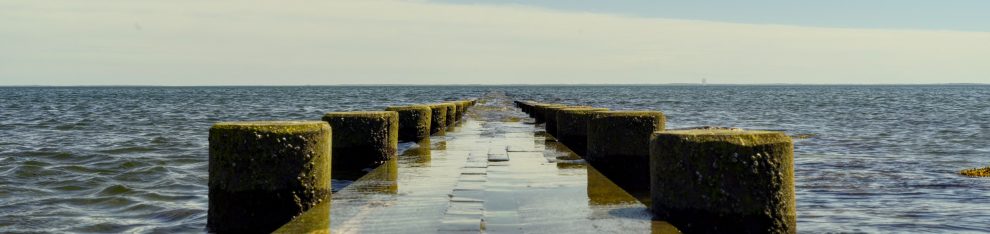
These trees were planted on Turkey Hill Road South just a few years ago. They’ve grown in nicely (Photo/Bob Weingarten)