Last month — before and during the state Department of Transportation public hearing on the future of the Cribari Bridge — residents and Representative Town Meeting members urged 1st Selectman Kevin Christie to form an advisory group.
Today, he did just that.
Christie said that a new Cribari Bridge Advisory Committee would “support the town’s ongoing engagement with the DOT as the state-led process moves forward.”
He did not announce names of committee members, or indicate when and how they would be appointed.
The first selectman noted, “the well-attended public hearing reflected strong community interest and underscored the complexity of the issues involved.
“Traffic, safety, neighborhood impact, historic and neighborhood context, and long-term fiscal responsibility are all legitimate concerns that deserve to be evaluated carefully and in an informed way.”
Residents packed Town Hall for last month’s Department of Transportation public meeting. (Photo/Dan Woog)
While state officials have identified a “preferred option” for the bridge, no final decision has been made. The environmental review process remains open.
Christie said, “the Advisory Committee will bring together technical expertise and community perspectives to help keep Westport’s input grounded in facts and reflective of community priorities. It will evaluate options for the bridge, including structural and design considerations, in the context of community impact, funding implications, and long-term maintenance responsibilities.”
The Advisory Committee will make recommendations to the First Selectman.
However, he noted, “the Advisory Committee will not replace the formal state process or make a final decision on the project. Its role is to support the town’s engagement with DOT by providing a structured forum for coordination, analysis, and public input, with a focus on outcomes that serve Westport’s long-term interests.
“Westport has a real stake in this project for our neighborhoods, our infrastructure, and our fiscal future. This Advisory Committee will build on the Town’s discussions with the DOT by grounding decisions in facts, incorporating community input, and identifying solutions that work for Westport.”
The public comment period on the DOT’s Environmental Assessment is open through April 17. Comments can be submitted online, by email to James.Barrows@ct.gov, or by mail to James Barrows, P.O. Box 317546, Newington CT 06131-7546. Reference Project No. 0158-0214.
Cribari Bridge (courtesy of Connecticut Department of Transportation)
As a longtime Bridge Street resident, Werner Liepolt has a front-porch view of traffic — including the vehicles that apps like Waze send past his house. He writes:
Take a look at Westport the way a navigation algorithm does.
I-95: Thursday, March 26, 9 p.m.
It sees not a collection of neighborhoods — but a network.
Because that’s how today’s traffic actually moves.
From the Waze-eye view, the logic is clear. Waze sees traffic speed and volume, but it doesn’t reliably see or respect local rules and human factors that shape safe and appropriate traffic patterns.
Waze emojis and avatars — “Moods” — represent “Wazers:” happy, fast, or stuck in traffic. Other icons indicate real-time reports, crashes, hazards and police.
Waze does not consistently indicate local thru-truck prohibitions. Neither school bus stops nor routes are accounted for. Ditto cyclists, crosswalks and pedestrian activity.
And Waze of course has no way of measuring or reporting long time and cumulative effects of traffic noise, pollution, aesthetic impact or vibration damage.
Waze also ignores narrow streets and historic districts — for example, the Bridge Street National Register Historic District.
The Cribari Bridge is not isolated. It connects directly to a sequence of roads that carry traffic eastward through Westport.
From the Waze eye view, the logic is clear.
The William F. Cribari Memorial Bridge connects Riverside Avenue’s commercial district directly to Bridge Street (Route 136), feeding traffic into a residential corridor that continues inland. What appears to be a local crossing is, in fact, a key link in a broader east–west route.
Now look a few miles away.
Individually, these are routine infrastructure projects.
Together, they form something much more consequential.
Just east of Westport, the Sasco Creek Bridge sits on Greens Farms Road near the Post Road and I-95 Exit 19. The Connecticut Department of Transportation proposes removing a major constraint at the eastern end of the same corridor.
CTDOT is:
Likely increasing load capacity at Sasco Creek. The design drawings show a full-capacity structure capable of carrying legal truck traffic.
Removing geometric constraints and increasing load capacity at the Cribari Bridge, making it capable of handling legal truck traffic.
Yet the Environmental Assessment of the Cribari Bridge assumes trucks will not use this route — without analyzing what happens once both bridges in this corridor are upgraded,
That creates a continuous, higher-capacity east-west route from Fairfield on the Old Kings Highway through Westport on Greens Farms Road and Bridge Street to Saugatuck — closely paralleling I-95 between Exits 18 and 19.
This is not speculation. It is visible on the map. The Sasco Bridge CTDOT Project 0158-0218 is already underway. The hearings concluded in 2021.
They concluded about the time the Environmental Assessment for CTDOT project 0158-0214 (the Cribari Bridge) was being written. Now the hearings and time for public comment on that project will end on April 17.
Combined, these CTDOT projects should broaden the Cribari Bridge Area of Potential Effect to the entire I-95-Greens Farms Road corridor.
Navigation apps do not consider whether a road is “appropriate” for through traffic.
They calculate the fastest route.
When I-95 backs up — as it often does — these systems will route drivers off the highway, send them across Sasco Creek, through Greens Farms and Bridge Street, over the Cribari Bridge, and back toward the highway or local destinations.
Once weight limits and geometric constraints are removed, this corridor becomes accessible, continuous, and visible to routing algorithms.
At that point, it will be used.
The Environmental Assessment for the Cribari Bridge suggests that trucks and through-traffic will not find this route “desirable.”
But that assumption belongs to an earlier era.
Today, traffic patterns are shaped not just by drivers, but by software. And software does not share local sensibilities.
Nowhere does the Environmental Assessment meaningfully examine:
The combined effect of upgrading both bridges
Diversion from I-95 during congestion
The role of real-time navigation systems
Impacts on residential streets and safety
Instead, the project is evaluated as if each bridge exists in isolation. It does not.
If this corridor begins to function as an alternative to I-95, the consequences will be felt across Westport:
Increased traffic through residential neighborhoods
Safety concerns for pedestrians and cyclists
Noise and air quality impacts
Changes to the character of a federally recognized historic district
These are precisely the kinds of indirect and cumulative effects that federal law requires agencies to consider.
No complex modeling is needed to understand the risk. The map already shows:
A connected route
Fewer constraints
A faster alternative to a congested highway
Numerous Waze alternative routes from the Post Rd and through residential neighborhoods south of the Post Road
The question is not whether traffic will use the corridor. The question is why the state has not fully evaluated that possibility.
Public comment on the Cribari Bridge project is open through April 17. Submitted comments make a difference and must be counted under FHWA regulations. Comments can be submitted here or by voicemail: (860) 594-2020. (reference State Project No. 0158-0214). Written comments can be mailed to: James Barrows, 2800 Berlin Turnpike, P.O. Box 317546, Newington CT 06131-7546.
(Our “Opinion” pages are open to all. Email submissions to 06880blog@gmail.com. To support our work, please click here. Thank you!)
But 2 of the properties proposed for that redevelopment project recently changed hands.
As first reported by Westport Journal, Spinnaker Real Estate Partners — a Norwalk-based commercial real estate firm that has developed mixed-use properties in South Norwalk and New Haven — bought 606 Riverside Avenue for $12.795 million, and 96 Franklin Street for $3.25 million.
The larger Riverside Avenue site includes Minutemen Cleaners and 2 other businesses. Previously, it was an automobile dealership. The smaller nearby property is a parking lot.
Spinnaker has not yet disclosed plans for the site. They did not respond to requests for comment.
Some residents applauded some parts of the proposal, developed by ROAN Ventures. Others found it too dense, too massive, too out of character for the neighborhood.
New commercial development in the area — particularly around dilapidated 606 Riverside Avenue — could be the next step for Spinnaker. It would follow the renovation pioneered by Gault that brought the Whelk, other businesses and apartments to the area near Bridge Square (and which, when proposed, was also hotly debated).
New apartments a few steps from the train station could attract both young people, and older Westporters looking to downsize. Spinnaker has experience with transit-oriented development: Their Platform apartments are just steps from the South Norwalk station.
Spinnaker’s “The Platform” apartments, by the South Norwalk train station. They include studios, and 1, 2 and 3 bedrooms.
Hamlet’s hotel idea was welcomed by some. Others questioned the economics of a boutique property with just a few dozen rooms, in the shadow of I-95.
After the P&Z squelched the Hamlet, ROAN threatened a massive 8-30g affordable housing development. They later withdrew that plan.
Spinnaker has not previously pursued 8-30g projects. Their work leans toward projects like SoNo Central, a 150-unit apartment building with 3,000 square feet of restaurant and retail space, and The Audubon, luxury apartments near Yale New Haven Hospital and the Audubon Arts District.
ROAN proposed to renovate and “re-skin” the 21 Charles Street office building opposite Zucca Gastrobar. The structure has been a thorn in the side of many locals. Spinnaker did not buy that property, however.
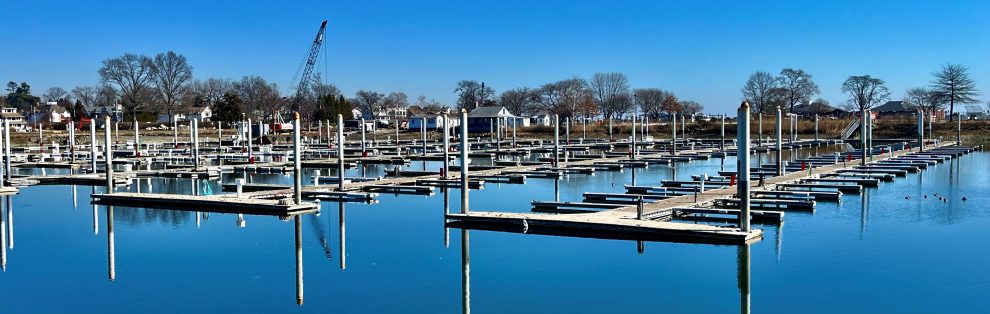
Spinnaker’s purchases also did not include any riverfront property. ROAN’s plans for water taxis were derided by some. Others liked the idea of a marina, and the concept of opening up the river — now hidden behind nondescript buildings, and a boatyard.
One of the Hamlet’s marina plans.
All of which is to say: Saugatuck development may soon be back in the news.
In which case, it will share headlines with another Saugatuck project: the future of the Cribari Bridge.
The 2 would not be related — except for their impact on traffic through the area.
That is an important consideration.
One of ROAN’s proposals involved rethinking and synchronizing traffic lights, from I-95 Exit 17 down Charles Street and Riverside Avenue, to the bridge.
Whatever Spinnaker decides, that would be a welcome step toward solving some of the thorniest issues Saugatuck has seen in its long, storied history.
(“06880” covers Saugatuck, real estate, commercial development, housing — and everything else in town. We rely on our readers to help. Please click here to support our work. Thank you!)
As a Bridge Street resident, Werner Liepolt has followed the Cribari Bridge project closely. He writes:
Many people in Westport wonder: Could this project change the kind of traffic that moves through our neighborhood — especially trucks?
It’s a legitimate question. And it’s more important than it might seem, because the answer is not just a matter of opinion or preference. It is supposed to be part of a federal review process.
Westport has been here before. From the construction of I-95 to earlier debates over the bridge itself, residents have long wrestled with how large infrastructure decisions affect the character of their neighborhoods. Past leaders have emphasized the importance of seeing full information and hearing public input before major decisions are made.
The Cribari Bridge. (Photo/Wendy Crowther)
That expectation — that process should be clear, transparent and responsive — remains just as important today.
Four key groups are involved in the process.
The Connecticut Department of Transportation (CTDOT) designs the project and prepares the Environmental Assessment, and identifies potential impacts (traffic, right-of-way, neighborhood effects).
The State Historic Preservation Office reviews impacts on historic properties and districts, and participates in Section 106 consultation.
The Federal Highway Administration ensures compliance with federal law; oversees environmental and public review, and must consider and respond to public comments before decisions are made.
The public (residents and consulting parties) provides comments and local knowledge; raises concerns, and becomes part of the official record agencies must consider.
Each of these roles matters. The process works best when every part is carried out fully and transparently.
One way to make sense of the process is to translate the terminology into plain language.
A federal law (the National Environmental Policy Act)requires that before a project is approved, agencies must look carefully not just at what will be built, but at what may change because it is built.
That includes traffic patterns, safety, noise, and how a place is experienced over time.
So when residents ask whether a new bridge might change traffic — possibly including truck patterns — that is not outside the process. It is the kind of question the process is supposed to answer.
When there is an issue on I-95, traffic backs up on Bridge Street. (Photo/Werner Liepolt)
At the March 19 public hearing, another issue brought the question of process into sharper focus.
It surprised many to hear that approximately 10 properties and a dock may be affected by right-of-way acquisition. Yet no map or specific identification of those properties was presented.
Moments like that can be unsettling — not because projects never have impacts, but because understanding those impacts is essential to meaningful public participation.
When information emerges late or without clear context, residents may wonder whether they are seeing the full picture, or how their own property or neighborhood might be affected.
That too is part of what the review process is intended to address: ensuring that potential impacts are clearly identified and available for public understanding before decisions are finalized.
Because Cribari sits within the Bridge Street Historic District, another federal requirement also applies: Section 106.
Bridge Street is part of a Historic District.
This part of the process asks a different but related question: How might a project affect not just a structure, but the character of a historic place?
To answer that, agencies define an Area of Potential Effects — the area where the project could reasonably have an impact.
If a project could change traffic patterns beyond the immediate footprint of the bridge, it is reasonable to ask whether the area being studied should also be broader.
If right-of-way acquisition is under consideration, it may also be appropriate to consider whether those properties should be clearly identified and included in the analysis.
There is also a sequence to how these decisions are supposed to be made. The process is not decide → build → address concerns later.
Instead, it is meant to proceed in this order:
Avoid impacts where possible.
Minimize impacts where they cannot be avoided.
Mitigate impacts as a last step.
If that sounds like common sense, it is. It is also federal regulation.
At a December 18 meeting, discussion appeared to move quickly toward potential mitigation measures associated with a replacement bridge. Options such as relocating the existing structure were raised, and demolition was referenced as an alternative.
While mitigation is an important part of the process, it is intended to follow a full consideration of ways to avoid or minimize impacts. When the conversation centers on mitigation before those earlier steps are clearly resolved, it can give the impression that key outcomes are already taking shape, rather than remaining open to evaluation.
The Cribari Bridge is 143 years old. (Photo/Robbie Guimond)
The purpose of that petition is sometimes misunderstood. It is not asking that a particular outcome be imposed, nor is it opposing infrastructure improvement.
Rather, it reflects a shared concern that potential impacts — especially those that extend beyond the bridge itself — be fully and transparently evaluated before decisions are made.
It is a request that the existing federal review process be applied as intended.
As the Cribari Bridge project has evolved, the design has become more defined and more aligned with current engineering standards. That is a natural and expected part of any infrastructure project.
At the same time, some residents are asking whether the analysis of potential impacts — particularly indirect effects like changes in traffic — has evolved at the same pace.
That is not an argument against the project. It is a question about whether the process is keeping up with the project.
It is also understandable that some residents feel the process can be difficult to follow, or that decisions may be moving ahead of public understanding.
At the beginning of the March 19 public comment session, attendees were directed to provide comments at tables for transcription. As the session unfolded, speakers instead came forward to the podium to offer comments directly.
Moments like this can add to uncertainty about how best to participate. Clarity in how public input is received is an important part of ensuring that residents feel their voices are heard — and that their comments become part of the official record.
The public comment period exists for exactly this reason. It is one of the few points at which residents can ask that questions be fully addressed before decisions are finalized, rather than after.
Home page of the Connecticut Department of Transportation Cribari Bridge website.
The comments residents submit become part of the official record that federal agencies are required to review and respond to.
That is how the process is designed to work. It works best when people use it.
You do not need to master the terminology, and you do not need to agree with your neighbor on every point.
But if you are concerned about how this project could affect traffic, safety or the character of the neighborhood, there is a simple and meaningful way to participate: Ask that the impacts be fully studied before decisions are made.
Even a short, clear and respectful comment helps ensure that those concerns are considered as part of the process. Comments become part of the official record that federal agencies must review and respond to before moving forward
In the end, this is not only about a bridge. It is about how decisions are made, how places are understood, and how communities participate in shaping what comes next.
That participation does not require expertise — only a willingness to ask the right questions at the right time.
Public comment on the Cribari Bridge project (#0158-0214) is open through April 17. Comments can be made online (click here); by email (James.Barrows@ct.gov); voicemail (860-594-2020), or mail (James Barrows, 2800 Berlin Turnpike, Newington, CT 06131).
To learn more about the Cribari Bridge project, click here.
(“06880” Opinion pages are open to all. Email submissions to 06880blog@gmail.com. To support our work, please click here. Thank you!)
But today — the day after a public meeting with the state Department of Transportation, in the midst of fierce discussions about the future of the Cribari Bridge — is a good time to resurrect it.
The last time the Saugatuck River span was renovated — over 30 years ago — a temporary bridge took it place.
It rose up and down at both ends: Bridge Street and Riverside Avenue.
It was wide. It curved around the original. It cut through the parking lot of what was then Mansion Clam House (now the aptly named Bridge at Saugatuck restaurant).
And it worked.
Traffic was a breeze.
For 3 decades since, Westporters have wondered why it was torn down.
Today is a good time to resurrect not only the photo, but the question.
(Friday Flashback is one of “06880”‘s many regular features. If you enjoy this — or anything else on our website — please consider a tax-deductible contribution. Just click here. Thank you!)
More than a dozen state Department of Transportation representatives — including deputy commissioner Laoise King — came to Town Hall last night, for a public meeting about the future of the Cribari Bridge.
“Save Saugatuck From Semis” signs greeted residents at Town Hall yesterday.
They offered a dry presentation, focused on structural engineering issues.
The public could comment afterward, they said — but only at a table near the front, speaking individually to a transcriber.
The public howled.
DOT — perceived as inflexible by many residents, during discussions over the past few years about the 143-year-old span — relented.
Residents could indeed step up the microphone and address the entire audience– including the DOT staff — the moderator said.
The public applauded.
Part of the Town Hall crowd last night.
For nearly 2 hours, the public — Representative Town Meeting members, other citizens, even the owner of the small Bridge Street house that once belonged to the bridge tender – spoke.
Nearly all emphasized two things: traffic and safety. Environmental concerns, and fears of damage to homes from the vibrations of semis, were raised too.
Kristen Schneeman — who demanded that she be allowed to speak from the lectern, not the corner table — was first. Her comments set the tone for the night.
The RTM member noted that public opinion has recently converged around 2 needs: preventing tractor-trailer traffic from creating a “fourth lane of I-95 that jeopardizes safety, health, and quality of life well beyond the Bridge Street historic area,” and preserving the historic character of a local icon.
She said that CTDOT’s Highway Design Manual calls on designers to be “imaginative, innovative and flexible,” asking “if the oldest active movable highway bridge in Connecticut does not merit that flexibility, what does?”
RTM member Kristin Purcell and Westport Alliance for Saugatuck member Dara Lamb both said that state officials are encouraging more housing in Saugatuck, as a “Transit-Oriented District.”
Why then, they wondered, should tractor-trailers be added to an already congested area?
RTM member Kristin Mott Purcell.
Greens Farms Association president Art Schoeller called Greens Farms Road “already a go-to pass-through” for I-95. His organization, he said, opposed “any alternative that would allow trucks” in that neighborhood.
Carole Reichhelm drew applause when she thanked CTDOT for their extensive work on the project.
But, she added, “you’ve given waivers and allowed exemptions many times before, for a variety of reasons. Why wouldn’t the Cribari Bridge qualify for one?
“You can’t stop Waze,” she concluded. “But you can stop trucks. We want to work with you on this.”
Morley Boyd of the Westport Preservation Alliance held a copy of the CTDOT’s own Bridge Preservation Plan. (All photos/Dan Woog)
Public comment on the Cribari Bridge project (#0158-0214) is open through April 17.
Comments can be made online (click here); by email (James.Barrows@ct.gov); voicemail (860-594-2020), or mail (James Barrows, 2800 Berlin Turnpike, Newington, CT 06131).
To learn more about the Cribari Bridge project, click here.
Joey Kaempfer is a 1965 graduate of Staples High School.
After working on commercial real estate projects around the world, he moved back to Westport. He lives near Saugatuck Shores, and drives through Saugatuck often. Joey writes:
I have watched and listened to the back and forth about our 143-year-old Cribari Bridge for some time. I have traveled across it in cars, bicycles and by foot on and off for nearly 70 years.
So, as a Westporter, I wish to offer a few thoughts.
First, I understand and completely concur with the idea of not curing the ills of an overcrowded I-95 by running giant trucks through the village.
Second, I have had the pleasure of living in antique houses, and in my business career rebuilding a number of old structures around the world. I do not find the Cribari either charming or pretty, except at Christmas time with its colored lights.
Yes, it’s old, but mere age isn’t really a meaningful reason to retain something that has outlasted its useful life. I say that as someone who is often nostalgic about older buildings, houses, and objects of beauty.
Mere age is not a reason to retain something that has outlived its useful life, says Joey Kaempfer.
I would like to see the bridge, or part of it, moved closer to town as a footbridge near the Library, or as an interesting replacement for the Kings Highway bridge near the medical park formerly known as Fort Apache.
We could then build a magnificent modern bridge in Cribari’s stead. It could be genuinely beautiful, perhaps designed by a remarkably talented architect. (Perhaps Jon Pickard of New Haven, the former head designer at the late Cesar Peilli’s office, or someone like Norman Foster in London, or another notable and brilliant designer.)
I would be delighted to pay the differential cost for this great design over yet another dull river crossing. Such a bridge could help lift up our wonderful town, by showing what startling design can do. I have found great design to be contagious.
One example of a modern bridge design. Joey Kaempfer notes, “Ours would be smaller and more delicate. But great design can lift the spirits of those who see and travel across it.”
The replacement bridge could be slightly wider; be more graciously proportioned; have a simple, modern mechanism to allow taller boats to pass, and still not be designed to allow large, noisy trucks trying to avoid I-95 congestion.
I see this as an opportunity for Westport to keep some history, while creating something accretive to the beauty and charm of our town.
(“06880” Opinion pages are open to all. Send submissions to 06880blog@gmail.com. To support this hyperlocal blog, please click here.)
Tonight’s main event — a public meeting about next steps for the Cribari Bridge, with representatives of the state Department of Transportation — begins at 6 p.m., in the Town Hall auditorium.
Can’t be there? It will be livestreamed at www.westportct.gov, and aired on Optimum channel 79.
The Cribari Bridge leads from Saugatuck (above) to Greens Farms. (Photo/John Videler for VidelerPhotography.com)
=================================================
Meanwhile, Saturday’s main event will be the state high school basketball championship.
The Staples boys team — already 2-time FCIAC champions — competes for their first Connecticut crown since 1937.
Tip-off is 8:30 p.m., at Mohegan Sun.
Sure, it’s late — and at the other end of the state. But it’s been nearly a century since Westporters have been able to cheer the Wreckers on in a state boys basketball final.
Go Wreckers! And go Westporters — see you Saturday night at Mohegan Sun!
The Staples boys basketball team. (Photo/Diane Lowman)
=================================================
Looking ahead: The theme for the Memorial Day parade float contest has been announced.
And — looking back — it’s a great one: “250 Years of Honor and Service.
Certificates will be awarded in 6 categories: Best Development of Theme, Best Youth Organization Float, Most Creative, Best Community Organization, Most Colorful, and Best Overall Float.
Of course, we already know the winner in the Overall category.
It’s the Y’s Men of Westport and Weston.
After all, they’ve won for the last 250 years.
Another Y’s Men Memorial Day parade float winner. This one won in 2021. (Photo/Dan Woog)
In their continuing effort to UnPlastic Westport, Sustainable Westport will show “Plastic People: The Hidden Crisis of Microplastics.” The documentary explores the alarming spread of microplastics throughout our planet — and our bodies.
The event — following a sold-out showing at SXSW — is April 9 (6:30 p.m., Greens Farms Academy). A panel discussion will follow the screening.
Westport Professionals Network co-founders Lisa Fedorchak and Katie Gervasio, analyzed the current job market, at Tuesday’s Westport Rotary Club meeting.
The WPN connects local college students and young professionals with job and networking opportunities. Volunteers offer mentorship and advice, in person and online.
“Right now, this is a tough time,” said Fedorchak. “The young professional unemployment rate is 10.5%.”
Lisa Fedorchak (speaking) and Katie Gervasio, at the Westport Rotary Club. (Hat tip and photo/Dave Matlow)
=================================================
Westport resident Vivek Kanthan wants to end the drought of Americans ascending to the top of Formula 1.
“06880” last checked in just over a year ago, when he signed with the Formula 4 team Griffin Core by Campos — the top-ranked team in that division.
Since then, Kanthan won his first F4 race, captured Rookie of the Year honors, and set several records, including the single lap speed mark in Mexico City.
Last weekend, the 15-year-old placed 1st at the Spanish Winter Championship.
For more than 4 decades, The Susan Fund has provided college scholarships to Fairfield Country residents who have been diagnosed with cancer at some time in their life, and attend (or plan to) enroll in an institution of higher learning.
The Fund was established in 1980 in memory of her Susan Lloyd, a Staples High School graduate who lost her battle with cancer. Since its founding, the organization has provided over $2 million in scholarships to more than 300 students.
The deadline is near — April 1 — for applications for the 2026 school year. To apply or to learn more about the Susan Fund, click here.
On May 2, the Nolan Team at Compass is sponsoring a town-wide tag sale. It will likely be Westport’s biggest ever.
Residents can participate by hosting a sale at their own home.
It’s a great way to get plenty of publicity. The Nolan Team handles all promotion (including a sign for your lawn or driveway). Your address will be included on a map, and all publicity.
Shoppers can plan their own route, and visit multiple sales all day.
To participate, and for more information, click here.
300 years of passageways in Weston is the topic of an April 19 book talk at the Weston History & Culture Center.
Artist Julie O’Connor will discuss her 2008 book, “Doors of Weston.”
The lecture is free, but registration is required. Click here.
doors are accessible “portals” to understanding the evolution of Weston and its people over the last three centuries, as we celebrate America and Weston since the signing of the Declaration of Independence.
The Center says, “doors are accessible ‘portals’ to understanding the evolution of Weston and its people over the last 3 centuries, as we celebrate America and Weston since the signing of the Declaration of Independence.”
Westport Police made 3 custodial arrests between March 11 and 17.
A 44-year-old Woodside, New York man was charged with 2 counts of larceny, following 2 shoplifting incidents at Walgreens. Both involved allergy medications. One was of $2,659 worth of merchandise; the other was $1,964. He was extradited after being incarcerated for an unrelated matter in New York.He was held on a $40,000 bond.
A 50-year-old Redding man was charged with sexual assault, after a complaint by a restaurant employee that a customer had used his hand to pinch the victim’s buttocks.
A 44-year-old Plymouth, Massachusetts man was charged with failure to appear. He was held on a $25,000 bond.
Westport Police also issued these citations:
Texting while driving: 9 citations
Operating a motor vehicle without minimum insurance: 6
Operating an unregistered motor vehicle: 5
Failure to obey stop sign: 5
Operating a motor vehicle under suspension: 4
Failure to renew registration: 4
Failure to obey traffic commission regulations: 4
Distracted driving: 3
Operating a motor vehicle without tint inspection: 2
Click here to help support “06880” via credit card or PayPal. Any amount is welcome, appreciated — and tax-deductible! Reader contributions keep this blog going. (Alternate methods: Please send a check to “06880”: PO Box 744, Westport, CT 06881. Or use Venmo: @blog06880. Or Zelle: dwoog@optonline.net. Thanks!)
GET THE “06880” APP
The “06880” app (search for it on the Apple or Android store) is the easiest way to get “06880.” Choose notifications: whenever a new post is published, or once or twice a day. Click here for details.


 But that assumption belongs to an earlier era.
 Public comment on the Cribari Bridge project is open through April 17. Submitted comments make a difference and must be counted under FHWA regulations. Comments can be submitted here or by voicemail: (860) 594-2020. (reference State Project No. 0158-0214). Written comments can be mailed to: James Barrows, 2800 Berlin Turnpike, P.O. Box 317546, Newington CT 06131-7546.


