Yearly Archives: 2017

They Do Grow Up!

On July 1, 2003, a small group gathered underneath a pear tree, on a patch of grass separating a rutted parking lot from the sprawling, 1-story Staples High School campus.

Several speakers at the low-key ceremony praised the high school as “the jewel in the crown” of the Westport school system.

Then superintendent of schools Elliott Landon, principal John Brady, 1st selectwoman Diane Goss Farrell, Board of Education chair Sandra Urist and 10 other educators, politicians, citizen-volunteers and Turner Construction Company representatives turned over symbolic shovels of dirt.

Ground was broken for construction of an even more sprawling, 3-story school. Another major chapter in Staples’ fabled history had begun.

The Westport News ran a front-page photo of a young boy helping out:

As the caption noted, 4-year-old Jacob Leaf was the grandson of Dan Kail, chairman of the Staples School Building Sub-Committee.

The paper was wrong, however. Jacob is a member of the Class of 2017 — not 2018.

Tomorrow (Thursday, June 22, 2 p.m.), he and over 450 classmates graduate.

They’ll do so in the fieldhouse — one of the only parts of the building not touched by the $84 million renovation.

The project — completed in 2005 — transformed Staples forever. It is a 21st-century building, and this year’s graduating class have done their high school — and town — proud.

Sitting especially proudly in tomorrow’s crowd will be one of the Westporters most responsible for the modern Staples High School: Jacob’s grandfather, Dan Kail.

Congratulations to all the graduates; to all who made Staples possible, and all who continue to do so.

Josh Duchan’s River Of Dreams

Josh Duchan grew up in Westport. But, he says, “as the son of 2 New Yorkers, Billy Joel was the soundtrack of my childhood.”

Records filled the Duchans’ High Point Road home. Cassettes played on the radio, as Josh was shuttled between activities.

Duchan took piano lessons. He discovered that rather than looking at every note, he could read guitar chords and “fake it.” He bought scores to Billy Joel songs, and learned to play and sing along.

Duchan was a talented musician at Long Lots Elementary and Coleytown Middle Schools. He played Will Parker in Staples Players’ “Oklahoma!”, then wrote the score and conducted the pit for their production of “The Tempest.”

Staples teacher Alice Lipson cultivated Duchan’s love for choral music. Her theory classes showed him “the amazing ways music really works.”

Private instructor Bill Hall shaped Duchan’s tenor voice. Billy Joel is a tenor too. If you think Duchan was a fan of the singer/songwriter then — read on for today.

Josh Duchan

Duchan graduated from Staples in 1997. After majoring in music at the University of Pennsylvania, he earned a master’s and Ph.D. in ethnomusicology at the University of Michigan. He loved studying the intersection of music and culture. Mozart fascinated him; so did Native American and South African music.

But when his first major paper was assigned, Duchan nervously pitched the idea of … Billy Joel.

His master’s thesis was not on Billy Joel. But, Duchan notes, “I used him for just about every example of musical meaning.”

His doctoral dissertation was about a cappella groups. His research led to Duchan’s first book, “Powerful Voices: The Musical and Social World of Collegiate A Cappella.”

Now he’s written a second. If you can’t guess the subject, I guess that’s just the way you are.

The idea for “Billy Joel: America’s Piano Man” began in 2013, when Duchan gave a presentation on you-know-who at a meeting of the International Association for the Study of Popular Music. Two attendees were editors of a book series on 20th century musicians.

Four years later, “Billy Joel” has just been published. If you think it’s worth reading: You may be right.

Duchan says, “Billy Joel was not just the soundtrack of my childhood. He was the soundtrack to many people’s lives.”

The singer/songwriter’s music offers “a window into what people cared, thought and worried about” from the 1970s through the ’90s, Duchan says.

On the surface, for example, “Allentown” is about a struggling city. But it represents major changes in American manufacturing, and difficult decisions about staying in your hometown, or leaving. Duchan puts that song — and many others — in the context of how it was written, and why it appealed.

The book is not a biography (several have already been written). Instead, Duchan examines a selection of songs — some mega-hits, many not — in a series of themed chapters. Songs about places, for example, cover Joel’s well-known home (“New York State of Mind”), as well as Los Angeles (where he once lived) and the familiar concept of suburbia.

Other chapters cover topics like relationships and history (“We Didn’t Start the Fire”).

“Billy Joel” is also not a book filled with technical music jargon. Duchan aims for a general readership.

Billy Joel

The book’s subject loves the project. Duchan — who has seen Joel in concert a few times — scheduled an hour phone interview in September. The more insightful Duchan’s questions became, the more enthusiastic Joel got. He had not had many opportunities to think — and speak — so introspectively about his music.

Duchan had to hang up to teach a class — his day job is professor of music history, ethnomusicology and pop culture at Wayne State University in Detroit — but they agreed to meet in person.

Duchan wanted it to be in a place with a piano. A month later, he flew to Joel’s home near Oyster Bay.

Their scheduled hour interview turned into 4 hours (including lunch in his kitchen). Joel played classical music as well as his own songs, explaining melodies and chords along the way.

Joel then added a coda: A great blurb for the back cover.

Library Journal gave it a very positive review (“must-read analysis”).

Now Duchan is planning his next project: the same sort of how/why deep dive into creativity, with another popular composer. His sights are set on James Taylor.

But right now, Josh Duchan is enjoying his Billy Joel moment.

And so it goes.

Pic Of The Day #65

Compo Beach, moments before last night’s storm. (Photo/Andrew Colabella)

Best Worst Parking Job. Ever

I have no idea what went on here, earlier this afternoon:

But it goes without saying:

It happened in the Compo Shopping Center parking lot.

Staples Interns Rock The Real World

Once upon a time, Staples High School 12th graders marked the month before graduation with boredom, pranks and trouble-making.

Now they build homes and websites. They help bakers make cakes, and bankers make money. They work in corporate offices, on sustainable farms, in recording studios and dance studios.

They use the math, writing, analytical, computer and common sense skills they’ve honed during a dozen years of school. For perhaps the first time in their lives they solve real-world problems with bosses, colleagues and clients.

They learn how to communicate — and how to commute.

On Friday, over 400 Staples seniors completed their 5-week internships. They work hard, at real work. They learn a lot, met new people, and (for the most part) had fun. Many call the program one of the most valuable experiences in their entire school careers.

On Thursday, they graduate.

Thanks to their teachers, administrators, coaches, club advisors and counselors — and their Staples Senior Internship — they’re as ready for the real world as they can be.

Colin McKechnie and Hallie Lavin capped their internship at the Weiser Kitchen by preparing and hosting a delicious party.

Claudia Lagnese does environmental work at Harbor Watch.

Alice Sardarian with a young patient at Village Pediatrics.

During their internship at Oliving Experience — a builder of energy-efficient luxury homes — Josh Berman and Teddy Lawrence worked on spreadsheets and handled social media. They also did lots of manual labor.

Faiza Qureshi gets into position at Kaia Yoga.

Becky Hoving and Jillian Stefani get into the mood for the Long Lots School field day.

Grace Wynne at Whittingham Cancer Center.


Pic Of The Day #64

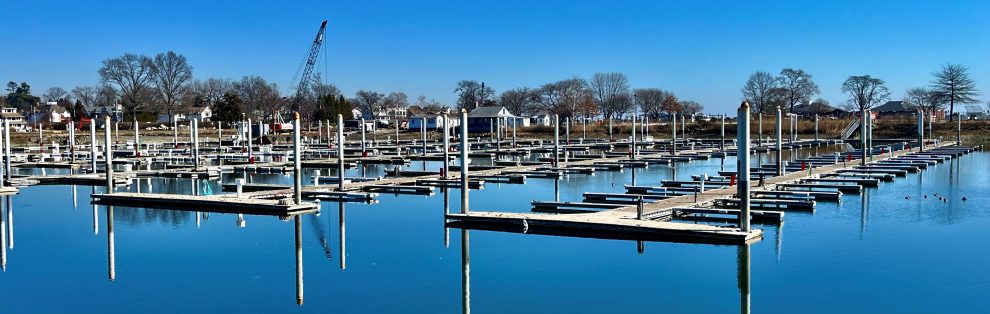
Heading into Ned Dimes Marina at Compo Beach last night, after a Father’s Day ride. (Photo/Andrew Colabella)

Groundbreaking Near For Exciting Library Project

It’s not a “renovation.” Nor is it a “remodeling.”

On August 1, the Westport Library breaks ground on a “transformation” project.

Through 21 months of construction — during which it remains open for use — the 31-year-old building will be reimagined, top to bottom.

Literally.

The stark and dark lower level — currently home to the video department, offices, the cramped McManus Room and a few offices — turns into a place of light, nature and activity.

The lower entrance off the Taylor parking lot will be spiffed up and enclosed, resulting in great river views. (Photo/Lynn U. Miller)

The offices facing the river will be recaptured for patrons’ use — with larger windows, to enjoy the view.

Right now, offices, doors and a stairwell prevent patrons from enjoying the nearby river. (Photo/Lynn U. Miller)

The functional Taylor parking lot entrance becomes more welcoming. A 2nd entrance — midway up Jesup Green — offers another access to the main level.

The result of all this is a better visual and visceral connection between the library, the river and the green.

A rendering of the new Jesup Green entrance. It will lead patrons into the upper level about where the graphic novels are located now.

The DVD/BluRay collection — accounting for 35% of the library’s check-outs — moves to the main floor.

So does the very popular McManus meeting room — where it will be 4 times larger.

The main level — the one accessible now only from the Levitt Pavilion lot — undergoes a mind-boggling transformation.

The cafe expands threefold. With more food choices, an outdoor terrace, a new connection to the Sheffer Reading Room and a special entrance allowing it to be used after hours for events like author and poetry readings, this area can become an actual destination.

Right now, the gift/store area is cramped — and so is the cafe behind it. A greatly expanded — and more flexible — cafe is in the works. (Photo/Lynn U. Miller)

The newspaper and magazine reading rooms — with their gorgeous river views — remain. But mobile furniture makes them more flexible.

The hulking service desk gets revamped, to be more open and inviting. Director Bill Harmer calls the area next to it “The Hub,” where staff members offer assistance.

The area near the massive circulation desk becomes much more user-friendly. (Photo/Lynn U. Miller)

The main room gets acoustic tiles, helping noise and aesthetics. Dozens of power outlets will line the perimeter.

But that’s only the start.

A raised floor will be built over the art display kiosks (which are actually air intake vents, too costly to move). The grandstand will be similar to Times Square. Harmer envisions similar excitement, interaction, dreaming and activity.

The Great Hall will include grandstand seating, over the current art exhibit kiosks (which actually hide air intake vents). Stacks will move downstairs.  The area near the windows will be reimagined, providing great views of Jesup Green. (Photo/Lynn U. Miller)

A giant LED screen and excellent sound system add to the possibilities.

A rendering of the grandstand.

The current book stacks move one floor below, freeing up room for what Harmer calls “open, flexible community forum space.” With room for 500 people (and a large screen), it’s a spot for collaborative work, and large programs.

A “forum” replaces stacks on the main floor. It’s a flexible space for collaboration and programs, with a large LED screen at the rear. This rendering shows the view toward the police station.

The entire space can be cleared if needed, for exhibitions or trade-type shows.

The Maker Space has already been disassembled, and reopened temporarily on the top floor. It will reappear — in a larger form — where the reference section, offices and computers are now. It too will have an after-hours entrance.

Harmer describes the new area as “community-oriented hacker space.” Laser cutters, lathes, power tools, sewing machines and kilns will allow for even more than tinkering, robotics, coding and 3D printing.

“We’ll provide the tools of invention,” Harmer says. “We’ll bring the community together to create magic.”

Sounds interesting, but noisy?

No problem: It’s all sound-proofed.

The old Maker Space has been disassembled. The new one will be even better.

The nearby recording studio will be sound-proofed too. “It’s not Abbey Road,” Harmer apologizes. But — designed by Rob Fraboni, an audio engineer who has worked with the Rolling Stones, Bob Dylan, the Band, the Beach Boys, Eric Clapton and Joe Cocker — it will offer another immersive experience for patrons.

Seven conference/study rooms — more than double the current 3 — will be loaded with technology.

The new McManus Room is planned for the far end of the main floor — closest to the police station — where the stacks are now. Windows will brighten that now-dark corner of the library.

Library director Bill Harmer in the far end of the main floor. Newspapers and stacks will move downstairs, giving way to grandstand seating, an LED screen, the new McManus Room and a recording studio. (Photo/Lynn U. Miller)

Upstairs, the balcony comes out another 5 feet. That provides “box seats” for all that goes on below, while easing the current hallway space crunch.

A much-improved waiting area outside the children’s department is planned. And the nearly unusable balcony will be widened substantially. (Photo/Lynn U. Miller)

The Children’s Department gets an extreme makeover too. More natural light, and a bit of reconfiguring of shelves, enlivens that important area. Giant porthole windows will enable kids to look out over the Great Hall.

Small windows in the children’s section — where shelves now line the wall — will give way to large porthole windows. The Robert Lambdin mural will be moved elsewhere (as will the River of Names tile project, now downstairs). (Photo/Lynn U. Miller)

The price tag for all this is $19.5 million. The town of Westport provides a quarter of the funding. The other three-quarters comes from individual, foundation and corporate donations (including a $1 million state grant).

The library has raised all but $4 million of what’s needed. Bridge financing is already in place.

The Westport Library sits on some of Westport’s most beautiful — and valuable — real estate.

It’s also one of our town’s most used — and valuable — resources.

Less than 2 years from now, the library will be “transformed.”

The project will transform more than the building, and Jesup Green around it.

It will transform all of downtown.

And all of us, too.

Right now, a few areas of the library work well. Views from the children’s department, and the 1st floor Sheffer and magazine reading rooms, will be retained. (Photo/Lynn U. Miller)

(To learn more about the Westport Library transformation project, click here.)
Pic Of The Day #63

On the final day of the Yankee Doodle Fair, the sun finally shone. (Photo/JP Vellotti)

Photo Challenge #129

It’s a medium-size playground for little kids, with a big name.

Last week’s photo challenge showed wooden climbing structures, in a wooded clearing. (Click here for the image.)

Ten alert readers knew this hidden gem is on Weston Road, just north of Ford Road (next to Bridgewater Associates’ headquarters).

Called the Leonard Schine Preserve and Children’s Natural Playground, it’s part of the Aspetuck Land Trust’s vast, wonderful holdings. To find out more, click here(But sssshhhh! It’s our little secret!)

Congratulations to Joan Tricarico, Evan Stein, Fran White, Julie Fatherley, Stan Skowronski, Bob Fatherley, Rachel Polin, Grady Flinn (just 9 years old!), Alexandra Wiberg and David Brant.

This week’s photo challenge has 2 parts:

  • What is this, and
  • Where in Westport can you find it?

If you know, click “Comments” below.

(Photo/Lynn U. Miller)

Young Education Director Teaches Old History

The Westport Historical Society works hard to make the past come alive in the present.

Though they offer many exciting programs for kids and teenagers, WHS staff and volunteers skew — well, not “historical” exactly, but certainly “older.”

Which is why everyone there eagerly welcomed Nicole Carpenter. In her first job after graduating from college, she’s embraced her new role — director of education and programs — with energy and joy.

And with a nod to Westport’s long legacy.

Nicole Carpenter, with a Westport Historical Society award.

“I’m passionate about history and art,” Carpenter says. “This town has a great blend of both. It’s fascinating to learn about the history, and all the artists and other people who lived here.”

The Brookfield, Vermont native attended Castleton University. She majored in art history and painting, with minors in history and business administration.

Then it was off to Syracuse University, where she earned a master’s in museum studies.

Last year, when Carpenter’s boyfriend landed a job as the Wilton Historical Society collections manager, his boss there recommended her for the Westport education role.

At the time, Carpenter knew little about Westport beyond its reputation as an artists’ and writers’ haven. But she used her research skills — online, and using actual books.

When she began work in September, Sven Selander — and many other Westporters — told her “tons of stories.”

Carpenter has found Westport to be “both similar to and different from the rest of New England.” It’s larger and more urban than her Vermont home. But residents in both places have “a deep appreciation of where they live.” Westporters, she says, “are really, really proud of their town.”

Among her many duties, she particularly enjoys leading school tours, and outreach programs like History on Wheels. The WHS recently sponsored a Colonial Family Fun Day. She also helped organize speakers for walking tours and the Danbury raid exhibit.

Wheeler House — the Westport Historical Society’s Avery Place home — in a painting by famed local artist Stevan Dohanos. Nicole Carpenter loves the town’s artistic heritage — and its vibrant present.

Carpenter cites 2 particularly big accomplishments. One is the 3rd grade tour of Wheeler House involving students, teachers, administrators, curators and historians. “It’s so much fun to see kids discover their town’s history,” she says.

The other was the “Come Build Westport” Lego project in March. As children “constructed” Town Hall, National Hall and the WHS’ Wheeler House itself, they (and their parents) learned a lot about how the town grew.

Carpenter’s most recent project — undertaken with 7 high school interns — was the first-ever 1st grade tour.

She looks forward to 3 week-long camps this summer.

Then Carpenter begins planning for next year. She’s already an “old-timer.”

Though still a very young one.