Jarret Liotta is a 1983 Staples grad. He’s now a writer (New York Times, Los Angeles Times, Connecticut Magazine among many credits), and a blogger.
Recently, he wrote about his close encounter with the CL&P tree guys. Here’s an excerpt:

Jarret Liotta
How ironic it was to return home on Earth Day to find a representative of Connecticut Light and Power tagging trees in our neighborhood for take-down. (CL&P apparently hires local “gardening” businesses to do this sort of work, and I have to assume — it only makes sense — that the more trees they cut down — the more they tag — the more money they can make.)
So it shouldn’t have surprised me that he was suggesting a beautiful, large healthy tree at the corner of our property — at least 12 feet off the lines, and in no way presenting a danger — be given the ax (or chainsaw, as it were).
What was also hysterical (and frightening) was that the CL&P flyer — entitled “You Can Help Prevent Power Outages” — ONLY talked about PRUNING trees, and referenced their “tree-trimming program.” But on the enclosed permission sheet — the empowering written consent form that CL&P NEEDS to do their dirty work — they had a little line checked for “taking down,” with the numeral “1” next to it.
Were you to see the tree, you’d laugh that CL&P (or in this case, its paid assassin) would even TRY to argue this lovely life form should be taken down. But what’s so scary is that — and I have no doubt — many people throughout the town, throughout the whole state, are going to quickly sign these consent forms without even realizing it means they’re going to kill a healthy tree simply because 1) the tree killers will make more money and 2) it may save CL&P trouble in the long run.

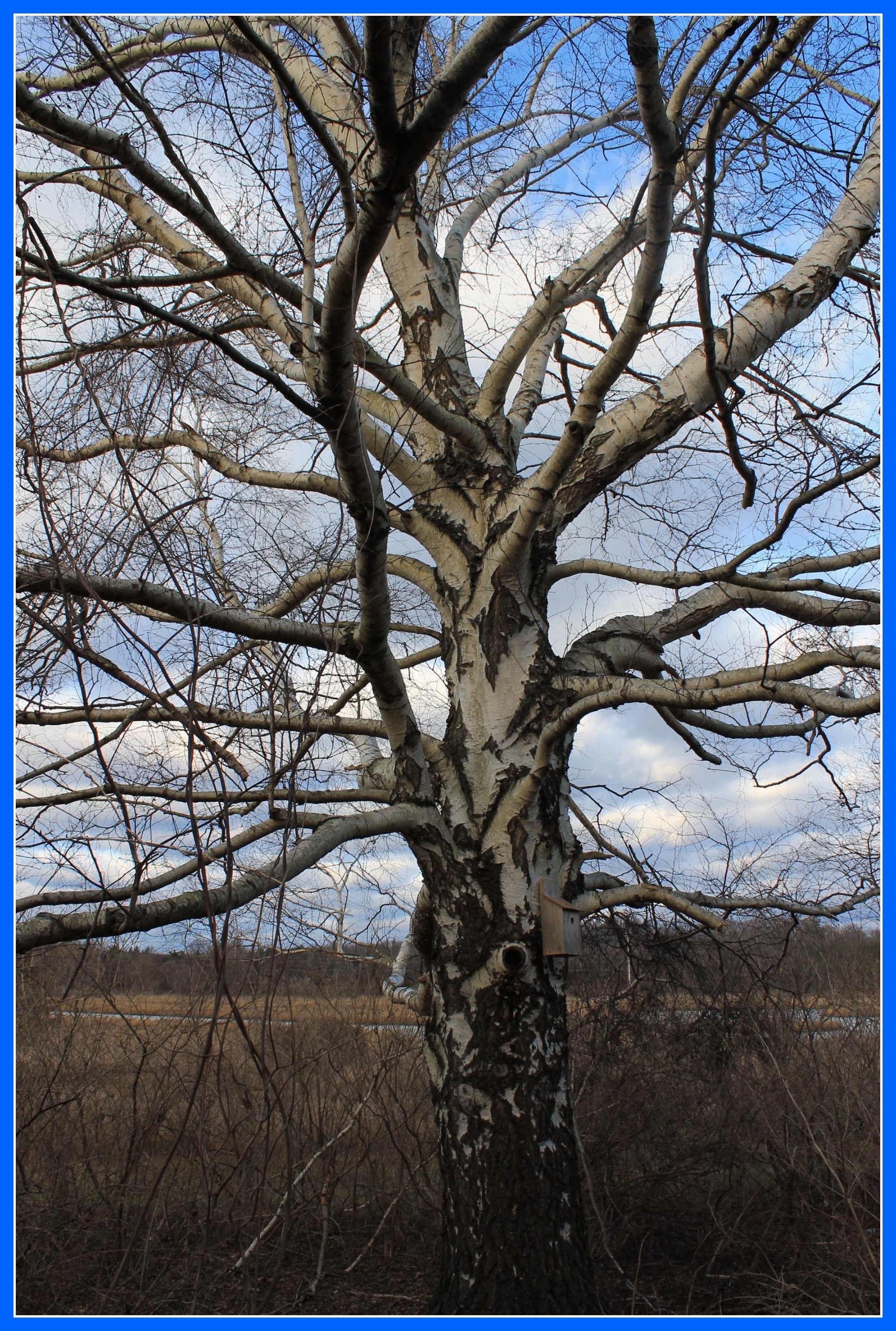
Jarret Liotta is not a big fan of tree cutting. (Note: This is NOT Jarret Liotta.)
The carelessness with which people take axes to healthy trees — ESPECIALLY so-called gardeners and tree caretakers, ironically — is pitiful. Modern housing construction starts with clear-cutting lots, rather than trying to design structures that work in tandem with the natural world (meaning big, beautiful trees).
Homeowners consider fine landscaping cutting down everything that makes shade and grows on the ground, planting the most artificial-looking chemical-saturated grass money can buy, and surrounding it all with wood chips, wood chips, wood chips — the stinkier, the better!
On a parallel note, the state is taking great steps to cut down as many trees as possible along the scenic Merritt Parkway. Apparently everyone is feeling paranoid because of some lawsuits involving trees and death and storms, so the logic is to always blame the trees (because we can’t blame the state, or the drivers), and so they must be cut down en masse, and scenery, nature and trees be damned …
(To read Jarret’s entire post, click here.)



 The most common energy-reducing actions taken by Westporters was the installation of programmable thermostats (62%). Other popular measures include scuttling old appliances for Energy Star ones; replacing old boilers, furnaces or windows with more energy-efficient; adding insulation, and installing compact fluorescent light bulbs. Only 3% said they had taken no action.
 However, survey co-chair Alan Abramson says, the biggest benefit reported afterward is comfort. Many homes are drafty, and the difference is immediately apparent.
 When his year was up, Alan returned to Westport. Soon, Gordon Joseloff asked him to co-chair the 1st selectman’s


 Chris has worked for CL&P since 1976 — a few years after graduating from Union. He remembers his big storm duty assignments well: 9 straight days during Hurricane Gloria in 1985; a week in a 1987 snowstorm; another week during back-to-back 2006 nor’easters; the December 1992 coastal storm that flooded Main Street, and the Christmas Eve nor’easter in 1993 that wiped out his holiday.
