Real Food, Real Farmers

When the Westport Farmers’ Market started 7 years ago, the draw was locally grown food, from farmers committed to sustainability.

When the 2012 edition kicks off on Thursday (May 24, 10 a.m. to 2 p.m.) at the Imperial Avenue commuter lot, the food will be as local as ever. But this year, there’s an even greater focus on health and sustainability.

The Farmers’ Market and Wakeman Town Farm have been leaders in a push to make Connecticut the 1st state requiring all food manufacturers to label food that contains genetically modified organisms.

At the last minute Governor Malloy removed a key provision from the bill, but the Farmers’ Market remains committed to the cause. A number of vendors this year will provide GMO-free foods.

There’s also a booth to help everyone create and maintain a healthier lifestyle, plus ideas on how to work with youth toward a sustainable future.

22 regular vendors — and 17 more on a rotating basis — will offer locally produced meat, dairy products, bread, seafood and produce. Farm-to-table chefs will conduct classes and demos.

Each week, a different non-profit will be showcased at the Market. And a new “Artist Alley” will highlight local talent.

Eat, drink and be merry. Do it all locally and sustainably, at the Westport Farmers’ Market.

And do it without GMOs.

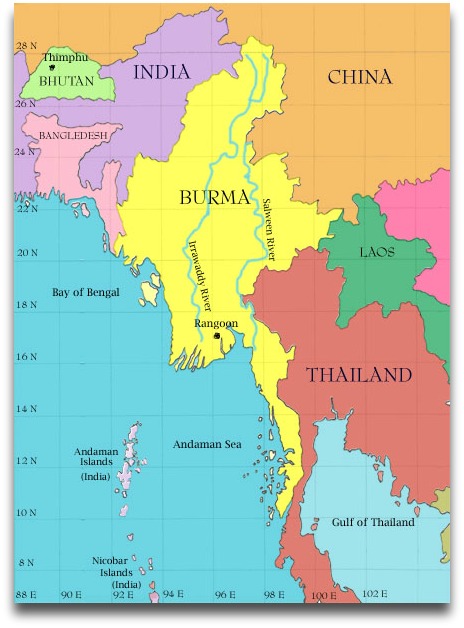
The Burma Road Leads To Westport

The “06880” tagline reads “Where Westport Meets the World.”

And — though Myanmar lies half a world a way from Westport — our connections are so close, it might as well be next door.

The new ambassador to Myanmar — the 1st in 22 years — is Derek Mitchell. His brother Jeff moved here in 1993. Derek comes often to watch his nephew Zach play Staples football and run indoor track (he captained the team to a state championship). The ambassador will be here next month too, for Zach’s graduation. (As Derek often does, he’ll walk his red poodle in Winslow Park.)

The swearing-in ceremony for Special Representative Derek Mitchell, with Secretary of State Hillary Clinton. The ambassador’s oath will be administered soon by President Obama. From left: Min Lee (Derek’s wife), Derek Mitchell, Secretary Clinton, and Eli, Zach and Jeff Mitchell of Westport.

In February Burton Levin — the most recent ambassador to Burma (1987-90) — spoke at the Westport Public Library. Jeff Mitchell was there, and helped the 2 ambassadors connect.

Perhaps the most famous Burmese person in the world is U Thant, the 3rd secretary-general of the United Nations (1961-71). His daughter Daw Aye Aye Thant is a longtime resident of Westport. She speaks frequently here, and is the founder and president of the U Thant Institute.

According to Asia Times, her Westport home is filled with beautiful indigenous tapestries and exquisite sculptured Buddhas, and photos of her father with presidents Kennedy and Johnson, plus many other world leaders.

Last fall her son, Thant Myint-U, spoke at Green’s Farms Congregational Church on key issues facing Myanmar and the rest of Southeast Asia.

Jeff Mitchell hopes to arrange for his brother, Aye Aye Thant and former Ambassador Levin to speak together here. It would be a historic event, Jeff says, and would mean that Westport “pretty much has a monopoly on the top Burma scholars in the world, outside of that country.”

Though just “wishful thinking” today, Jeff would love for Aung San Suu Kyi — the Nobel Peace Prize winner and opposition politician who recently helped Myanmar transition from military rule to democracy — to come together for the event.

Meanwhile, Jeff Mitchell has started a charity organization, Partner with Myanmar. The goal is to further the development of community-based programs and projects. The focus is on arts, culture and conservation.

Its 1st project brought international attention to the Me N Ma Girls, 5 college-educated women who wrote their own songs, battled censors both on song content and how they dressed, and came from different ethnic regions. They’re on the verge of becoming the 1st Burmese band — male or female — with an international recording contract.

Up next for Mitchell: creating the 1st film from Myanmar to be release globally. With Westport’s many industry connections, that goal may not be far-fetched.

06880 meets the world in many places, and many ways. The new democracy in Myanmar is one of the most intriguing, and impressive.

Graffiti Artists Welcome On Main Street

A year ago, University of Rhode Island student Austin Brodsky saw a poster for Art About Town’s street party.

The 1st-ever event — original art, live music, interactive art demonstrations, clever street performances and plenty of food and drinks — took place on a Thursday evening on Main Street.

Leonardo da Vinci and Mona Lisa (I think) and friends, last year on Main Street.

Austin — who goes by the tag “Ausltd” — already knew Westport. His graffiti-inspired clothing line is carried in local stores.

He loved the Art About Town party, and asked if he could come this year to demonstrate his “mad skillz.” (They’re far better than his spelling.)

Ausltd is not the only graffiti artist set for this year’s street party (next Thursday, May 24, 5:30 to 8:30 p.m.). Brooklyn’s David Hollier will be there too. British-born but now Brooklyn based, he was awarded Best of Show (Fine Arts) at the NYC Contemporary Art Fair.

Both graffitists will demonstrate their skill on a VW Bug (donated by Dragone Classic Motorcars).

But if graffiti — award-winning or otherwise — is not your thang, no worries. There’s much more, for folks of all ages.

Dining al fresco last year, in front of Bobby Q’s.

Painters using oil, acrylic, watercolor, wax and gold (!) will explain their processes and inspirations. Potters and sculptors — including the great Peter Rubino — will pot and sculpt.

(Last year Peter turned 250 pounds of clay into a bust of Beethoven, choreographed to the 5th Symphony. This year he — Peter, not Beethoven — will add dance to the mix.)

Just another day downtown.

Meanwhile,  in the New Media Lab space above Bobby Q’s, the Westport Arts Center offers a mural project/open house.

Relative Souls — a jazz/funk/rock band — will play. So will Chillingsworth, Dylan Connor and Joe Izzo, and the jazz duo Eric van Laer and Gene Pino.

The street party kicks off 3 weeks of Art About Town. After the graffiti guys and stilt-walkers leave, hundreds of original works will remain in 70 shops and restaurants. All works are juried, for sale, and on display through June 17.

Last year’s event was one of those “well-should-I-go-or-not?” deals. Crowds were not huge, but the buzz was. The Westport Downtown Merchants Association liked it too, and once again is the main sponsor.

Westport’s Main Street: It’s not just for graffiti artists anymore.

Except when we welcome them with open arms.

(For more information on Art About Town, click here.)

Peter Rubino sculpted Beethoven in 20 minutes — to the strains of “Beethoven’s 5th Symphony.” For video highlights, click the YouTube arrow below.

Applying The Cunningham

When most Westporters read that Briggs Cunningham III — a great-grandson of Edward T. Bedford, the founder of the Westport YMCA — pledged $250,000 to support the new facility at Camp Mahackeno, they may have thought “that’s a lot of money.”

Or “Briggs Cunningham III — what a WASPy name.”

Neil Brickley –a good friend of mine who learned to sail off Burying Hill Beach, within sight of the old Bedford estate (now Green’s Farms Academy) — thought, “I wonder if that’s the same Briggs Cunningham who invented ‘the Cunningham.'” (If you’re not a boater — and I’m not — then you don’t know that a Cunningham is “a common device on sailboats that adjusts sail tension.”)

“Cunningham downhaul” (Photo/Wikipedia)

“Applying the Cunningham” is apparently a favorite sailing technique. Though it sounds like something right out of the Kama Sutra, via The Onion.

Neil is right. The inventor — Briggs Cunningham II — has quite an entry in Wikipedia. He was, that impeccable source says, “an American entrepreneur and sportsman, who raced automobiles and yachts.

“He skippered the victorious yacht Columbia in the 1958 America’s Cup race, and invented the eponymous device, the Cunningham, to increase the speed of racing sailboats.”

He learned to sail at 6. He began racing at 17, out of Pequot Yacht Club. Briggs II left Yale to marry Lucy Bedford — daughter of Standard Oil heir F.T. (Fred) Bedford. Not a bad career move.

In addition to sailboat racing, II competed in the 24-hour auto race at Le Mans. In 1951 he designed and built the Cunningham C-4R, a race car with “a sleek, hand-hammered aluminum body and Chrysler’s newly introduced V-8 engine, (which) has been called America’s first sports car.”

Briggs Cunningham II, on the cover of Time.

On April 26, 1954 Briggs II was on the cover of Time magazine, with 3 of his Cunningham racing cars. (“The H-Bomb In Color” rated only a ribbon at the top.)

So I’m guessing the $250,000 his son — Briggs III — just pledged to the Y isn’t going to break the bank. (Briggs III’s sister, Lucie McKinney, pledged $500,000. But she’s got more skin in the game. She’s a Westporter — III lives in Kentucky — and 2 of her 5 children are Y board members.)

The Cunningham-Bedford Y connection is indeed strong. In 1944 the Y was offered 30 acres of land off Sunny Lane, near their newly established camp. Fred Bedford (Briggs II’s father-in-law, and III’s grandfather) said the Bedford Trust Fund would pay half of the cost — provided the Westport community matched it.

The total amount:  $10,000.

In 1945 the Y moved onto the new land, which they called Bedford Camp. The next year — at Fred’s request — it was changed to Mahackeno. The name honored Mahackemo, the chief of the Norwalke Indians, who in the early 1600s used the property as a summer home lodge.

Which is all you need to know today about Mahackeno, the Bedford family, Briggs Cunninghams II and III, and how generations of boaters have changed the shape of their sails.

Camp Mahackeno, shortly after the name was changed from Bedford Camp.

It Won’t Win Any Oscars, But…

..for a great, wide window into Staples and Westport life in 1972, this YouTube video gets our vote.

Does this make you nostalgic for back-in-the-day? Are you glad you grew up then — or are you glad you’re growing up now? Click “comments” for thoughts as random as this video.

Tough Terrain

Last Saturday, I posted a pretty nice story on the opening of Terrain. Plenty of people love Westport’s newest spot for everything from terraria and jewelry to organic food.

Plenty of people, that is, except those on Crescent Road. Cliff Montagna — a resident of the street that runs directly behind Terrain, from the fire station to McDonald’s — sent these comments to “06880”:

While we welcome Terrain to town and celebrate the wonderful renovation of this property, as a resident of Crescent Road, we are very concerned about the level of activity.

Crescent Road behind Terrain, yesterday at 4 p.m.

We have been awakened at 4 a.m. by truck deliveries. Workers are throwing trash on our front yards, customers and employees are double parking up and down our narrow, hilly street blocking our school buses, and customers are even parking in our driveways. To get into our homes, we have to call a tow truck.

The Planning and Zoning Commission did not do its due diligence for the residents of this quiet residential neighborhood when reviewing this site plan application.  We are left wondering what to do to fix our neighborhood?

I’m not sure it’s the P&Z’s fault. The site is zoned for business.

But a bit more care — by deliverymen, employees and customers — would go a long way toward easing the burden on Crescent Road residents.

I’m sure the police and fire departments are happy to help too.

Another One Bites The Dust…

WestportNow’s “Teardown of the Day” series is many things.

It’s fascinating, educational, addictive and depressing.

It’s also relentless. Every few days, a new house is slated for demolition. Some of them we’ll never miss. Others, it’s hard to believe anyone would knock them down.

And then there is a house like yesterday’s.

WestportNow featured the home at 14 Charcoal Hill Road. Built in 1928, it was owned by Natalie Maynard, the noted concert pianist, and her husband Harry. They lived there since 1977, after inheriting it from her parents. Just last year, the Maynards proudly placed an “Honoring Our Heritage” Westport Historical Society plaque on it.

The house at 14 Charcoal Hill Road. (Photo/Bob Weingarten for WestportNow)

It’s a Frazier Peters house.

Arguably Westport’s most famous architect, he built over 2 dozen homes here.

Writer Susan Farewell — a Peters expert — wrote:

Were Frazier Peters to build houses today, he’d be receiving all sorts of accolades for being an architect on the leading edge of environmentally-conscious, energy-efficient, sustainable design and construction.

The thick fieldstone walls (as much as 16 inches) typical of a Peters stone house make them energy-efficient; the stones effectively hold the heat in winter and keep the interiors cools in summer….

He segregated rooms by giving each one a separate identity, and through the use of step-downs, varied building materials, and interesting transitions. He was also taken by how beautifully European stone structures aged and compared them to American-built frame houses that “droop and pout if they are not continually groomed and manicured.”

Another important component of Peters’ designs was the marriage of the house and its surroundings. He wrote a great deal about this and was especially enamored with the brooks, hillsides, and woods of Connecticut.

Harry Maynard died in August 2011, 3 months after affixing the heritage plaque to his home. He was 93.

Natalie Maynard died 7 months later, in March. She was 85.

And now — just 2 months after her death — an application is in process to demolish their hom

Their Frazier Peters home.

(UPDATE:  As noted in the comments section below, according to Elise Russi, the Maynard estate itself is applying for demolition. She adds, “they would welcome offers in writing from anyone seriously interested in purchasing the property. It is for sale but not listed on MLS. The owners/executors are listed in the Westport online land records.”)

YMCA Moves One Step Closer To Mahackeno

Two months ago, the Westport Weston Family Y announced some stark news. It was $6.2 million short in its fundraising campaign. Unless it raised sufficient funds by mid-May, the Y said, it would not proceed with plans for Phase I — the scaled-down version — of its new facility at Mahackeno.

Yesterday, the board of directors and board of trustees voted unanimously to forge ahead with their new home. Over the past 8 weeks, board of directors president Bonnie Strittmatter said, they’ve received “more than $4.4 million in contributions.”

That funding, she said, “has given the Boards the confidence to release funds that will keep our building project on track to break ground in the fall.”

The boards, she added, “are optimistic that the progress we’ve made with fundraising will continue until we reach our goal of fully funding the first phase of our building project by the time construction starts.”

The Y has now raised more than $10.6 million toward its building project.

The YMCA also announced an intention to complete the sale of its downtown building.

In all, today’s press release said, the Y “has identified $34.1 million in funding, including proceeds from the agreed-upon sale of its current home.” It is estimated Phase I will cost $37.5 million, leaving a funding gap of $3.4 million.

Construction is scheduled to begin this fall, with a target date for opening of November 2014.

In other news, the Family Y trustees voted to issue a “Written Notice of Intent to Close” on the previously agreed-upon sale of the Y’s current facility at 59 Post Road East to Bedford Square Associates.

“Connecticut: Still Revolutionary”

“Connecticut: Still Revolutionary” is our state’s new brand.

Doesn’t that just roll off your tongue?

Remember “I ♥ New York”? It’s only 4 syllables. Ours is 11!

And you thought Connecticut was a puny little state.

The good news: We only spent $500,000 on the logo and “other creative materials.”

Governor Malloy’s new tourism push — a $27 million, 2-year campaign involving TV, radio, billboards and social media (plus a website, ctvisit.com) — highlights Connecticut’s many attractions. They are, in case you forgot, our shoreline, hills, Mystic Aquarium, Essex Steam Train, Goodspeed Opera House, and — is this a great state our what? — 2 tribal casinos.

And you thought there was nothing to do in Connecticut!

In announcing the campaign yesterday, Governor Malloy also referenced a different type of revolution: the sexual one.

Not a big fan of the sexual revolution.

Yes! In Griswold v. Connecticut — a groundbreaking 1965 case — the Supreme Court struck down a law prohibiting the use of contraception. That paved the way, 8 years later, for Roe v. Wade. Which led, basically, to Rick Santorum being considered (well, by some people) a legit candidate for president of the United States.

You go, Land of Steady Habits!

As a loyal Westporter, I’m pissed the governor did not mention 2 local revolutions as he launched the campaign.

The Westport Country Playhouse revolutionized summer theater — and Broadway — when it opened in 1931.

And The Stepford Wives — set right here in Westport — revolutionized an entire generation of women when the book and movie came out in the 1970s.

For a few years — ever since the sexual revolution, actually — women had been asserting themselves in the workplace, at the voting booth, and in the bedroom.

Suddenly, though, Stepford Wives realized the importance of being submissive, docile housewives.

It’s taken a while, but now women are back on top. Thank you, 50 Shades of Grey.

You say you want a revolution…

“A Good High School Will Raise The Price Of Onions”

Last Friday’s post on the portrait of Horace Staples spurred one reader to ask who the founder of Westport’s high school was, anyway. Here — direct from my book Staples High School: 120 Years of A+ Education — is the answer.

In 1866, Horace Staples was perhaps the wealthiest man in Westport. A direct descendant of Thomas Staples, one of 5 settlers who founded Fairfield — and of Mary Staples, accused but acquitted of witchcraft during the fever of 1692 — he had worked since he was 8 years old.

At age 27 he started a lumber and hardware business in Saugatuck. It soon grew into a general store carrying grain, groceries, household furnishings and medicines. He bought sailing vessels, a silk factory, and an axe factory. He owned a thriving pier off the west bank of the Saugatuck River. In 1852 he helped establish a bank. In addition to everything else, he ran a farm.

Now Horace Staples was 65. Every morning he watched Westport boys and girls board the Post Road trolley. Some headed west to Norwalk; others east to Bridgeport – the 2 nearest towns with high schools. It was time, he thought, for Westport to “get up” a high school of its own.

Horace Staples

He offered to give the town a lot for a building. But no one did anything. He offered again; again the town refused to act. Year after year, young Westporters left town for education. Others, at age 14, began to work.

In 1880 Horace Staples’ only daughter died. His sole remaining heir was a grandson. He decided that the fortune he intended to leave his daughter should benefit all young people in town. Nearly 80 years old – and so hard of hearing he carried a yard-long ear trumpet – Horace Staples embarked on a final project that, more than a century later, would dwarf every other endeavor of his long, successful life.

In 1882 he redrew his will, directing some of his money toward a new high school. The following year he planned a red-brick building just up the street from his West (now Riverside) Avenue colonial home.

Though over 80 years old he was in good health, and came from a long line of long-living people. “I might as well see my name up in bricks while I am still around,” he said.

Though the Staples High School seal says “1885,” the school opened in 1884.

“A suitable building for a school house” would be erected on vacant land he donated. His builders assured him the school would be finished by July.

On April 22, 1884, whistles and sirens blew; church bells rang. Businesses closed. A procession formed in front of National Hall, turned left onto West Avenue, and made the short walk to the site of the ceremony. The crowd was estimated at 2,500.

Governor Thomas Waller arrived. Pastors offered prayers and addresses. A choir sang a hymn composed for the occasion. The cornerstone was laid.

Governor Waller finally stepped forward. The Westporter did not print his address. It did note, however, that “A good high school will increase the value of property, and raise the price of onions.”

Before it was Fairfield Furniture (and later the Inn at National Hall), the “National Hall” building housed the very first Staples High School. Classes were held on the top floor.

Despite his builders’ assurances, the building was not ready when the first term began in September. For a few weeks classes were conducted on the 3rd floor of National Hall (Horace Staples’ First National Bank of Westport occupied the first floor). Sixty students enrolled, from Westport, Norwalk, Southport and Weston.

The red-brick and stone building on West (Riverside) Avenue opened officially on October 31, 1884. The 1st floor contained 2 classrooms, a cloakroom, a laboratory and a 250-volume library.

The 2nd floor contained 2 more classrooms, another cloakroom, and a 350-seat “Assembly Hall” that doubled as a gymnasium. The entire school assembled there once a day, for devotional exercises.

During the first year of operation, there was no running water. The next year water pipes were fitted in the building, and wash bowls placed in the cloakrooms.

The original Staples High School. The building sat on what is now the site of the Saugatuck Elementary School auditorium.

Classes were held from 9 a.m. to 4 p.m. The curriculum included the usual courses of the day — advanced arithmetic, algebra, English grammar, physical geography, botany, geometry, trigonometry, English history, physics, chemistry, French, German, ancient history and the United States Constitution – plus 4 courses not generally offered in high school: Greek, Latin, physiology and genealogy.

The latter was a particular favorite of Horace Staples. It is “not enough to know where you’re going,” he said. You “also have to know where you’re coming from.”

The inclusion of those 4 courses is noteworthy. From its inception, and all the way through to today, Staples has done things other schools do not do.

But in other ways, the Staples of 1884 was very different from the modern Staples High. The first graduating class to enter the halls of Westport’s new school consisted of just 6 students.

And all were girls.

(My book on the history of Staples High School is available at the Westport Historical Society. Click here to order.)