Monthly Archives: January 2015

Jeff Seaver Recalls A Constellation Of Stars

Last month’s post about “I Love Lucy” and Westport’s Minuteman statue — plus many of the characters in that story — struck a chord with alert “06880” reader/longtime resident Jeff Seaver. He writes:

I first experienced Westport at age 17, visiting the family of a college friend. Ralph and Betty Alswang lived on Fraser Lane. He was a theater designer of note, and we became friends. Eventually he took me under his wing as an intern in theater architecture. (Mercifully, he later suggested I leave the field and “try something more fun.”) In the meantime I helped work on Lucille Lortel’s White Barn and Playwrights Horizons, among other projects.

At the Alswang home I was exposed to an astonishing collection of the special denizens of Westport. This included the Alswangs themselves, Bob and Eileen Weiskopf, and their delightful children.

Ralph and Betty’s house on Fraser Lane had once been the studio of the sculptor James Earle Fraser. With its stone walls, imposingly large doors and windows, and dark slate roofs, the house was an architectural marvel. I understand that Fraser found the villa in Italy, purchased it and had it disassembled and brought here — along with Italian masons — to be reconstructed, stone by stone.

James Earle Fraser and his bust of Theodore Roosevelt, around 1921.

James Earle Fraser and his bust of Theodore Roosevelt, around 1921.

I am told that Fraser’s original for the cast bronze equestrian sculpture of Theodore Roosevelt with an American Indian (now standing at the entrance to the American Museum of Natural History) was created within those walls. Sculptures were rolled out through the 2-story-tall swinging doors on to a massive concrete loading dock, later converted into a patio.

Ralph and Betty had a lively, eccentric home life: 3 vibrant, smart kids; a pair of neurotic Siamese cats; dogs here and there; huge spreads of food; lots of laughter, storytelling and music; remarkable friends, and deeply held — usually radical — political views, loudly expressed over meals.

Ralph was a larger-than-life character. He built a coffee table sturdy enough to stand on to facilitate the delivery of his fabled orations: smart, opinionated, always hysterically funny. And everyone, it seemed — especially my college chums — had secret crushes on Betty.

The Alswang home was open to neighbors and friends like Paul Newman, Joanne Woodward, Sydney Poitier and their families; director Otto Preminger; actor Gary Merrill (who had been married to Bette Davis); attorney Leonard Boudine (who lived across the street); Lucille Lortel, and many others.

Some were luminaries, some mere mortals, but all of them fascinating, talented folk. I would stumble out of Ralph’s studio, bleary-eyed from work, and find an assembly of guests lounging over coffee at the outsize dining table or enjoying the sun in back. As a naive teenager, I assumed this lifestyle must be how all adults lived.

Ralph Alswang (5th from left), with a galaxy of stars as they arrivefd for a session of the House Un-American Activities Committee in Washington, D. The group includes June Havoc, John Huston, Humphrey Bogart, Lauren Bacall, Danny Kaye, Jane Wyatt and Ira Gershwin.

Ralph Alswang (5th from left), with a galaxy of stars as they arrived for a session of the House Un-American Activities Committee in Washington, D.C. The group includes June Havoc, John Huston, Humphrey Bogart, Lauren Bacall, Danny Kaye, Jane Wyatt and Ira Gershwin.

Sad to say, this extraordinary madness was not to last. Betty Alswang, whose beauty (she was a model in her youth) was matched by her wits, died from cancer. As sometimes happens, Ralph died of a heart attack not long afterward. It was a heartbreaking loss, and the aftershocks left holes in many lives.

But the children carried on the tradition of style, talent and smarts. The Weiskopfs’ son Kim, who became a friend, went on to some celebrity as a TV writer in California. Fran Alswang became a TV producer, working with Michael Moore among others. Hope Alswang has a distinguished career as a curator of the decorative arts at various museums. Ralph Alswang was, among other things, official White House photographer for the Clinton administration. The Poitier children who once scampered around the house have found their own special callings.

Ralph and Betty and their circle remain emblematic for me of the greatest attributes Westport had to offer, when its gravitational pull attracted a constellation of brilliant lights in the theater, visual and literary arts.

Given the changes over the past 30 years in Westport, I’m skeptical such a powerful confluence could occur here again. But I feel blessed to have been invited in briefly, if only as a spectator, during that special time.

Jeff Seaver

Jeff Seaver

I later set about crafting my own dynasty. I got as far as designing and building a beautiful loft in Chelsea, filling it with Siamese cats, and marrying another talented artist.

In 1999, after 25-plus years of carving out a successful career as an artist in New York, I began searching for a life outside of the city. I wanted our 5-year-old daughter to experience exotic, rarefied things like grass, birds and squirrels.

One evening, while scouting locations in Connecticut, I looked up and recognized the road that leads to Longshore. I crossed over from there to Compo Beach, parked by the legendary cannons and stared out across the beach, flooded with recollections. I stopped over at Allen’s Clam House, and took a drive back up north to Fraser Lane, where so many other wonderful memories came flooding back.

Poof — the decision was made.

“Gloria,” As You’ve Never Heard It Before

In 2008, the wife of Chris Bousquet’s friend died suddenly. He realized how quickly someone’s world can fall apart, and wondered how anyone can move on after such a tragedy.

Chris Bousquet

Chris Bousquet

The singer-songwriter — he led High Lonesome Plains, and has performed with Roger McGuinn, John Sebastian, Asleep at the Wheel, the Nields, the Turtles and J. Geils — started to write a song about all that.

It didn’t go anywhere. “I was maybe too close to it,” he says. “Or maybe it was not really my song to write.”

A couple of months later, he read about Westport oysterman Alan Sterling, and his boat Gloria (named for an old girlfriend). Bousquet calls it “a profoundly moving story of grief, continual struggle, and the simple triumph of carrying on.”

Having grown up in Clinton, Connecticut, Bousquet always found the sea to be “ethereal and transcendent.” Staring out at the water, he believes in the interconnectedness of all things. So when Sterling noted in the story that a gull might be Gloria watching over him, Bousquet understood.

Gloria (Photo/John Kantor)

Gloria (Photo/John Kantor)

The sea can be warm and caressing, but also brutal. “Alan was well aware of the cold and raw, but it didn’t blind him to the beauty,” Bousquet says. Inspired, he reworked his old song into a new one: “Gloria.”

Bousquet never met Sterling in person. He thought about sharing the song with him, but felt it was presumptuous. Sterling died last July 4. Now, Bousquet wishes he had told the oysterman what an inspiration he’d been.

“He made me appreciate my life — and my wife! — even more,” Bousquet says. “I don’t mean to sound trite. But he reminded me to head out on my proverbial boat, and sail on each day.”

Alan Sterling culling his oysters.

Alan Sterling culling his oysters.

The song was supposed to be part of a compilation CD a few years back. It didn’t happen. But it’s one of his most popular songs during his live performances. Bousquet cherishes the connections “Gloria” allows him to make with audiences.

Now, Bousquet has re-recorded it. It will be on an EP to be released this spring.

But, he says, if any of Alan’s friends want to do something with it, he’ll be glad to help.

“The best songs are the ones that feel like they came from some place outside myself,” Bousquet says. “Like in some sense that gull came down to guide me too — and lead me home.”

(Click here to listen to Chris Bousquet’s haunting song “Gloria.”)


Laura Loffredo Offers Adoption Hope

Laura Loffredo is a child of Westport. Her father was the hard-working, generous owner-operator of Belta’s Farm on Bayberry Lane. Her mother helped out there too.

From childhood on Laura wanted to have kids, and be a mom like her own mother.

Laura first babysat at 14. She continued until graduating from Staples in 1995, then earned a BA in psychology at the University of Connecticut and a master’s in community counseling from the University of Bridgeport.

Laura Loffredo

Laura Loffredo

She worked as a mental health counselor and case manager, then went back to school for a 6th-year degree in education. She’s been a teacher for the past 7 years, while also working for Big Brothers Big Sisters.

To this day, Laura remembers crying at TV commercials showing starving children in Africa. At 14, her parents helped her sponsor a little boy overseas. She still recalls his name: Saul Hormiga Donu.

When she got married, Laura and her husband John expected to have children right away. Instead they endured a 6-year struggle that included thousands of dollars spent on 8 failed fertility treatments, and a miscarriage.

“I prayed every night for a baby. The longing inside my heart was unbearable,” Laura says.

“I didn’t understand why God was denying me the one thing I wanted more than anything in the world. I was angry, bitter and heartbroken. I couldn’t breathe.” She calls this “the darkest time of my life.”

When Laura and John finally made the decision to adopt, it was “like a light in the darkness.” For the first time, Laura felt hope.

Laura and  John Loffredo, with their daughter.

Laura and John Loffredo, with their daughter.

The first time she held her minutes-old daughter in her arms, Laura was overcome with emotion. All the pain washed away.

“At that moment, I understood the reason for everything,” she says. “This little girl was always meant to be ours. It just took her a while to come to us.”

But she agonized over all the people who did not have $40,000 to adopt a baby. The thought of not being a mother was overwhelmingly painful.

So Laura adopted a new cause: adoption advocate. She began forming ideas for what is now the Adoption Hope Foundation. Its mission is to provide grants to people who hope to build families through adoption.

The Adoption Hope Foundation is seeking non-profit status. It’s inaugurated a GoFundMe campaign, to cover start-up expenses and initial grants. The goal is to award the 1st funds by the end of the year.

“Adoption is a beautiful gift,” Laura says. “It is a life-altering experience that has allowed me to feel the deepest kind of love imaginable.”

That love extends from her daughter, out to the birth parents who selflessly placed her with Laura and John.

Now, Laura is paying it forward. She’s spreading that love — and the funds needed for it — as far as she can.

(For more information, or to support Laura’s work, click on the Adoption Hope Foundation’s GoFundMe site. To contact Laura directly, email loffredo.laura@gmail.com, or call 203-354-4971.)

Laura and John's daughter. Her outfit says "And baby makes 3."

Laura’s daughter. Her outfit says “baby makes 3.”

A Rich Discussion

Friday’s New York Times ran a fascinating piece on the perils of money for young people. That’s an important topic of discussion in Westport.

But there was an even more specific connection here.

The hook for the story was the shooting murder of a hedge fund manager by his 30-year-old son. Apparently, the 2 had argued over the 30-year-0ld son’s “allowance.”

Writer Ron Lieber posed a few questions that his friends and peers were having:

How does it come to pass that a 30-year-old Princeton graduate still gets pocket money from his parents? What, if anything, went wrong in the way his parents raised him? And is there something about the environment that his mother and hedge-fund-running father raised him in that may have itself been damaging?

Affluent kids have many material things ...

Affluent kids have many material things …

Lieber answered himself:

We still don’t know very much about this one stranger and his mental health. Nor are we likely to ever get a full picture of his family, its values or the relationship between the father and the son. But in the last 15 years or so, academics have spent an increasing amount of time studying the affluent and what can ail them, and there is an emerging consensus that their children often have higher rates of depression and anxiety and elevated levels of substance abuse and certain delinquent behaviors.

Adding that “the well-off are human, too, and if some of their children are hurting, it’s indecent to mock or ignore them,” Lieber noted that academics have added studies of children of wealth, to their previous research into poverty.

He cites psychologist Suniya Luthar. She’s now a professor at Arizona State University, but while at Columbia University she embarked on a longitudinal study that included Westport students.

... and high expectations of "the good life" ...

… and high expectations of “the good life” …

Starting in 1999, Lieber says, she found that teenagers in higher-income families had higher rates of substance abuse of all kinds than those in lower-income ones; that the more affluent suburban kids stole from their parents more often than poorer city youth, and that those with more money were “more likely to experience clinically significant levels of depression, anxiety and physical ailments.” Many of those trends emerged in 7th grade.

According to Lieber, Luthar said that it’s easy for parents to pressure children, resulting in some of the problems cited above:

Many such parents enjoy their fulfilling, prestigious jobs and have a wide network of friends from their top-tier educational institutions. Most of them desperately want the same things for their own children, and why wouldn’t they? “This is the trap we can fall into,” she said.

... but parental pressures can be high.

… but parental pressures can be high.

Luthar notes that one of the most powerful risk factors for youngsters is “being highly criticized by your parents.”

She adds: “The most important thing is to keep ourselves and our children from getting swept up in the movement towards more being better, and the idea that ‘I can and therefore I must.’”

Readers’ reactions to the Times piece run the gamut, from finger-pointing at rich parents to cautions against minimizing real concerns about mental health.

It’s a fascinating story, with an intriguing discussion thread. To add your own thoughts, “06880”-style, click “Comments.”

Hiawatha Lane Proposal Withdrawn — For Now

First Selectman Jim Marpe announced today that Summit Saugatuck is withdrawing its application to the Water Pollution Control Authority for a sewer extension to Hiawatha Lane Extension.

However, the attorney for the developer — who had hoped to build 186 housing units on the property abutting I-95 exit 17 — said that this does not mean Summit is abandoning its development plans. A new application will be filed soon.

Marpe said, “I was pleased to receive this letter. The report the town commissioned from Weston & Sampson engineers clearly showed the limits to the pump station serving this area. I hope that Summit will take this opportunity to reconsider the scope of its proposal.”

Hiawatha Lane extension is shown by an arrow, on this Google Map image. It's below I-95. The entrance is via West Ferry Lane, which is off Saugatuck Avenue (diagonal road on the right side of the image).

Hiawatha Lane extension is shown by an arrow, on this Google Map image. It’s below I-95. The entrance is via West Ferry Lane, which is off Saugatuck Avenue (diagonal road on the right side of the image).

Historic Designation Sought For Golden Shadows

The best use of the Baron’s South property is still a subject of debate.

But a group of Westporters want to make sure that whatever it is, it includes Golden Shadows.

The 1959 Colonial Revival-style structure — built as a private residence by the perfume magnate Baron Walter von Langendorff (hence the perfume-scented name “Golden Shadows”) — sits in the middle of the hilly property, between South Compo Road and Imperial Avenue.

It’s unoccupied — save for some books stored there by the library, and perhaps some woodland creatures — but it’s still in decent condition.

Golden Shadows, looking southwest. (Photo/Wendy Crowther)

Golden Shadows, looking southwest. (Photo/Wendy Crowther)

Golden Shadows is listed on Westport’s Historic Resources Inventory. Last April, the Historic District Commission voted unanimously to support its designation as a Local Historic Landmark Property. Now, concerned Westporters want the RTM to weigh in with their vote too.

“On the heels of the Planning and Zoning Open Space Subcommittee’s January 8 vote to recommend re-zoning Baron’s South as open space,” a petition submitted to the RTM reads, “we thought it might also be an appropriate time to establish similar protections for Golden Shadows.”

The petition says that the home could be re-purposed as office space, event space or some other municipal use. (New Canaan did something similar with Waveny Park; Norwalk did it with Cranbury Park.)

The “landmark” designation would help conserve the building’s historic features, preventing it from demolition or inappropriate alteration, while also permitting the town to earn a grant for a needs assessment and plan of preservation.

A view into the central parlor shows a chandelier and circular staircase.  (Photo/Wendy Crowther)

A view into the central parlor shows a chandelier and circular staircase. (Photo/Wendy Crowther)

The designation would not force the town to do anything. But it does raise Golden Shadow’s profile, and — if passed — flags it as something the RTM deems important.

2015 will see continued debate on Baron’s South. Now, that debate will include a possibly historic landmark home, standing right in its midst.

Broadway Stars Benefit Orphenians

Adam Kaplan has not forgotten his roots.

Adam Kaplan

Adam Kaplan

The 2008 Staples High School graduate scored some prime roles — Martin Delancey and a newsboy, plus understudy for lead Jack Kelly — in the popular Broadway show “Newsies.” But he has returned to Westport often, enjoying Staples Players productions and  visiting Greens Farms Elementary School music classes.

Now Kaplan is donating his talents to a fundraiser for the Orphenians, the elite high school singing group that helped boost his career. The a cappella musicians have been invited to San Francisco — the only East Coast group to participate in the famed Chanticleer National Youth Choral Festival, this March.

Kaplan has put together an all-star Broadway cast, for a benefit performance. Set to appear with him in the Staples auditorium on Monday, January 26: “Newsies” Tommy Bracco and Molly Jobe; Matt Shingledecker (“Wicked,” “West Side Story,” “Spring Awakening”); Steffanie Leigh (the final Mary of “Mary Poppins”); Robin de Jesús (current star of “Wicked”; 2-time Tony nominee for “In the Heights” and “La Cage aux Folles”); Barrett Wilbert Weed (“Heathers the Musical,” “Lysistrat Jones”) and Kara Lindsay (“Wicked,” “Newsies”).

Proceeds will help all Orphenians be able to make the trip. Click here to order tickets ($40 for adults, $20 for students and seniors). If you can’t attend but would like to contribute, click here.

The 2014-15 Orphenians

The 2014-15 Orphenians

Paris Tragedy A Reminder Of Past Horrors

Last week’s horrific events in Paris touched every Westporter. We wondered how such things can happen. We talked about religion, freedom and humanity. We thought about France, and looked in new ways at America.

The news hit Westport’s Bart Shuldman and his wife wife Sue especially hard. In 1996 they were eyewitnesses to an IRA bomb that demolished a London bus.

Bart helped save the driver’s life. Nearly 20 years later, he remains haunted by the event. He calls such violence “truly devastating. It is worse than any picture could portray.”

That February day, Bart and Sue had just arrived in London. They boarded a taxi to their hotel. At a red light, a bus traveling from a different direction turned, then exploded right in front of them.

The taxi driver screamed. Bart and Sue watched in horror as the bus continued to travel, while opening up like a can.

The taxi driver asked what they should do. Bart said, let’s go help.

The aftermath of the 1996 IRA bus bombing in London.

The aftermath of the 1996 IRA bus bombing in London.

Not knowing if there were more bombs, they followed the bus until it stopped.  The taxi stopped. Bart and the driver jumped out.

The driver grabbed a fire extinguisher, and went to one side of the bus. Bart went to the other side.

He heard noises. It was the bus driver, who had been hit from behind by the blast. The taxi driver, meanwhile, said he’d discovered a body in 2 parts, on fire. It was the bomber.

Bart got the driver out from the rubble, and carried him to the sidewalk.  His head was bleeding badly. Bart knew the victim could not hear him, so he had the man focus on Bart’s mouth. Bart wanted to keep talking, so the man would not pass out and die in his arms.

It took a while for an ambulance to arrive. Police and medics waited a long time, as people screamed there were more bombs.

Finally, Bart was escorted back to the taxi. Sue was there, scared. Bart at been gone nearly an hour.

The bus driver survived. But he never worked again.

“These acts are more violent than any TV news report can show,” Bart says. “The destruction is horrible. The impact to a body is something you cannot imagine.”

Nearly a decade later, he is not sure why he jumped in to help. Perhaps — just as the entire world is trying to make sense of the news from France — it takes a horrible tragedy for each of us, individually, to find out something about ourselves.


Hey, Has Anyone Seen My Shoes?!

An alert Westporter walking his dog this morning at the Haskins preserve looked up and discovered a new definition of “shoe tree”:

Shoes in Haskins Preserve

Meanwhile, for weeks another pair of shoes has dangled even more mysteriously above Myrtle Avenue:

Myrtle Avenue

Baby, it’s cold outside. This is no time to go barefoot!


Oh My 06880! — Today’s Photo Challenge

Week 1 of our new Sunday feature — where in Westport is this scene? — was easy. Nearly every “06880” reader, it seemed, knew the gargoyle came from the front entrance of the old Y. (It probably helped that I ran a story on the gargoyles a few weeks earlier.)

Now it gets tough.

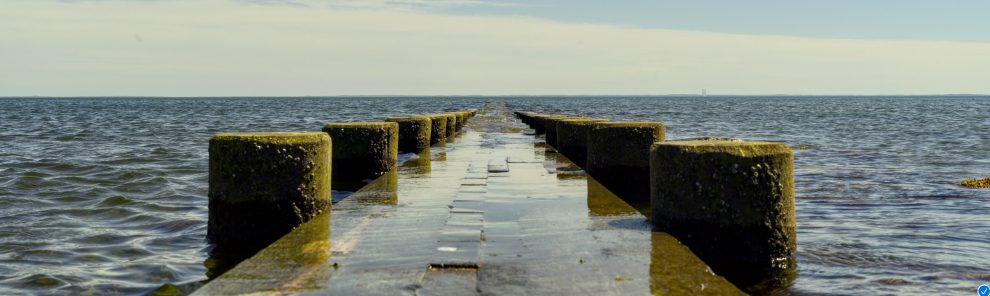
If you think you can identify Lynn U. Miller’s photo (below), click “Comments.” Add any thoughts about the subject you wish.

How well do you know Westport?

(Photo/Lynn U. Miller)

(Photo/Lynn U. Miller)