Monthly Archives: July 2011

Speed Dating, Westport-Style

Speed dating is a big-city thing.  Singles (hopefully) spend a few minutes chatting with a random stranger.  A bell rings; then it’s off to the next table, and a few more after that.  If both parties like each other, organizers provide them with contact info.

But this is Westport.  Our “speed dating” event needs an intellectual — and environmental — bent.

Also, no hooking up allowed.

Expert Minds” is this Thursday’s (July 14, 7 p.m.) Westport Arts Center speed dating-inspired event.

Futurist Watts Wacker definitely looks like an expert.

Working with Green Village Initiative, the WAC has assembled 10, um, expert minds.  Each hosts a table with 4 seats.  For 15 minutes, everyone chats — presumably about the expert’s area of expertise.

Then it’s on to the next randomly selected table.

There’s a break after the 1st 2 sessions, for food and wine; then 2 more tables.

After the 4th table, everyone is invited to mingle (and, I guess, drink a bit more).

The experts include:

  • Michael Aitkenhead, Staples High School environmental teacher and Wakeman Town Farm steward
  • Julie Belaga, former state representative, gubernatorial candidate, and New England director of the Environmental Protection Agency
  • Maxine Bleiweis, Westport Library director
  • David Brown, public health toxicologist
  • John Fifield, architect and innovator
  • Deepika Saksena, “zero waste manager” whose weekly household waste fills just one plastic newspaper sleeve
  • John Solder, member of the world champion Staples High School robotics team
  • Bill Taibe, chef/owner of Le Farm
  • Watts Wacker, futurist
  • Eden Werring, arts and education advocate

As the experts and their guests talk, they’ll be surrounded by Christo.  The environmental artist’s stunning works may inspire some of the discussions, says Deanne Foster, the WAC’s interim executive director.

“Art can take you to another place,” she says.  “There’s always lots of conversation here, as people look at the exhibitions on the walls.  This event is one more way to get people thinking, and engaged.”

“Expert Minds” — speed dating, arts-style — is something the 92nd Street Y might do, Foster says.

“But it’s here in Westport.  We’re lucky to be surrounded by so many amazing people.”

(Tickets for “Expert Minds” are $25.  They’re available by phone at 203-222-7070, and online by clicking here.)

On Second Thought…

A local blog ran this photo yesterday, reporting that “someone” defaced the Westport Library with graffiti:

(Photo by Larry Untermeyer)


In fact, according to an alert “06880” reader, “the drawings resulted from a library-sponsored event for kids.  They were given chalk to express creatively their love for books, reading, and Westport.”

So instead of shaking our heads in disgust, let’s smile indulgently.

There’s a thin line indeed between graffiti and art.

Celebrating Italian Fest, 2011

This summer, Festival Italiano is just a cherished memory.

A lack of volunteers and sponsors doomed the 27-year-old institution — itself a revival of the long-running St. Anthony’s Feast.

But Westporters are intrepid.  And though the carnival rides, fried dough and Johnny Maestro are gone, we can have our own Italian Fest this summer.

Or at least, we can celebrate the reason we had a festival in the first place:  Saugatuck.

Rather than riding roller coasters, eating unhealthy food and listening to bands without most of their original members, let’s honor the place that meant so much to so many, for so long.

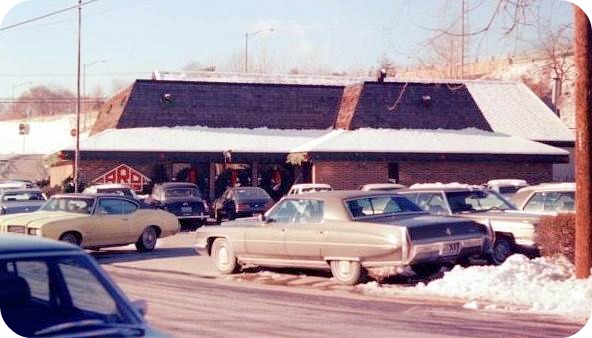
The Arrow Restaurant was always packed.

You can drive to Saugatuck, and ride along its still-familiar streets.  You can walk around, and — though the smells and sounds of the 1930s, ’50s, even the ’70s are gone — still see the remnants of what was once Westport’s most vibrant neighborhood.

Or just sit back, close your eyes, and think back to the days of the Arrow restaurant, Lou Santella’s barber shop, and small grocery stores and other shops everywhere.

Remember families like Capasse, Anastasia, Luciano, Cribari, Giunta, Caruso, D’Aiuto, Dorta, Romano, DeMattio, Arciola, DeMace, D’Amico, Manere, Capuano, Arcudi, Melillo, Rubino, Caputo, Tiberio, Bottone, Nazzaro, Saviano, Reitano, Valiante, Tedesco, Gilbertie and Nistico.

Construction of I-95 sliced the Saugatuck community in half.

Think of the grape arbors, plum trees and beautiful gardens of years gone by.  Some survived construction of I-95, when it sliced through the heart of this tight-knit community.  Many did not.

Recall Dr. Gillette Circle.  It’s a strange name — but it memorializes the family doctor who served Saugatuck so well.

Think about the old  Sons of Italy hall on Riverside Avenue.  Next to it — once upon a time — was a cable grip factory.  Nearby were farms, a shirt factory, homes that housed multiple generations and houses with multiple families.

Not far away is the train station.  The 2nd set of tracks was built by Italian immigrants.  It’s an important part of the community that’s still there.

Carole and Robert DeMaria in Saugatuck (now Luciano) Park. In the background is Esposito's Gulf station (soon to be Mario Batali's Tarry Lodge). On the corner is Arcudi's grocery story (now the 21 Charles Street office building.) (Photo courtesy of Terry Santella Anzalone)

So is Luciano Park.  Both the park, and the station parking lot, were apt sites for the Italian Festival when it thrived.

The thousands of fair-goers may not have realized they were standing on a patch of history — that’s tough to do when you’re playing whack-a-mole, scarfing down pizza frites and dancing to do-wop — but it’s the way the world turns.

Still, it doesn’t hurt to think back — particularly this 2nd weekend in July, the traditional date for Festival Italiano — to what it was, and why it was there.

So spend a few minutes remembering the Italian Fest, and its the entire Saugatuck community.

You can travel back there in real life, or go there in your mind’s eye.

Either way, it’s a wonderful journey.

Happy

The other day, I walked into a local store.

Without prompting, the owner said:  “People are happy.”

That evening, walking at the beach, I met a Westport couple.  Out of the blue the woman said:  “Isn’t life good?  I feel so happy.”

What’s behind this sudden spasm of good feeling?

Perhaps it really is “out of the blue” — the bright blue skies we enjoyed for several days, along with perfect temperatures and low humidity.

Perhaps  we’ve finally shaken off the “blue” feeling we had throughout the long, snowy winter, followed by a cold, wet spring.

Sure, storm clouds loom.  The economy remains rough, and next month we could see a monetary crisis that dwarfs anything America has ever faced.

But for now, for many of us, summer in Westport is good.  The weather is nice (except for today).  The beach and Sound are beautiful, and there are tons of things to do in and around town.

We’re happy.  No need to over-analyze it.  Let’s leave it at that.

Have a great weekend!

Slow News Day

News 12 dispatched its mobile unit, a reporter and cameraman to Playhouse Square, the scene of last night’s break-ins at Silver Ribbon and Kennedy’s All-American Barber Club.

It doesn’t seem like much of a story.

Then again, this isn’t much of a blog post.

Digital Immigrants

In early 20th century America, youngsters in the new country had an advantage over their immigrant parents:  the kids learned English.  They translated for their parents, some of whom clung to their native tongues and never assimilated.

In the early 21st century, young people again have an edge:  They’ve mastered tech-speak.  This time though, the old folks have no choice.  To live in today’s world, they have to learn the language.

“It’s not like just a few years ago, when you could wait for some 12-year-old to program your VCR,” says Westport Library director Maxine Bleiweis.  “Now, every day, there are technological problems people have to solve.”

And — for more and more people — the library is the place to solve them.

What's on Maxine Bleiweis and Bill Derry's iPads? The library's website, of course.

Libraries have always been a center for learning, Bleiweis says.  But many Westporters don’t realize it’s a hub for not only books, periodicals and author talks, but  technological knowledge too.

The Westport Library offers 3 types of technology education.  One is through regularly scheduled events.

“Tech Tuesdays,” for example, are held from 2-4 p.m. through August 3.  Bring a tablet — or a question, like how to download music.  Staff members are on hand to help.

“Jobseekers” programs — held Wednesdays throughout the summer — highlight topics like using LinkedIn and Twitter.  “If you’re out of a job, you might have missed out on hearing about things like this,” Bleiweis says.  “The workplace changes quickly, and this is a great way to keep up.”

The 2nd type of education takes place every day.  “We’re not a repair shop,” Bleiweis cautions.  “But if you’ve got a new eReader and don’t know the features, or you’re having problems attaching a photo file to send to your grandchildren, we can help.”

Reference librarians — best known for answering questions about obscure Mongolian dynasties, or pointing people to perfect online databases — are a tremendous technological resource.  If you’re searching for printers, say, or software or synching programs, reference librarians are happy to help.

The 3rd type of education involves teaching people things they didn’t know they needed to know.

In case you wondered: These are tags. The library explains how to use them.

“Tags” are an example.  They’re those words of various sizes you see on various websites — the library’s, for instance.  They’re an entree to more information on a particular topic; their size indicates relative popularity — but you have to click them to use them.  If you didn’t know that, you’d likely overlook them.  Mentioning them in the library’s newsletter — a friendly, familiar format — is a good way to teach non-native tech speakers about them.

The same with podcasts.  At every library lecture, someone announces it’s also available as a podcast.  You may have heard the term, but ignored it as just another newfangled word.  By explaining what a podcast is — and how you can download it — the library provides an important, but subtle, education in tech-talk.

The Westport Library also provides hardware.  They’ve got 30 computers, with color printing; scanners; a MacBook Pro; Kindles for a 7-day loan (loaded with titles); an iPad, plus Nook and Sony e-readers for sampling, and wireless printing from laptops.

Library cardholders can also download music from Freegal.  What’s that?  Just ask!

The library’s tech cred got a big boost recently.  Bill Derry – formerly coordinator of info and technology literacy for the Westport school district — joined Bleiweis’ staff as assistant director for innovation and user experience.

Children instinctively know the language of 21st-century technology. The rest of us have to be taught.

He knows what students know — and what adults don’t.  Bleiweis uses the analogy of parents who get frustrated when they can’t help kids with their “new math” homework.

Derry has the skills — and patience, and energy — to teach the older generation the language the younger one instinctively knows.

And the Westport Library is the place to do it.

“It’s intimidating to ask a 20-year-old geek at a store some question you’re embarrassed you don’t know the answer to,” Bleiweis says.

“It’s much easier to do it in the familiar setting of the library.”

A library, she says, is “a place to learn — no matter what you need to know.”

(In the works:  an iPad users group.  Got another idea for a a tech service that will serve and support the Westport community at the library?  Email Bill Derry at bderry@westportlibrary.org, or call him:  203-291-4846.)

Shameless Self-Promotion

One of the advantages of having your own blog is being able to blog about teaching blogging.

So here goes:

I’ve teamed up with Westport Writers’ Workshop to offer a 2-evening session called “Be a Blogger.”  On Thursday, July 14 and 21 (7 to 9 p.m.), I’ll help aspiring bloggers — this means you! — learn how to:

  • Choose a topic.
  • Generate ideas.
  • Create content.
  • Find a voice.
  • Respond to the Dude, Anonymous, or whoever else comments on your stuff — and create a community in the process.

We’ll also cover the mechanics of choosing a platform, finding graphics, and marketing and maintaining your blog.

That’s the 1st Thursday.  In the hands-on, interactive 2nd session you’ll develop your own blog, write the 1st post, put it online — and hear immediate feedback from fellow workshop participants.

Here’s 1 free hint on how to start blogging:  Embrace action verbs.

But you have to pay for the rest.

(Westport Writers’ Workshop is at 3 Sylvan Road South.  Anyone age 14 and up is welcome.  For more information and to register, click here.  Space is limited to 12 soon-to-be-awesome bloggers.)

Unemployment Is Fun!

After graduating from Staples (1992) and the University of Michigan, Kerry Quinn embarked on career in advertising.  For 11 years she worked and lived in New York.  Then, in a “you only live once” decision, she moved to L.A.

She loved California, and her job in a small agency.  But in 2009 their major client — a bank — was seized by the FDIC, and sold at auction.  A few months later, her office closed.

Kerry was unemployed.

At first she felt depressed and dejected — “like a failure,” she says.  Her days lacked structure.  With the economy in the toilet, tasks like networking and acting upbeat during interviews seemed almost unbearable.

After “wallowing” for a couple of weeks, Kerry got an email offering a free exercise class with a celebrity trainer — on a Wednesday afternoon.

“I started to delete it.  Then I thought, ‘hey — I can do this!” Kerry recalls.

Kerry Quinn

She was spending her days sending out resumes.  But she realized she also had time to do things she’d always wanted to do:  Learn to cook healthfully.  Sell unneeded items.  Reduce her debt.

Kerry had a “funemployment” epiphany.  She would not sit around watching “Wire” marathons — but she could stop pitying herself, and enjoy her new free time.

After 2 months, she landed a small freelance project.  She then spent 4 months full-time, filling in for a pregnant woman.  But, Kerry says, the bulk of her past year and a half has taken her on a “funemployment” journey.

“I changed my outlook,” she says.  “I learned I didn’t have to work 14 hours a day, and ignore the rest of my life.  I need to take care of myself too.”

At networking events — she did not abandon those — she described her philosophy.  People told her she seemed so positive.  They urged her to share her excitement with others.

Kerry started a blog, called LovingFunemployment.

Then — running into people who were not having fun unemployment experiences, because they were depressed or suicidal — she wrote a book.

Funemployed:  Finding the Upside in the Downturn has just been e-published.  With chapters ranging from taking up painting and getting in shape to volunteering, traveling and dating, Kerry spreads the message that readers should not view unemployment as a failure, nor should they internalize it.

The idea behind “funemployment,” she says, is “to go into your next job with a good outlook.”  You can do that by “having some fun.  And don’t feel guilty about doing that.”

This sounds like a recipe for parody — or at least criticism that most unemployed Americans have more on their minds (and less opportunity to pursue it) than yoga lessons or trips to Paris.

“I anticipated that,” Kerry says.  “But I haven’t heard it yet.”

She understands, she adds, that her way  “is not something everyone can do.  If you have a mortgage and 3 kids, and you have to hustle full-time for your next job, ‘funemployment’ can seem trivial and trite.  But I talk about debt management, creating structure in your day, and selling stuff on eBay or taking jobs like babysitting or dog-walking without violating unemployment benefits.”

Her book, she says, “is not all about having fun.  It’s about dealing with issues people face.”

As for those exercise classes, “they don’t have to cost a lot, if you use trial offers or Groupon.”

How long can someone last “funemployed”?

“It depends,” Kerry says.  “You have to figure out your severance, savings and unemployment.  It’s different for each person.”

She is “lucky” to have freelance work, she knows.  “Full-time work in California is tough to find.”

Hopefully too, the book will generate income.

While doing publicity for the book, Kerry is learning new skills.  She hopes they’ll make her even more marketable during the job interviews she continues to pursue.

Landing a new job in advertising “makes the most sense — I’ve got 14 years experience,” she says.

“But I love writing.  Maybe I’ll do TV scripts — or another book.  Writing this one really reignited my passion for writing.”

Chalk up one more benefit to “funemployment.”

(Funemployed is an e-book.  To download it from Amazon, click here.)

BMX Man

Everyone’s seen him.  He races up and down the Post Road, popping wheelies, performing bunny hops and nose picks and other BMX-style tricks he may even have invented himself.

Alert “06880” reader Miggs Burroughs caught him roaring past Matsu Sushi the other day, and sent this photo to us.

He’s hard to pin down — he doesn’t stop for much, including traffic lights — but he’s really good.

And very intriguing.

If you know anything about this guy — who he is, where he’s from, what he does when he’s off his bike, whether he’s trying to impress us or scare the hell out of us — hit “Comments.”

An entire town wants to know.

The Playhouse: Past, Present And Future

As the Westport Country Playhouse celebrated its 80th anniversary last week, I wanted to interview someone who attended the 1st performance.

No luck.

But I did find Doug Tirola.  The producer (4thRowFilms) and Westport Arts Center board member has a long history with the Playhouse.  In fact, it has informed and influenced his entire life.

Doug’s father Vincent was the Playhouse attorney — and helped save it one of the many times it nearly went under.

Doug Tirola

Doug’s earliest memories of the Playhouse are of “typical kids’ shows.”  His 1st job, a few years later, was placing posters for upcoming shows in as many store windows as possible in Westport, Fairfield and Darien.  He earned 25 cents per poster.

His 2nd job was house beautician.  “That’s theater-speak for janitor,” he notes.  Doug would prepare the Playhouse for the upcoming show, head to the Y to play basketball (or Ships to eat), then return afterward to clean up.

Mondays were special.  That was opening night — and shows changed weekly.  Local critics like Ina Bradley and Jeanne Davis were there.  They’d eat next door at Backstage (now the Dressing Room) before the play ; afterward they’d all gather on the gravel patio outside the theater, then return to Backstage for drinks.

Some theater-goers were there already.  “If the play wasn’t good, at intermission guys would wander over to the bar,” Doug says.

Doug also ushered.  His co-workers were older people, like today.  But there were also many younger ushers.  He doesn’t see many of them now.

The Playhouse, he says, was a hangout for teenagers — and not just the theater crowd.  “I played 3 sports,” he notes.  “Lots of kids wandered back and forth between the playhouse and Friendly’s” in Playhouse Square.

Westport Country Playhouse -- 80 years young.

Now — producing and marketing movies — Doug looks back on those days with a sense of awe.  “I had this sense of it being like ‘hey, let’s put on a show.’  I had no idea how hard that is.  Turning shows around week after week, with what I realize now were very limited resources — that makes me realize anything is possible.”

Doug was influenced by men like Jim McKenzie — the longtime executive producer, and a “larger than life figure” — and Todd Haimes, now artistic director of the Roundabout Theatre.

Looking back, Doug also realizes that his initial experiences at the Playhouse were special.

“11-year-olds today have a lot more options than we did then.  There’s good and bad sides to that.  But I also think there are more things today geared directly at them.  Back then, by default, kids were exposed to more adult activities — the theater, movies, even TV shows.  That forced us to interact with the adult world.”  As with ushers, Doug sees few young people involved with the Playhouse’s adult shows.

He also senses less of an overall townwide connection with the Playhouse.

“I’m not trying to be negative,” he emphasizes.  “But part of the DNA of Westport has always been the arts.  People here still point with pride to the arts, but they don’t always take advantage of them.

“My parents chose Westport over other Fairfield County towns in part because there was more diversity, but also because of the arts opportunities.  People who moved here the last 10 years, probably 95 percent would say they came for the schools and the beach.  Those are great things, but 30 years ago they might have included the arts too.

“I know plenty of people support the arts financially,” he says.  “But it’s important to go to shows, and to the Arts Center — and to expose your kids to them.”

But — on the 80th anniversary of the Westport Country Playhouse — Doug continues to beat the Playhouse drum.

“As much as I remember what it was like when I was young — the sights and smells — you can’t walk into the Playhouse now and not feel how awesome the space is.

“They’ve done a great job of honoring what it was, and doing what needs to be done for the future.”

A future that — thanks to Westporters like Doug Tirola and his father — now seems more secure than ever.