Evan Barr is a lawyer, specializing in white collar criminal defense and litigation. He has lived in Westport with his wife and family (including 2 Staples High School graduates) for the past 17 years. He is also a longtime member of the Westport Democratic Town Committee. He writes:
The Representative Town Meeting will soon vote on a request by the Department of Public Works to use $630,000 in American Rescue Plan Act funds for the redesign and redevelopment of Jesup Green and the Imperial Avenue parking lot.
From both a legal and public policy perspective, ARPA funds should not be used for this purpose.

In 2021, Westport applied for and received a $4.2 million pandemic grant for projects to be commenced before December 31, 2024.
In January 2022, the first selectwoman and her team made a presentation to the Board of Finance to discuss the grant. (Click here to see.)
The administration itemized 3 categories of eligible uses:
- To respond to the COVID-19 public health emergency or its negative economic impacts
- For the provision of government services, to the extent of the reduction in revenue of such recipient due to COVID-19
- To make necessary investments in infrastructure, the economy and public health.
The administration then set about spending the money.
The administration listed an initial expenditure of $340,000 for “Downtown Parker Harding & Jesup Lots Design” as falling under the category of “Economic Vitality.”
In May 2022, the administration secured RTM approval for an appropriation of $400,000 from Westport’s ARPA funds for the planning, design and redevelopment of Parker Harding Plaza, Jesup Green and the Imperial lot.
That same year, the US Department of the Treasury issued updated guidance on the use of Coronavirus State & Local Fiscal Recovery Funds, which includes the ARPA money allotted to Westport. (Click here to see.)
Under these regulations, eligible infrastructure usage is limited to investments in water, sewers or broadband projects. The regulations also provide that qualifying expenditures for “public health and economic impact” could be used to respond to “the disease itself or the harmful consequences of the economic disruptions resulting from or exacerbated by the COVID-19 public health emergency.”

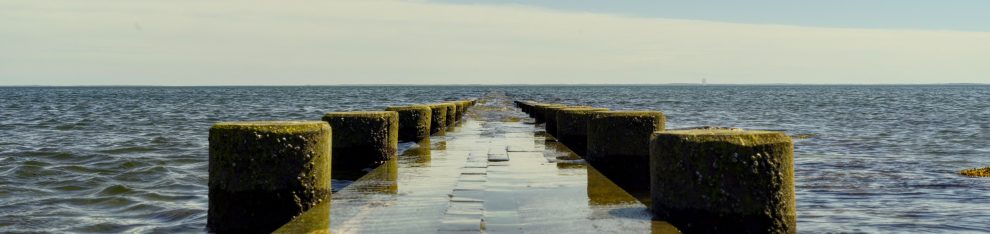
$1. 3 million in ARPA funds were used to rebuild the groin at Burying Hill Beach. (Photo/Peter Swift)
Most importantly, the regulations make clear that municipal expenditures for “general economic development” – meaning “activities that do not respond to negative economic impacts of the pandemic but rather seek to more generally enhance the jurisdiction’s business climate – would not be eligible” under this category.
But that is exactly what the first selectwoman is apparently trying to do here.
The proposed project before the RTM has nothing to do with the “economic impact” of COVID-19. Downtown has rebounded from the pandemic and remains vibrant. (Nor does it relate to any eligible infrastructure category).
To the contrary, the first selectwoman and the head of the Department of Public Works have consistently described the Jesup project as part of a long overdue solution to aesthetic and traffic-flow issues that have bedeviled Parker Harding Plaza since the 1980s. The administration has not, and cannot, plausibly characterize this project as related in any way to the pandemic and its repercussions.
Westport is an affluent suburb with a Triple-A bond rating that does not need to rely upon specially- designated federal pandemic relief money to boost our “economic vitality.”
But that doesn’t mean the ARPA grants have to go to waste. We can use the money, for example, to fund flood mitigation measures or to invest in upgrades to the Aspetuck Health District facilities where vaccines are administered.
Numerous state and local governments around the country have been called out for spending ARPA funds on questionable projects clearly unrelated to the pandemic. Let’s not add Westport to the list of towns and cities accused of misusing taxpayer money.


