Dylan Robbin is the newest member of the “06880” board of directors.
One seat on the 7-person board is reserved for a member of Inklings, Staples High School’s newspaper and website.
A rising junior, Dylan has immersed himself in many aspects of school life. Passionate about sports and journalism, he is a member of the varsity football team, director of sports media of Inklings News, and a coordinator on the WWPT-FM leadership team.
Outside of school, Dylan enjoys golfing, working out and watching movies. His favorite film is “The Departed.”
For more information on the “06880” board, click here.

Dylan Robbin
================================================
Yesterday’s Sunday morning worship drew a large crowd to Compo Beach.
Several churches rotate leadership of the service. This one was directed by Green’s Farms Congregational Church.

Sunday morning worship, at Compo Beach. (Photo/Karen Como)
==================================================
Soon after the morning worship service — and throughout the beautiful day — the Sandbar did a booming business.
But the Compo Beach concessionaire was not the only active “sandbar.”
The one off Schlaet’s Point, on Hillspoint Road between Compo and Old Mill Beaches, was humming too.
Boats anchored in the low tide. Folks wandered out onto the sand.
Planned? Impromptu?
Who cares?! It was just another great summer Sunday in Westport.

(Photo/Tammy Barry)
==================================================
Meanwhile, back on land around the corner, there was this classic scene:

(Photo/Nathan Greenbaum)
Sure, the cars and homes are fancy. But it doesn’t get more Anytown USA than this.
=================================================
We don’t yet know who’ll be playing in Sunday’s World Cup final.
But we do know where you can see what’s sure to be a great match: the Westport Library.
And that’s not all. There’s a full, family-friendly soccer afternoon.
At 1:30, Westport soccer personalities including former Staples High School coaches Dan Woog and Chris O’Dell, national champion Paddy Donovan and soccer filmmaker Joe Pierce will tell stories about their lives in the Beautiful Game.
From 1 to 3 p.m., fans can exchange Panini brand stickers.
Whether you’re a longtime fan or only recently caught World Cup fever, this is a chance to spend an afternoon with soccer people — and watch what is sure to be a memorable match surrounded by many others.
And you can’t beat the admission price. It’s free!
(“Westport Meets the World Cup” is supported by the Westport Soccer Association, Mickey Kydes Soccer Enterprises and “06880.”)

(Graphic courtesy of Isabelle Sareen)
=================================================
The Val Ramos Flamenco Ensemble danced across the Levitt Pavilion stage last night.
The free show was one of dozens this year, at the open-air theater on the Saugatuck River.
This week’s schedule:
- Tuesday, July 14: Connecticut Ballet (7:30 p.m., free)
- Wednesday, July 15: Elena Moon Park: Children’s Series (7 p.m., free)
- Thursday, July 16: Amani Burnham, blues/rock (7:30 p.m., free)
- Friday, July 17: Dogs in a Pile, psychedelic/jazz/funk rock (6 p.m., paid tickets)
- Saturday, July 18: Hollywood Nights: The Bob Seger Experience (7 p.m., paid tickets)
- Sunday, July 19: MT Jones (7 p.m., free).
For tickets and more information, click here.

Val Ramos Flamenco Ensemble (Photo/Susan Garment)

On Saturday, Eggy returned to the Levitt, for 2 high-energy sets. (Photo/Dick Wingate)
=================================================
Westport’s celebration of America’s 250th anniversary continued this weekend. The Westport Library hosted “A Small Standard Patriotic Flower Show.” Floral designs, horticulture and education tables — all with a red, white and blue theme — were presented by the Westport Garden Club.

From left: Joni Andrews, Kara McKenna-Wong, Kelle Ruden, Joanne Heller, Nathalie Fonteyne, Andi Turner, Anne Lester.
=================================================
Noted Westport artist Nina Bentley is participating in the current New York Historical’s “Weitzman Shoe Museum” exhibit. It includes a number of pieces from the collection of Stuart Weitzman,

Nina Bentley, with her work (bottom).
==================================================
Outgoing State Senator Ceci Maher is the featured guest on July 23 for “This Is Your Life”. The series — a collaboration between the Westport Center for Senior Activities and The Legacy Project USA — is a chance to learn about the lives of friends and neighbors among us, both well known and quiet.
Prior to her 2 terms as state senator, Maher served in both the public and corporate worlds. She also raised 3 children. Her daughter Katherine is CEO and president of National Public Radio.
Rozanne Gates, owner of The Legacy Project USA, is the moderator of “This Is Your Life.” The series at the Senior Center has included Mark Yurkiw, Rabbi Greg Wall, Harold Bailey, Bill Harmer, Miggs Burroughs and Carleigh Welsh.
To attend “This Is Your Life, Senator Ceci Maher,” call 203-341-5099

State Senator Ceci Maher.
==================================================
Longtime Westporter, noted publisher, former Westport Library president and Brown University trustee Joel Davis died peacefully on Saturday, after a short illness. He was 92.
The Chicago native was president of his Highland Park High School Class of 1952. His college years at Brown University made a major impact on his life.
Joel became the youngest trustee of the Brown Corporation at age 34. He served from 1968-73. He was head class agent for the Class of 1956 for 35 years.
Joel kept in touch with dozens of classmates, and knew the names of their partners, children and other important life details. At a classmate’s wedding he met Carol Barnett, his wife of 67 years. They moved to Westport in 1965.
After college Joel and his father Bernie founded Davis Publications. He was president and publisher for 40 years. At its peak they published 60 special interest magazines including Ellery Queen’s Mystery, Isaac Asimov’s Science Fiction, Income Opportunities, Sylvia Porter’s Personal Finance, Alfred Hitchcock’s Mystery Magazine, and Analog.
Architectural Designs was launched, with his wife Carol as editor. One of Joel’s three sons, Jonathan, was brought in 20 years later to learn the business and eventually take it over. Jon evolved AD into an e-commerce leading business, selling home plans to builders and individuals.
Joel was proud that last year his grandson, Jared Davis, became the third generation CEO of AD.
Joel’s father co-founded Ziff-Davis Publishing Company in 1928, which meant that Joel and his family have had a key role in publishing for 98 years.
Joel served on the board of the Westport Library for many years, including 2 terms as the president. He was also served a 25-year board member of the Magazine Publishers of America.
Additionally, he was a director for Mutual of New York on 3 different funds. Joel served on the Merritt Parkway Conservancy board, and was a Young Presidents Organization Fairchester Chapter chair.
Joel is survived by his wife Carol; sister Carol Davis Teten; sons Chuck (Jan), Andy (Kate) and Jon (Evelyn); grandchildren Jared (Emily), Jenna (Connor Grealy) and Jack, and two great-grandchildren. One more is on the way.
Joel’s family will host a celebration of his life this fall.

Joel Davis, at his 84th birthday.
==========================================
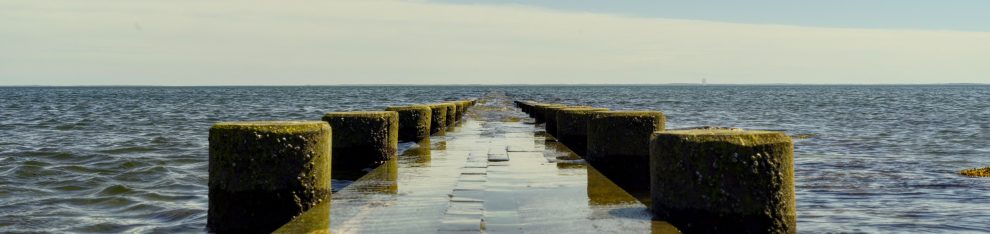
Many “Westport … Naturally” photos are striking, inspiring, or for many other reasons make us think, “Wow! We live in a beautiful and special place!”
This one doesn’t.
Still, it’s part of the daily rhythm of life by the shore.

(Photo copyright DinkinESH Fotografix)
=================================================
And finally … in honor of Nina Bentley’s artwork, at New York Historical (item above):
(Another week — and more chances for “06880” to give you all the news, features, photos and more that you love. If you enjoy this hyper-local blog, please click here to support our work. Thanks!)


 Dylan discovered that Sam’s story is told in a museum exhibit in Chandler, Arizona, and that Sam’s daughter Laura


