“Never forget.”
One of the great fears of the rapidly dwindling number of Holocaust survivors is that it will be forgotten.
The horrors of the 1930s and ’40s, the evil that can be done when no one stands up, the lessons learned — all may be lost in just a couple of generations.
Dylan Robbin is 3 generations removed from Nazi Germany. But he is making sure that no one will forget.

Dylan Robbin
Dylan is a typical Staples High School freshman. He plays football, and is part of Inklings, WWPT-FM and the Service League of Boys.
Two years ago, Dylan was preparing for his bar mitzvah. A key part of the coming-of-age rite is a project demonstrating commitment to Jewish values.
Dylan had had heard stories of his family’s personal history in the Holocaust. In some ways, it was similar to millions of others: His paternal great-grandfather, a cardiologist named Samek “Samuel” Rubinstein from Krakow, Poland, was targeted by the Nazis.
In another way though, it was special. Dr. Rubinstein was Oskar Schindler’s physician.
The German industrialist — a member of the Nazi party — saved the lives of 1,200 Jews, by hiring them for his enamelware and munitions factories in occupied Poland.
Dylan’s great-grandfather worked there, treating Schindler and his employees

Dr. Rubenstein’s Krakow ghetto ID card.
But that’s not all.
In 1944, as the Russians closed in on the Eastern Front, Dr. Rubinstein and many of Schindler’s employees were transported to Auschwitz and Mauthausen.
While at the Mauthausen concentration camp — where he helped treat prisoners — Dr. Rubinstein met Simon Wiesenthal. After surviving 4 camps and a death march, Wiesenthal dedicated his life to tracking down Nazi war criminals. The Simon Wiesenthal Center in Los Angeles is named in his honor.
Yet there may have been no center — and no convictions of Adolf Eichmann, and many other Nazis — if not for Dr. Rubinstein.
At Mauthausen, as Wiesenthal shrank to just 80 pounds, the doctor kept his spirits up.

Simon Wiesenthal (left) and Dylan Robbin’s grandfather reunited after the Holocaust.
In gratitude, Wiesenthal gave him several drawings. Years later while cleaning out his apartment, Dylan’s grandfather found them. The family donated them to the United States Holocaust Musuem in Washington.

A drawing by Simon Wiesenthal, given to Dr. Rubinstein. It is now housed at the United States Holocaust Memory.
Though his great-grandfather was not on Schindler’s list of Jews he saved — memorialized in the 1982 book “Schindler’s Ark” and 1993 movie “Schindler’s List” — Dylan realized that his ancestor’s story needed to be told.
He began researching it. The more he learned — including watching “Schindler’s List” — the more fascinated he became.
There was, for example, the story of Sam Soldinger. He survived Mauthausen — and 6 other concentration camps — and knew Dr. Rubinstein.
 Dylan discovered that Sam’s story is told in a museum exhibit in Chandler, Arizona, and that Sam’s daughter Laura wrote a book called “Death & Diamonds: A Holocaust Survivor’s Inspiring Journey of Survival, Faith, Hope, Luck and the American Dream.”
Amazingly, Laura lived just 30 miles from Dylan’s grandparents in Arizona. The 2 families had an emotional visit, sharing stories about their relatives, Schindler, and the journeys their families have taken.
Laura told Dylan’s grandfather, Mark Robbin, “I would not be alive if were not for your father.”
“That’s a story that needs to be shared,” Dylan says.
He has many other stories. And — beyond his bar mitzvah project — the teenager wants to share them with as many people as he can.
One way is through the video he made 2 years ago. (Click here to see.)
“There’s so much antisemitism today,” he says. “There were swastikas in Weston and Wilton. It may never go away. But if people in Westport and the US hear personal stories, it could help.
“I want to get this out. People need to realize the Holocaust was a real thing. It was awful. It was inhumane. This needs to be told. I haven’t done enough of that yet.”

Dylan Robbin, at his 2023 bar mitzvah.
While at Bedford Middle School last year, Dylan’s language arts class read “Night,” by Elie Wiesel. Dylan mentioned his project to his teacher, Alison Antunovich, who suggested he present it to the class.
This year, the BMS Culture Club watched the video.
“People my age know what the Holocaust was. But they don’t understand it,” Dylan notes.
“Personal stories can convey the reality of it. We need this now, more than ever.”
Dylan’s family’s story is certainly personal. After being freed from Mauthausen, and making his way to the US, Dr. Rubinstein changed his name. Samek “Samuel” Rubinstein became Dr. Stanly Robbin.
He had a successful career in this country. In addition to medicine, he founded and chaired the Long Island Holocaust Memorial Commission. He designed the Long Beach Holocaust Memorial Monument in Nassau County. Dedicated in 1987, it received international recognition, and was the subject of an Austrian Broadcasting Corporation documentary.

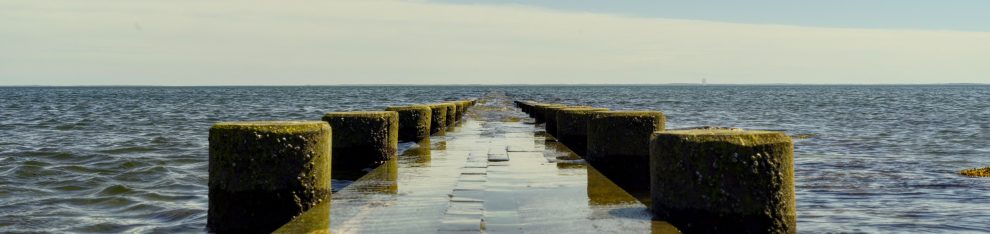
Long Beach Holocaust Memorial, designed by Dr. Stanley Robbin.
Dr. Robbin’s great-grandson Dylan Robbin now lives comfortably in Westport.
But he will never forget.
And he is doing his best to make sure that no one else does, either.
(Dr. Rubinstein’s stories — and many others — are told in “Schindler’s Legacy.” Dylan used the 1995 book as oart of his research.

It wouldn’t surprise me at all if Trump and his goons will attempt to remove any history of the holocaust. They have already removed the remembrances of the accomplishments in our history of black and Native Americans. This is beyond disgusting.
holocaust books have been removed from some school libraries.
The Diary of a Young Girl by Ann Frank has faced bans and complaints in some schools
That’s an outrageous claim and completely baseless. There’s zero evidence that Trump or “his goons” have ever attempted to erase Holocaust history. In fact, his administration publicly recognized Holocaust Remembrance Day every year, including explicit mention of Jewish victims after early criticism.
Claiming he’s erased Black and Native American history is equally misleading. Disagreeing with specific curriculum approaches or opposing politically slanted content is not the same thing as erasing history. That kind of exaggeration cheapens real issues and turns legitimate debate into paranoid fantasy.
If you want to argue policy, argue policy. But tossing around accusations of Holocaust denial without evidence is reckless and frankly, insulting to the memory of those who actually suffered under regimes that really did try to erase history.
What a superb story. Thank you, Dan, for sharing it. And thank you Dylan for the incredibly valuable work you are doing.
Truly lives up to your tagline “Where Westport meets the world” and a powerful story indeed. Dylan: great work!
Thank you so much Dan for sharing this story in a touching,beautiful and very timely way. Mazel Tov to Dylan for his research and sharing this crucial information with his peers.
Thank you for sharing a great story . As time goes by New generations need a constant reminder so it will never happen again . Good luck to Dylan with his studies and thank you for sharing this incredible story with school and all of us.
Thank you Dylan and Dan for sharing.
Dylan- Please keep telling your great grandfather’s and your family’s story!
And let us hope- Never Again (to any and all peoples)
In a world where most teens would rather give their time to matters of no consequence, Dylan is an inspiration. Thank You Dylan!
Thank you, Dan, for sharing Dylan’s story — and thank you, Dylan, for your passion about it. Keep telling it. We must never forget.
A long time ago I knew somebody who, as a captured child of eight or nine, was in a Nazi camp during WWII. This was where many medical experiments were ongoing and he was one of the children who were tied naked to posts in the snow in January, sometimes for days at a time, being shot to see if one bleeds more profusely in cold weather. Bullets were removed without anesthesia. There were other medical experiments involving injections and administering other substances to observe reactions. It is a miracle he survived.
Thank you so much Dan for taking the time to speak to Dylan and share this story
Dylan is quite the young man. Thank you, Dylan, for soaking in this story and re-telling it for our time. And thank, you, Dan, for beautifully introducing 06880 readers to Dylan.
Trump is the best friend Israel ever had.