Category Archives: People

A Night On Cockenoe Island

The other day, alert — and adventurous — “06880” reader Seth Schachter headed out to Cockenoe Island. 

He’d been there often. This time though, he camped out overnight.

The experience was so special, he offered to share it with “06880” readers. He writes:

A few weeks earlier, I had reserved our camping location through the town Conservation Department. There are only 4 spots available. A shout-out to Emily Wadsworth, who was so friendly and helpful at Town Hall.

A Westport friend and I loaded up our kayaks. It was Saturday afternoon, and we headed to the state boat ramp underneath I-95.

And they’re off!

My friend had done this once before. His lightweight camping and cooking gear all came in handy.

After our 45-minute paddle, we checked in at the “front desk” (aka unloaded our kayak at the beach), and set up camp.

Home for the night.

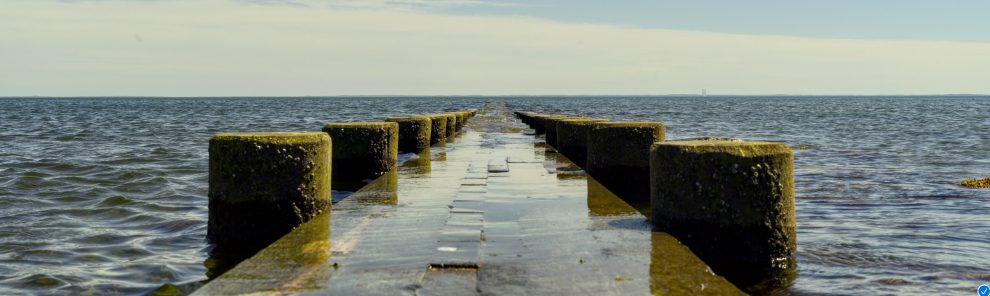
We then enjoyed the large “swimming pool” in our back yard, and the incredible views and sounds that surrounded us.

The “yard.”

The sunset; the constant sounds of wildlife (Cockenoe is a nesting ground and habitat for threatened and endangered birds); the almost full moon; the morning sunrise — it was all amazing.

(We did not get to see a humpback whale, unfortunately!)

Sunset on Cockenoe.

The island was beautiful. It was a great time. That Cockenoe could have housed a nuclear power plant — so close to Compo Beach — is hard to fathom. The hard-fought, successful lobbying by Westporters in the late 1960s is very much appreciated.

Driftwood at night.

I hope these photos help recap some of the magic that enveloped us on this 1-night journey so close to mainland Westport.

I look forward to my next overnight experience on Cockenoe. If the opportunity presents itself, others should do the same!

The view in the morning. (Photos/Seth Schachter)

A map of Cockenoe Island on the Town of Westport website shows the 4 reservable campsite.. Numbers 2, 3 and 4 all point toward Compo Beach and the Westport shoreline.

From Cottage To Firehouse

When it was the Vigilant Hose Company, the firehouse next to National Hall was where firefighters worked, lived — and cooked meals.

After the fire station closed, De Rosa’s Brick Oven Pizza moved in. Later it was the site of Neat — a coffee spot by day, wine and cocktail bar at night.

Soon, the Wilton Road landmark will become Brian Lewis’ latest creation.

The Vigilant Firehouse on Wilton Road, circa 1977.

The chef/owner of The Cottage — the much-heralded New American restaurant in Colonial Green — will open a Japanese restaurant there this fall. The yet-to-be-named place adds to the burgeoning West Bank culinary scene, which already includes Bartaco and The ‘Port.

The menu is “Izakaya meets Omakase.”

Brian Lewis

Lewis and his Cottage architect will work together again. They hope to bring out the original character of the historic building, while melding Japanese cooking with an American chef’s vision.

This past spring, Lewis tested a weekday menu at the Cottage. It was an instant hit.

He soon added a sake program, plus new cocktails. That spurred him and general manager Charlie Gihuly to search for a suitable place with history and “great bones.”

They found it — in a spot with a culinary past they look forward to building upon.

PS: If you’re wondering: Izakaya means “informal Japanese gastropub.” And “omakase” is “chef’s choice.”

Nest Egg Foundation Helps Infertile Families Grow

About 1/8 of all couples have infertility issues.

Only half of those have insurance coverage to try to become pregnant.

And of those who do, many face strict financial limits. Becoming pregnant can cost up to $20,000.

Dr. Mark Leondires

Dr. Mark Leondires knows those issues well. As medical director and partner in reproductive endocrinology at Reproductive Medicine Associates of Connecticut, he sees them every day.

Now he’s doing something about it.

With a group of local residents — some medical professionals, others in finance and law; 4 from Westport, 1 from Weston — he’s formed the Nest Egg Foundation.

It’s a brilliant name — and a wonderful concept.

Each year, the non-profit provides $10,000 grants for in vitro fertilization treatment to people who have been unable to start their families due to financial needs.

There’s no guarantee of success in the infertility field. But the Nest Egg Foundation’s success is clear. Last year, they gave 4 grants. Three of those women are already pregnant. The 4th is getting ready to try.

It’s a rigorous process — and that refers to the selection, as well as the treatment. Applicants are vetted by a retired OB/GYN, a psychologist and a CPA.

“This is not about giving money,” Leondires notes. “It’s about giving the opportunity to try to get pregnant. My heart breaks for these people. If people want to have a child, money should not be a barrier to try.”

“Everyone thinks everybody around here can afford everything. That’s not true. A lot of our neighbors can’t.”

He adds, “In some ways, I have the best job in the world. People always send me pictures of their babies. But in some ways, this is the most challenging, because of all the people who can’t.”

The Nest Egg Foundation began when Leondires realized that although RMACT provided financial assistance to clients, it had no clear process for deciding who to help.

Now the aid is more consistent, more clearly defined — and out of the hand of the physicians themselves.

Though it’s professionally run, the Nest Egg Foundation relies entirely on volunteers. Miggs Burroughs donated the logo; others — including many from Westport — offer free legal and PR help.

Many people find the organization through RMACT’s website. “If you’re dealing with infertility, you spend a lot of time on the internet looking for information,” Leondires says.

Others hear of it through social media, or word of mouth.

Of course, the Nest Egg Foundation needs its own nest egg. Money comes from donations, board members and fundraising events like last month’s “Birdies for Charity” golf tournament.

Many worthy causes ask for money. Leondires is proud to be one of them.

“Becoming pregnant can change people’s lives,” he says. “The chance to try gives us the chutzpah to keep asking.”

(For more information on the Nest Egg Foundation, click here. To donate, click here.)

Unsung Hero #11

Lois Schine has done many things in her long life.

A mechanical engineer at a time when nearly all her peers were men, she helped found the Society of Women Engineers.

She served 18 years on Westport’s Representative Town Meeting (RTM). She chaired our Human Services Commission, and was a member of 1st Selectman Diane Farrell’s Land Use Committee.

Today she’s an active member of the Westport Downtown Master Plan Committee, and a Friend of the Senior Center.

But of all she’s done, Schine says her “crowning accomplishment” is helping the town keep Winslow Park as open space.

Lois Schine

Following its days as the Westport Sanitarium — and after B. Altman abandoned its plans to build a department store there — the 32-acre site of woods and meadows just north of downtown was owned by perfume executive Walter Langer von Langendorff (aka “the baron”).

First selectman Jacqueline Heneage asked the baron if the town could buy the land. Schine’s husband Leonard — a noted attorney and judge — negotiated with the owner.

The baron backed away, offended by the town’s “low” offer of $2.38 million. Schine planned to return to the issue in a while. But he died — and so did the baron.

The baron left several wills. It appeared his land would be tied up in court — then sold, to satisfy his various estate obligations.

In 1987 the RTM voted 26-8 to condemn the land. Citizens opposed to the deal brought a referendum. Lois Schine, Joanne Leaman and Ellie Solovay helped spur a “yes” vote. By 54-46%, Westporters chose to move ahead with eminent domain.

The purchase price was $9.42 million. But no one in town knew what to do with the property.

Schine worried it would be used for buildings, or some other intense activity. She asked town attorney Ken Bernhard how to designate the land as “open space.”

Winslow Park draws visitors with dogs …

He said there was no such zoning regulation in town. He suggested she run for the RTM, so the body could pass a resolution asking the Planning & Zoning Commission to create that designation.

She did. She won. And — with Ellie Lowenstein at the P&Z helm — officials created an “open space” zone for passive recreation.

“Longshore, Compo, all the pocket parks — none of them had open space designations,” Schine recalls.

Today they do. So does the baron’s other property — the 22 acres across the Post Road, between Compo Road South and Imperial Avenue.

… and sleds.

“Some people say Winslow is ‘only a dog park,'” Schine notes.

“But it’s a park in the middle of town.”

And — had it not been for Lois Schine, and many others — that middle of town might look very different today.


An Evergreen Grows In Westport

First, it was natural land: wooded, a bit wet.

Then it was cleared for farming. Eventually, nature took over again.

Stone walls show that this wooded land was used long ago for farming.

In 1959, Lillian Wadsworth sold 12 acres to the town of Westport — for $1. The year before, she’d given 62 acres to the fledgling Mid-Fairfield County Youth Museum. The organization later changed its name — first to the Nature Center, then to Earthplace.

A philanthropist, artist and sculptor, Wadsworth was active in the Westport Garden Club, Westport Library, and various preservation and horticutural organizations. 

The Board of Education considered the site — bordered by Stonybrook Road and Woodside Lane — for a school. Residents of the quiet neighborhood objected.

Eventually, the town designated the 12 acres for passive recreation.

The Lillian Wadsworth Arboretum is called “Stony Brook Rd property” on this Google Maps Earth view. Earthplace is at top.

About 20 years ago, the town explored selling the site to a developer. Nearby resident Dick Fincher and town attorney Stan Atwood helped scuttle that plan.

In 2009, a micro-burst felled hundreds of trees. They sat, rotting, for several years.

In 2014 Fincher and Lou Mall got 1st Selectman Jim Marpe interested in the site. When tree warden Bruce Lindsay saw it, he immediately recognized its potential.

With a $50,000 urban forestry grant — and hundreds of volunteer hours — a few trails were cut. Fincher and neighbor John Howe played key roles, and saved a beautiful Norway maple.

Dick Fincher, at the entrance to the Wadsworth Arboretum (corner of Stoneybrook Road and Woodside Lane).

A Norway maple at the Wadsworth Arboretum. The teepee nearby was built by students.

Since then, volunteer restoration efforts have continued. The land was given an official name: The Lillian Wadsworth Arboretum.

Now Fincher and Stein — both members of Westport’s Tree Board — are kicking the project into high gear. The Board has formed a non-profit — Westport Evergreen — to solicit foundation, corporate, civic group and individual funding to manage, maintain and improve open spaces throughout town.

The start of the Eloise Ray trail, on Stonybrook Road. Eloise Ray was a noted landscape architect.

In addition to the Wadsworth Arboretum, Westport Evergreen has done preliminary work at Baron’s South, the 32-acre wooded site between South Compo and Imperial Avenue.

So far, 40% of the Wadsworth site work has been completed. Dangerous deadfalls and invasives were removed; a trail plan has been established, and several trails added. Specimen vegetation has been planted, signage installed, and benches and tables were made by Stein from salvaged wood.

Dick Stein made this bench from salvaged wood. Lou Mall invited fellow RTM members here for a picnic.

Clearing the massive amount of underbrush is “not a job for amateurs,” says Dick Fincher.

Dick Fincher stands on a bridge built earlier this summer by Lou Mall, Dick Stein and tree warden Bruce Lindsay.

Dead creepers line a Wadswworth Arboretum trail.

Still ahead: a visitors’ information kiosk, 3- or 4-car parking area, and path along the Stonybrook perimeter.

A visitors’ kiosk will be built here. All the wood comes from the Wadsworth Arboretum site.

Westport Evergreen hopes to organize work days with groups like the Boys Scouts, Staples’ Service League of Boys, and Rotary and garden clubs.

One of the trails already cut at the Wadsworth Arboretum. Many have been created by students.

Last year, several Staples senior interns and members of Mike Aitkenhead’s environmental studies classes worked at the Arboretum.

Westport Evergreen seeks contributions to the general fund, or for planting a tree or purchasing a bench. Email blindsay@westportct.gov, or write Lillian Wadsworth Arboretum, c/o Tree Warden, 110 Myrtle Avenue, Westport, CT 06880.

When funding is completed, this rock will bear a plaque saying “Lillian Wadsworth Arboretum.”

In the meantime, wander over to the Lillian Wadsworth Arboretum. It’s open 365 days a year.

And it’s free.

That’s priceless.

Heather Hightower: The Charlottesville I Know

Heather Hightower graduated from Staples High School in 1999, and the University of Virginia 4 years later. She’s still in Charlottesville, where she’s the founder and owner of The Center for Vocal Study (and choir director at Field School).

In the aftermath of that city’s domestic terrorism incident — as the world tries to figure out what to make of her adopted hometown — she emailed “06880.” Heather says:

The Charlottesville I know is full of caring, good, hardworking people who actively seek to improve the lives of others.

The Charlottesville I know cares about its children, its small business owners, its food sources, its historical mark on this nation.

The Charlottesville I know is full of people who take the time to read about the issues and who then give careful consideration to how to best support the highest good.

The Charlottesville I know had people attending lectures on historical roots of racism, prayer vigils and other peaceful forms of activism the nights and weeks leading into this past weekend’s events.

Heather Hightower

The Charlottesville I know is committed to the values our nation holds dear, including diversity and freedom of speech.

The Charlottesville I know has the strength and presence of mind in its residents and leaders to tackle major issues and work towards resolution. We have faced some difficult issues in the past few years that have sparked national conversation. The events of this weekend, amplified by participants from out of town, do not represent the heart of Charlottesville. This city is strong, thoughtful, kind and cares about its neighbors and where we are going as a community.

The Charlottesville that will prevail is one powered by good. We have a marvelous opportunity to demonstrate how to lead in a time of crisis. It begins with how we conduct these conversations and how we rise to keep working towards change that builds community. Our community is listening, it is acting, and our artists are shining brightly.


Bespoke Stephen Kempson

At 16 — with just $150 and “a bag of clothes” — Stephen Kempson left England for San Diego. His dream was to become a professional soccer player.

It didn’t happen. But unlike many Brits who don’t become the next Beckham, Kempson had another talent to fall back on.

As a lad, he’d worked for a small London haberdasher. On tea breaks he watched as tailors took fittings, then turned fabric into handsome suits.

Kempson liked soccer. But he loved men’s style.

When his sports career ended, Kempson worked on Rodeo Drive. Then came stints at Hickey Freeman, Dormeuil and Brioni. He learned about textiles, manufacturing and more.

In 2001, he opened his own business in Los Angeles. It grew — but the real potential was in his New York clients. They dressed more formally than men in California. Soon, Kempson was traveling every other week to the East Coast.

One summer Sunday in 2004, a friend who had moved from L.A. to Westport took Kempson and his wife to Longshore. Sitting at Splash, both said “Wow!”

It did not take long for them to move. They’re raising 3 kids here, and love the community.

For most of that time, Kempson commuted to his Park Avenue atelier. But a few months ago — as the train ride got longer, and his children got older — he thought about opening a pop-up shop here.

Driving over the Post Road bridge in April, Kempson spotted a sign in the first storefront on Post Road West. George Subkoff Antiques was moving.

The space was perfect. With a cutting table in the front, passersby could watch suits being made. Enormous windows on the side and in back offered superb views of the Saugatuck River and downtown.

Stephen Kempson in his store. Behind him are diners on Arezzo’s patio, and the Saugatuck River.

Stephen Kempson London opened just over a month ago. In addition to bespoke suits, jackets, pants and shirts, he offers shoes, ties and cufflinks; tailoring; ready-to-wear items off the rack, and wardrobe consultation.

In fact, that personal touch is where Kempson truly excels.

As we chatted the other day — with the river behind us, and a well-stocked bar in the corner — a customer walked in. He carried a $5,000 jacket. But it did not fit well — and the tailor in Milan had never met him.

Kempson knows his customers — where they work, what they do, what makes them them.

“I want people to put on my jacket, smile, and say ‘Wow! This is me!'” Kempson says.

Stephen Kempson explains fabric.

He tells the story of a Financial Times staffer who interviewed him in New York. At the end, the writer asked Kempson for a critique of his suit.

Kempson told the truth: It did not fit him well. When the man handed over his business card, Kempson learned he was Lionel Barber — the FT’s New York managing editor. Kempson figured he’d blown the interview.

But it turns out Barber’s colleagues had long despaired of his wardrobe. They encouraged him to get a full makeover.

A few weeks later, Barber wore his new suit to an industry dinner. Colleagues marveled at how great he looked. One asked where he got his tie. Others wondered if he’d lost weight.

“That’s why I do what I do,” Kempson says.

Suits in the Stephen Kempson window — and reflections across Post Road West.

And that’s why he is so happy to be doing it in his adopted hometown. He’s looking for a way to get more involved in the community — particularly for those in need.

Eight years ago on a train to New York, he overheard a conversation with a down-and-out man. Touched, Kempson offered to pay for his monthly train ticket, so he could keep his job. The two are still in touch.

“You have to give a hand up, rather than a handout,” Kempson explains.

And then — near the end of our chat — this perfectly dressed, well-coiffed man says something stunning.

“I was homeless once,” Kempson admits.

Twenty years ago in L.A. — separated from his wife, with a 6-month-old child — he was living on the streets, showering at a pool. A friend of a friend gave him a place to live.

Today, Kempson lives in Westport. He is elegant. His new store — also in Westport — is warm, welcoming and classic.

You can’t make this stuff up.

But Stephen Kempson can make sure that your clothes make you.

(Hat tip: Kami Evans)
Hate Has No Home Here

The weekend’s horrific events in Charlottesville shined a spotlight on the despicable, bigoted, anti-American groups and individuals now crawling out from under the rocks where they’ve hidden for years.

It also gave fresh momentum to a no-hate movement that’s been building here in Westport.

Earlier this summer, Bedford Middle School teacher Kerstin Rao visited Evanston, Illinois. She spotted several lawn signs:

Kerstin was staying with her husband’s cousin. Both men were born in India. Like Kerstin, her husband’s cousin is in a mixed marriage.

Pushing a stroller with her relatives’ infant daughter, and seeing similar signs on every street, gave Kerstin a “truly inclusive” feeling.

She vowed to bring that feeling back to Westport.

Online, she found the website for what was becoming a national movement. Organizers laid down a few simple rules: It could not be a fundraiser; it could not be political or partisan; the original design could not be altered, and the yard signs had to be sold at cost.

“This is truly a grassroots effort to show our welcoming hearts,” Kerstin says.

She learned that a few areas in Connecticut already had signs. She bought one from a Milford friend.

When Kerstin wrote about the movement on Jane Green’s “Westport Front Porch” Facebook page, the response was immediate. She organized a meeting at Barnes & Noble.

Baker Graphics offered a great price for printing. Steam Coffee at the Greens Farms train station offered to sell the signs to commuters.

The group that met at Barnes & Noble last week loved that the project is non-partisan. They vowed to include people from a wide spectrum to help spread the “no hate” message.

On Sunday, Kerstin and her husband Vijay brought their red-and-blue sign to the demonstration on the Post Road bridge:

“Peace is non-partisan,” Kerstin notes. “We are not affiliated with any political party, religion or cause. We just want to put a message in our neighborhoods that hate has no home here.”

She adds, “As a teacher, I imagine students of various backgrounds heading back to school, maybe feeling nervous. Maybe this will be their first year in Westport schools. The thought of them looking out their bus windows and seeing so many welcoming signs — well, that is really wearing our hearts on our sleeves.”

(The no-hate group has set up a fundraising page (click here). Donations will pay for printing only. To volunteer for the effort, email hhnhhwestport@gmail.com.)

Stevan Dohanos’ Firehouse Comes Home

Pat Kery thinks of the Saugatuck firehouse as “her” firehouse.

The art appraiser once had an office at Bridge Square. She still lives nearby.

So when she found a Stevan Dohanos print for sale called “Hose Co. 4” — which looked a lot like the Saugatuck firehouse, Engine Company 4 — she was excited.

The Saugatuck firehouse.

Actually, more than excited. She helped bring it home to Westport.

Kery consults for WestPAC — Westport’s Public Art Collection. She’s also a longtime Dohanos aficionado. Researching her 1982 book, “Great Magazine Covers of the World,” she learned a lot about the local illustrator. He drew 123 covers for the Saturday Evening Post — as well as the incredible mural that has hung since 1953 in the Coleytown Elementary School office.

Dohanos’ 1950 firehouse lithograph shows firemen shooting the breeze with a mailman, as they wait for the next call.

Stevan Dohanos’ “Hose Co. 4.”

“His genius was capturing the ordinary things in life — in particular some of the small details we might miss in our fast-paced lives,” Kery says.

“Hose Co. 4” shows bedposts in the 2nd-floor windows, laundry drying on a clothesline, and an alert Dalmatian for companionship.

“From a stylistic standpoint, the artist brilliantly echoes circles and squares — the firehouse, the trees, the dog — to visually tie in elements in the print,” she explains.

Stevan Dohanos at work.

Recently, Kery learned the print — signed by the artist in the lower right, one of an edition of 250, and in pristine condition — was being sold by a dealer in the Midwest. She called, and learned he’d visited Dohanos in Westport shortly before his death.

The seller offered an excellent price — and framed it. Sam  Gault generously provided funds for its purchase. Now it joins 3 other Dohanos Saturday Evening Post covers, and various illustrations — in the WestPAC collection.

It’s a treasure trove of art, including a Picasso and other world-renowned works.

But the real value of WestPAC is the chance to bring something like Stevan Dohanos’ firehouse “home.”

BONUS STEVAN DOHANOS PHOTO BELOW: 

This circa 1950 print — donated by Kery — is from a photograph at the Norman Rockwell Museum’s Famous Artists School Archives.

It shows Dohanos hanging out with Westport firefighters, in front of the original fire headquarters. It was on Church Lane downtown, next to the YMCA Bedford Building (left).

When fire headquarters moved to the Post Road, where it is today (next to Terrain),  the old firehouse was incorporated into the YMCA. Its 1st floor became the Y’s new fitness center, while the 2nd floor was converted into a weight room and cardio studio.

Today, both the Bedford Building and old firehouse have been refashioned into  Bedford Square.

PS: Check out the dalmatian at Dohanos’ feet!

Fran Southworth: Why I Stood On The Bridge

Fran Southworth has lived in Westport for 29 years. She is part of Indivisible Connecticut 4, and the Facebook Love in Action group.

Last night — saddened and horrified by the events in Charlottesville — she felt compelled to act. Fran writes:

Seeing the images of the University of Virginia students made me think about my own kids when they were in college, and the horror if they had been confronted with such hatred, intolerance and racism. Because of the hateful slogans chanted by the white supremacists, and the physical actions that caused at least 1 death and many injuries, I felt the need to unify as a community. We needed to come together to voice our opposition to hate, and teach our children and grandchildren that what they are witnessing now is not what America is all about.

So I decided to do a pop-up peaceful gathering on our bridge in Westport. I thought I might  be standing there alone with my sign: “Normalize Love Not Hate! Honk if You Agree.”

Getting Darcy Hicks involved was a sure way to gather people.

This morning Melissa Kane contacted me. We chatted about our similar family history. She spread the word as well.

Then a new activist friend, Juliana Hess, told her group. We were off and running.

Juliana wrote beautifully that people in Europe would never have sat back and done nothing if they knew what was coming. My Jewish grandparents ran for their lives from Russia. They and others told me stories of friends and relatives who ran. Many were killed in the Holocaust. Others survived. All taught me: “Never Again.”

Never again — yet Charlottesville just happened. I feel very deeply the pain, destruction and horror it has caused. I also say: “Never Again.”

Fran Southworth (center), flanked by Myra Garvett and Darcy Hicks, on the Ruth Steinkraus Cohen Bridge earlier today.

I also want to speak out for my close friend and singing partner, an African American woman. Because of the history of slavery and racism in America, blacks have always struggled here. But things are worsening, with white supremacists set loose by the tacit acceptance of our administration toward violence and intolerance.

My friend explained to me that they don’t want to have a separate “Black Lives Matter” presence. Unfortunately they have to.

We have to stop these white supremacists in their tracks. We must make it very clear that they — and their hate and intolerance — have no place in our communities. White supremacists, neo-Nazis and anti-Semites are the antitheses of our American values.

The president said there are many sides to this. There are no other sides to hatred and bigotry. I watched David Duke, a former KKK leader, say that President Trump told them they will take back our country.

No! We will take back our country. We will continue to live up to the American ideals of tolerance and inclusion of all people.

We need to let our politicians know that this is a very important issue for all of us. It’s not about anyone’s political party or agenda. It’s about human decency, compassion and respect.