Tag Archives: Democratic National Convention

Ev Boyle: Reporting From 2 Conventions

If you’re like me, you spent the past couple of weeks processing everything you saw and heard during the Republican and Democratic conventions.

If you’re like Ev Boyle, you did that too — but with a special perspective. The 2001 Staples High School graduate was on the scene — including the floor — in both Cleveland and Philadelphia.

Ev’s official title is associate director, University of Southern California Annenberg Center on Communication Leadership and Policy. He organizes programs and events in government, journalism and technology.

Ev Boyle (left) never knew who -- or what -- he'd see next. This was outside the Republican National Convention.

Ev Boyle (left) never knew who — or what — he’d see next. This was outside the Republican National Convention.

But he’s also a political junkie. So working with Annenberg professors like David Eisenhower (Ike’s grandson, Nixon’s son-in-law) and Geoffrey Cowan (former director of the Voice of America, author of a recent book on presidential primaries) is a dream come true.

Ev brought 6 student-journalists to the 2 conventions. “We pushed our students to go in with open minds and hearts. We wanted them to talk to as many people as they could.” They — and Ev — did exactly that.

They reveled in breakfasts with delegates, the controlled chaos of floor sessions, and random sidewalk meetings with everyone from Katie Couric and Samantha Bee to Libertarian Party presidential candidate Gary Johnson and UK Brexit leader Nigel Farage (who knew either of them were at the conventions?).

Ev realized that being on the floor was interesting and special — but it was also cramped, hot, and hard to know what was happening. “You could see and hear a lot better on TV,” he notes.

Marjorie Margolies — a former Pennsylvania congresswoman, and Chelsea Clinton’s mother-in-law — helped arrange a meeting with former presidential candidate John Kasich. The Ohio governor famously stayed away from the convention in his home state — but he met the Annenberg group for a long, insightful conversation.

Ev Boyle (3rd from right) and David Eisenhower (next to Ev) heard political insights directly from Governor (and former presidential candidate) John Kasich (4th from left).

Ev Boyle (3rd from right) and David Eisenhower (next to Ev) heard political insights directly from Governor (and former presidential candidate) John Kasich (4th from left).

Texas Republican congressman Pete Sessions — chair of the House Rules Committee — was especially “kind and accommodating” to the group, Ev says.

Delegate breakfasts were particularly intriguing. At California’s — on the 1st day of the Democratic convention — Ev and his students heard the thunderous boos from Bernie Sanders supporters that greeted Nancy Pelosi and others. That incident did not get a lot of press, but it presaged the California delegation’s actions through the rest of the week.

Ev and his group learned something everywhere they went. In Cleveland, 100 congressional pages — ages 15 to 24, from all 50 states — gathered. When asked how many had supported Donald Trump from the beginning, no hands were raised.

Two other questions: How many were Trump supporters now? How many were “Never Trump”? Ev says they were split 50-50.

Republican and Deomocratic symbolsEv helped his young student journalists seek out interesting stories. They interviewed hotel workers, female Trump supporters, a delegate who at 17 years old was younger than they, and Democratic officials who switched parties to vote for Trump.

The 2 conventions provided “an eye-opener into the process of politics,” Ev says.

And stories he can tell through the 2020 election.

Charlotte: One Student’s View

Sanders McNair — a 2010 Staples graduate — is now a senior at Wake Forest University. He and 9 classmates spent the past few days at the Democratic National Convention in Charlotte.

Here is his report. I hope that if readers comment, they’re as objective — and civil — as Sanders is.

We did a ton of different activities. We spent some time at the sets of several MSNBC shows, chatting and taking pictures with Joe Scarborough, Chris Matthews and Melissa Harris-Perry (a Wake Forest alum).

Sanders McNair (far left) and fellow Wake Forest University students, with political commentator (and WFU alum) Melissa Harris-Perry.

We went to a forum for college students hosted by the Atlantic and National Journal featuring Chelsea Clinton, Kal Penn, Chuck Todd, Atlanta mayor Kasim Reed and several others.

Though the venue change for President Obama’s acceptance speech meant we couldn’t see it in person, we did go to a large watch party next door.

Sanders saw San Antonio mayor (and keynote speaker) Julian Castro giving an impromptu interview.

Still, we saw many speeches in person that were not seen on TV by the rest of the country, including ones by Michelle Obama, Congressman and civil rights leader John Lewis, Lily Ledbetter, Secretary of Labor Hilda Solis, and more.

Additionally we did interviews with reporters, wrote up stories for various blogs and left some time for the touristy things.

I’m extremely thankful I got the chance to go to the DNC. I was a bit skeptical that the convention would just be one big party (both senses of the word). There was plenty of that, but there was much more.

No, conventions don’t present new policy ideas or change minds with one speech. However, I really appreciated hearing the personal stories of so many regular people (an incredibly diverse group at the DNC, I might add) — those we were standing in hour-long lines with, and those who we sat next to during speeches.

Overall, I’m just glad I got to experience an event that allowed me to both see the glitzy, celebrity side of party conventions, and the side of the regular people who came to support their candidate.


Martha Aasen: Quite A Life Of Convention

In 1960, Martha Aasen was living in California. The Democratic National Convention was held in Los Angeles.

Martha came from a family of avid Democrats. Her father was a convention delegate from their native Mississippi. Her brother wangled a job as a driver for Stuart Symington, one of several men still jostling for the nomination.

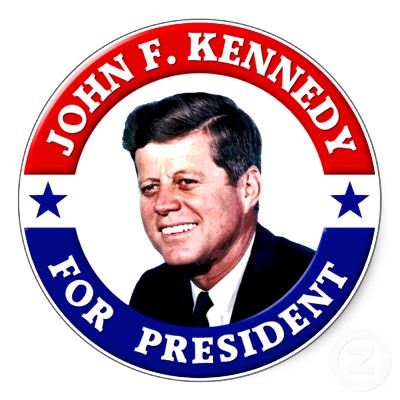
Martha and her husband Larry got a room with the Mississippi delegation, in a rundown Spanish-style hotel on the outskirts of L.A. They had just checked in when another candidate appeared. It was John F. Kennedy, on his way to meet the Wyoming delegation at the same “crummy hotel.”

Martha walked up to the Massachusetts senator. He took her hand, and looked straight at her. Half a century later, she remembers his “unbelievable charisma.”

Kennedy’s visit paid off. On the night of the roll call, Wyoming’s 15 votes gave him the nomination over his closest rival, Texas senator Lyndon B. Johnson.

Though longtime Westporters Martha and Larry Aasen have been active in Democratic politics — and attending conventions — ever since, 1960 was not their first. Four years earlier, one of Larry’s North Dakota Republican friends got them into the Republican convention at San Francisco’s Cow Palace. They watched as President Eisenhower and Vice President Nixon were renominated.

Fannie Lou Hamer faces the Democratic credentials committee.

In 1964 the Aasens were in Atlantic City. Martha’s mother was a Mississippi delegate. That year, the biracial Freedom Democratic Party challenged the seating of the state’s all-white delegation. Fannie Lou Hamer gave a rousing speech. The governor urged his white delegation to walk out. Most did. Martha’s mother was one of the 3 or 4 who did not.

Forty years later, in 2004, Martha was a delegate at the Boston convention.  Connecticut was seated next to Mississippi. Thousands of delegates — of all races — paid tribute to the work of Fannie Lou Hamer, and other brave people who fought for civil rights.

Martha and Larry Aasen.

The Boston convention also featured an electrifying keynote speech by Illinois legislator Barack Obama. “Everyone there knew we were hearing someone special,” Martha recalls.

Martha was in Denver 4 years ago, when Obama was nominated for president.

She’d been back in Los Angeles in 2000, too. That was one of the few times  Connecticut had good seats. They were seated right in front, next to Tennessee. The reason, of course: Al Gore’s running made was Joe Lieberman.

Martha missed the 1968 Chicago convention — perhaps the most famous of all — as well as the others before 2000. She was working for the United Nations, and could not be actively involved in domestic politics.

Now 82, she looks forward to the upcoming Charlotte convention. The event has changed since the JFK days — more security, less spontaneity, and the nominee is known in advance — but they’re still exciting.

“It’s more of a pep rally,” Martha says. “You hear speeches, and realize why you believe so strongly in what you do. You go home energized, eager to support your candidate.”

And who knows? Some day, once again, a candidate may come calling on Connecticut. Just as John F. Kennedy did with Wyoming back when he needed a few more votes, wherever they were.