Author Archives: Dan Woog

Roundup: More Snow, Board Of Ed Conversation Postponed, Alzheimer’s Support Group Forms …

After a professional development day, winter break, then 2 more blizzard snow days, Westport schools were finally back in session this morning.

It did not start out well.

A parent of a student reports, “Cars were driving 5 miles an hour on the way to school. Many were sliding all over the place. Scary!”

A Staples High School senior adds, “Wild school opening. 4 students in my first period class. Roads covered in snow. Couldn’t see the center line on the Post Road.”

The good news is: The sun will peek through this afternoon. The temperature will be about 40.

The bad news: Snow showers are predicted, Sunday through Tuesday.

Car and school bus navigate snow-covered roads very carefully this morning. (Photo/Dayle Brownstein)

==================================================

The Board of Education “Community Conversation” scheduled for noon today at the Westport Library has been postponed.

A new date will be announced soon.

=================================================

And 2 delays: The Senior Center will open at 10:30 a.m. today, 2 hours late.

The Westport Library opens at 11 a.m.

================================================

Residents caring for a loved one with Alzheimer’s or other dementia often feel alone.

There’s help available. The Residence at Westport and Westport Library are collaborating on a monthly support group, with professional facilitators.

It’s a chance to share stories with others who understand the challenges, in a safe and supportive environment.

Educational presentations may be provided, and participants will help choose discussion topics.

It meets the second Tuesday of every month (11 a.m. to 12:30 p.m., Westport Library). No RSVPs are necessary; it’s a drop-in group.

Questions? Email mledney@residencewestport.com.

================================================

For the second time this winter, SCA Crowley lent a clean-up hand.

The property management firm and Penna Construction — both longtime Westport-based firms — lent vehicles and crews yesterday night. Together, they cleared some of the snow that remained on downtown streets and sidewalks.

It takes a village. Thanks, SCA and Penna, for helping make ours a little less treacherous!

(Photo/Andrew Colabella)

==================================================

Also downtown: S’mores — courtesy of Nômade — are a winter Holiday Stroll favorite.

But they made an appearance yesterday, on the Main Street sidewalk.

And you thought nothing good would come out of that blizzard …

Who wants s’mores? (Photo/Sal Liccione)

==================================================

Many Westport Country Playhouse Script in Hand play reading selections are contemporary works.

The next one is a classic — and an encore presentation.

“The Subject Was Roses” — winner of the 1965 Pulitzer Prize for Drama, and a Tony Award for Best Play — comes to the storied stage on Monday (March 2, 7 p.m.).

It was produced at the Playhouse in 1966, then again in 1982.

“Roses” is set in May of 1946. As World War II draws to an end, a young soldier returns to the Bronx apartment where he was raised. Hoping his homecoming will repair his parents’ troubled marriage, he presses for small acts of reconciliation, only to expose years of resentment and emotional distance. As tensions rise, the family confronts the truth of their relationships and the life they share.

Tickets are $35. Click here to purchase, and for more information. 

Etai Benson stars in “The Subject Was Roses.”

===============================================

Cohl Katz loves her Smith Corona typewriter.

But it jammed up — and she has no idea who can fix it.

If you know a typewriter repair person — or can do it yourself — email cohlita@yahoo.com.

Who knows — she may write a nice thank-you note on it!

Kids: Do you know what this is?

===============================================

Dogs in a Pile — the 20-somethings band with “old souls and limitless chops,”  brings their psychedelic-tinged jazz/funk/rock to the Levitt Pavilion on July 17.

Touring is in their blood: They’ve averaged 130 shows a year since 2022.

Tickets go on sale Friday (February 27, 10 a.m.). Click here to purchase, and for more information.


Dogs in a Pile

==================================================

From Dogs in a Pile to a red-tailed hawk in a tree … here’s today’s “Westport … Naturally” feature photo:

  (Photo/Todd Ehrlich)

==================================================

And finally … on this date in 1873, 4 years before the invention of the phonograph, Enrico Caruso — the most popular operatic tenor of the early 20th century, and the first great recording star — was born. He died in 1921, at 48, from peritonitis.

(Where else but “06880” can you find Dogs in a Pile and Enrico Caruso in the same place? There’s lot more every day too, on your hyper-local blog. Please click here to support our work. Thanks!) 

RTM: Committee Could Advocate For Cribari Bridge

Representative Town Meeting (RTM) members spoke — and listened — last night, in a Zoom session focused on one topic: the Cribari Bridge.

The session was organized by RTM rep Matthew Mandell, in response to concerns about the future of the 143-year-old span — the oldest swing bridge of its kind in the country.

As a March 19 meeting (6 p.m., Town Hall auditorium) with the state Department of Transportation looms, members from RTM Districts 1, 4 and 9 — all encompassing or close to Saugatuck and Greens Farms – hoped to gain input and find consensus on possible action.

They discussed — and the public reinforced — concerns about traffic, safety, and a process many feel is already preordained by the state Department of Transportation.

In the end, support was strong for a committee — appointed by 1st Selectman Kevin Christie, and including RTM members — to give clear guidance to DOT, regarding the town’s wishes and demands.

Christie said he would discuss the idea with others. A sense of the meeting resolution may be voted on Tuesday, when the RTM meets next.

Last night’s meeting drew, at one point, 140 people. Matthew Mandell — the District 1 representative who organized the session — said the goal was for the town to plan how to work with DOT on a solution that’s good for “the residents and the state.”

“The RTM must champion residents’ efforts, no matter how it’s built,” Jennifer Johnson (District 9) said. She, like many others, noted the importance of not allowing Route 136  and Greens Farms Road to become a “truck route.”

Cribari Bridge (Photo/Whitmal Cooper)

Fellow District 9 rep Kristin Schneeman cited 2 distinct areas to examine: the engineering and design of the bridge, and the policy that drives discussion of its rehabilitation or replacement.

District 9 member Nancy Kail pressed for the involvement of Senators Richard Blumenthal and Chris Murphy, and Representative Jim Himes.

With much of the discussion revolving around Bridge Street, 2 speakers pointed to the bridge’s impact on other parts of town.

Lou Mall — an RTM member whose District 2 includes the often-gridlocked Riverside Avenue/Post Road West/Wilton Road intersection — said that whatever happens at Bridge Street will “squeeze the balloon,” with traffic affecting other parts of town.

Robbie Guimond, who lives on Riverside Avenue and owns a marina there, asked, “Why is the RTM so insistent on protecting one part of Westport — Bridge Street — at the expense of another?”

Town residents expressed frustration with the town’s previous dealings with DOT.

“They’re running roughshod over us,” said Valerie Seiling Jacobs, co-chair of Save Westport Now. “We know the answers they’ll give us on March 19. They’re not going to collaborate with us — they’ve made that clear.”

One example: DOT “did not require contractors to have any experience in historic renovation” when they sent information on possible bids.

“How many times do we have to ask questions, and get hit over the head?” Jacobs asked. “The DOT has said that the bridge will be built to (its) code. We need a strategy, and a solution, before the 19th.”

Nearly everyone agreed that something must — and will — be done to the Cribari Bridge. The issues were twofold: What will it be? And what role will Westport have in the process?

“Safety and careful planning are not conflicting goals,” said Werner Liepolt, a Bridge Street resident who has been active in the issue for years.

Westporter Ray Broady looked at the decade-long debate about the future of the Cribari Bridge, and the many proposals, arguments and counter-arguments that keep cropping up.

“This is Whac-a-Mole,” he said.

Skip Gilbert: Winter Olympics Offer Lessons For Youth Sports

Skip Gilbert knows his way around sports.

The former Westporter — now a Weston resident — worked with the US Tennis Association, USA Triathlon, USA Swimming and US Soccer. He was chair of the National Governing Bodies Council, and managing director of operations, marketing and development for the US Anti-Doping Agency.

Skip Gilbert

Most recently, Gilbert was CEO of US Youth Soccer.

That’s especially fitting: He was a University of Vermont goalkeeper star, played with the professional Tampa Bay Rowdies, and trained with Sheffield United, and clubs in Holland and Hong Kong.

This month, Gilbert avidly watched the Winter Olympics. He had 2 perspectives: industry insider, and sports fan.

He wrote some thoughts for a soccer publication. But his insights speak to perhaps the most burning issue in all youth sports, here and across the country: At what age should children start to specialize? How young is too young — and what will happen if they don’t choose one sport early in life? 

Gilbert said:

What did the Winter Olympics tell us about youth soccer in the US?

Plenty.

First, let me congratulate my former national governing body colleagues in putting together an impressive collection of world-class athletes to propel Team USA to its most successful Winter Games in history.

They were incredible to watch, and I could not have been prouder, absorbing every minute of every telecast.

Both the US men’s and women’s hockey teams won gold medals — both with 2-1 overtime wins against Canada.

Of all the great content delivered by NBC over the past few weeks, the most impactful regarding youth soccer was a segment by Mary Carillo, outlining the philosophy of youth development by one European country for kids under 12.

Their focus is for those kids to learn the chosen sport(s) with the goal of having fun. No pressure, no champions, no imagined expectations for parents to embrace.

Many will say that culture can’t succeed in the US.

I strongly disagree. For years, well before my recent role in youth soccer, I’ve been a strong advocate for multi-sport training for kids under 12 — and a firm believer that the only term kids under 12 should use is “player.”

No “elite.” No “travel.” Just “player.”

I also emphatically support the American Development Model (ADM) for coaching, designed by a sport national governing body and the US Olympic & Paralympic Committee.

For kids under 12, the goal is to learn the game, have fun, and pursue a path that will allow them to love, play and enjoy the game throughout their entire life.

From there, those with the “it” factor will have the path to follow, courtesy of the ADM. Those that don’t will not need to quit the sport. They will have an alternate path to follow.

If you are skeptical, let me end with 2 questions.

What national governing body wrote the ADM with the USOPC? USA Hockey — and they have gold medals for both the women’s and men’s teams.

As for the European country? It’s Norway: population 5.5 million (the same as Minnesota; the US population is 342 million). Their performance this month produced the most gold medals — and most total medals — in Winter Olympic history.

The Winter Olympics told us clearly that youth soccer in the US has something to learn.

Many other sports can heed those lessons too.

(“06880” regularly covers sports, kids, the joys and pressures of life in Westport, and much more. If you enjoy the broad scope of this hyper-local blog, please click here to support us. Thank you!)

Pics Of The Day #3233

One indoor view of the Blizzard of 2026 … (Photo/Judith Katz)

… and feeling a Buddha-like calm (Photo/Claudia Sherwood Servidio)


[OPINION] Cribari Bridge: Reject “False Choice”; Adopt “Adaptive Rehabilitation Alternative”

Tonight, there’s a Zoom meeting organized by several Representative Town Meeting members to discuss the Cribari Bridge (7 p.m., Zoom). The public is invited; click here for the link.

This afternoon, Save Westport Now co-chairs Valerie Seiling Jacobs and Ian Warburg released an open letter to Westporters. They say:

Contrary to the state Department of Transportation’s claims, not all bridges need to be rebuilt to current standards in order to remain safe and functional.

At least 2 other historic bridges in Connecticut have been successfully rehabilitated by DOT — without bringing them up to current code. In other words, there is a way to balance modern transportation needs with historic preservation.

That is not just a preservationist talking point. That is the key point in the Cribari Bridge debate.

And it is consistent with CTDOT’s own historic bridge framework.

In CTDOT’s 2002 “Historic Bridge Inventory Update,” the agency explains that the inventory is designed not only to identify historic bridges, but also to guide treatment in ways that avoid adverse effects and support proper review under federal historic-preservation law.

It also references CTDOT’s earlier Historic Bridge Inventory and Preservation Plan, which specifically addressed how to avoid adverse effects to historic bridges.

That matters because the Cribari Bridge is not a generic piece of infrastructure. It is listed on the National Register of Historic Places, and sits within the Bridge Street Historic District.

Yet despite repeated statements that no final decision has been made, the process appears to be moving toward a demolition-and-replacement outcome that would produce a much larger bridge, with a very different traffic profile.

Let’s be blunt: A bigger bridge is not just a bridge design decision. It is a traffic decision.

If Westport allows a larger, highway-scaled replacement that can more easily accommodate heavy vehicles, we should not be surprised when more I-95 spillover traffic — including trucks — is funneled onto local roads.

Bridge Street and Greens Farms Road were not designed to serve as an informal regional bypass. They are neighborhood roads used by residents, pedestrians, cyclists, school buses and local businesses.

Bridge Street traffic. (Photo/Werner Liepolt)

This is where the debate has been too narrow. We are not just being asked whether we want an old bridge or a new bridge. We are being asked whether Westport will accept a state project that could change the function of this corridor, making it more attractive for non-local through traffic while the consequences are borne by Saugatuck and Greens Farms.

Westport Journal reported that the state’s environmental assessment reviewed 5 alternatives (including 2 rehabilitation options and 2 replacement options), and that CTDOT/Federal Highway Administration identified replacement alternatives as best able to address structural and functional issues while improving sidewalks, bike access, and mobility.

It also reported an estimated $78–$86 million cost and roughly 3-year construction duration for in-place replacement. Those are serious considerations.

But they do not answer the central questions Westporters are asking:

  • Why is a context-sensitive rehabilitation alternative not getting full, good-faith evaluation?
  • Why is the likely effect on local traffic patterns — including truck cut-through — not front and center?
  • Why does a historic bridge in a historic district seem to be treated as though standardization is the only responsible option?

Cribari Bridge (Photo/Patricia McMahon)

CTDOT’s own historic bridge work undermines that “one-size-fits-all” narrative.

In its 2022 update, CTDOT explicitly distinguished between ordinary bridges and those requiring additional consideration. The report identified common-type bridges in or adjacent to historic districts, and separately screened for “exceptional” bridges whose design, aesthetics or context warranted special treatment.

In other words, CTDOT’s own framework recognizes what residents have been saying all along: Context, scale, and design matter.

The report’s own examples prove the point. CTDOT flagged as “exceptional” bridges like:

  • West Cornwall Covered Bridge (award-winning CTDOT preservation example)
  • Bridge 00658 in Hamden (Route 15 over Whitney Avenue), noted for ornamental features and parkway context
  • Bridge 00796 in Wallingford (Yale Avenue over Route 15), recognized for aesthetic treatment
  • Bridge 03697 in Fairfield (Brookside Drive over the Mill River), a modest concrete slab bridge set apart in part because of ornamental railing and visual character.

West Cornwall Covered Bridge

If those bridges merit heightened sensitivity because of design and context, how can Cribari — a nationally recognized bridge in a historic district — be denied the same seriousness?

CTDOT’s report also includes Westport’s own Saugatuck River Swing Bridge (Bridge No. 01349) among previously listed National Register bridges reviewed in the update, and it notes that CTDOT’s actions over prior decades helped preserve Connecticut’s engineering heritage as reflected in its bridges.

Westport should insist that this preservation ethic apply to the Cribari Bridge now — not just in retrospective reports.

We support safety improvements. We support better pedestrian and bicycle access. We support long-term infrastructure reliability. But Westport should reject the false choice between “do nothing” and “build a bigger bridge that changes the corridor.”

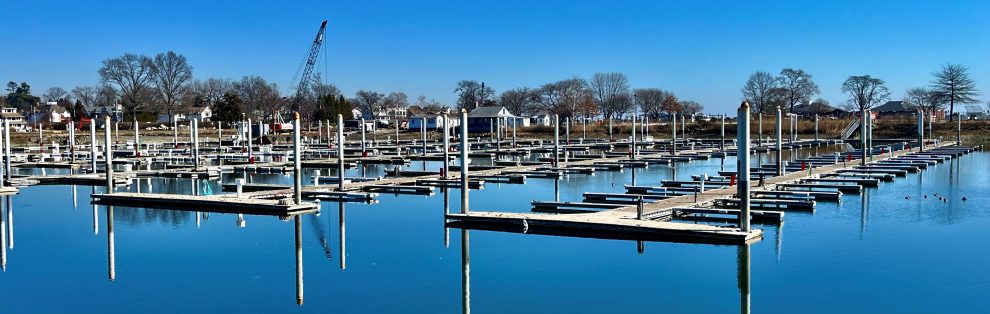
Cribari Bridge, at Riverside Avenue.

The town should formally demand evaluation of an Adaptive Rehabilitation Alternative that is engineered for safety and designed to discourage regional cut-through traffic:

  • Split-and-widen rehabilitation of the existing truss (not demolition and highway-scaled replacement).

A split-and-widen strategy — used elsewhere on historic truss bridges — can preserve the bridge while improving lane geometry, sidewalks and bike access.

That approach asks the right question: How do we make Cribari safer and more functional, without transforming it into a larger-capacity conduit? Here’s an example: https://www.youtube.com/watch?v=yys_4XPqbtA

  • Narrow crash-rail retrofit instead of bulky highway

There are compliant crash-rail systems designed for historic bridges that improve safety while preserving width, sightlines and visual proportion. Barrier design is not cosmetic. It directly affects whether the bridge remains context-sensitive or becomes a pseudo-highway structure.

  • Repair and strengthen piers/buttresses using preservation

If substructure work is needed, do it — but in a way consistent with National Park Service standards for historic resources. Structural integrity and historic integrity are not mutually exclusive. Competent engineering can deliver both.

  • Design explicitly for local safety and access — not truck

Westport should insist that any alternative be evaluated for its likely effect on traffic behavior, including whether it would increase the corridor’s attractiveness as an I-95 spillover route for trucks and heavy through traffic. The goal should be safer local use, not a state-engineered invitation for non-local traffic.

Here are 3 facts Westporters should not ignore.

First: This is not simply a preservation fight. It is a neighborhood safety, traffic pattern, and quality of life fight.

Second: Process concerns are real. Whatever one thinks about the engineering, the public has every right to demand full transparency, lawful historic review, and genuine consideration of alternatives before the outcome becomes effectively irreversible.

Third: Westporters are paying attention. A petition seeking greater oversight and federal review has now passed 1,000 signatures. That level of concern is not noise. It is a warning that residents believe the process is moving too fast and the stakes are too high.

This is not a choice between history and safety. It is a choice about whether Westport will settle for a state solution that may make our neighborhoods less safe and more congested — or insist on one that protects safety, lawful process, historic character and sensible local traffic patterns, including discouraging truck cut-through from I-95 spillover.

A public hearing is scheduled for March 19 at Westport Town Hall. Public comments run through April 17. If you care about Saugatuck, Greens Farms, and how major decisions get made in this town, now is the time to show up and speak up.

(“06880” Opinion pages are open to all. Please email submissions to 06880blog@gmail.com.)

“06880” covers the news — and offers readers many ways to react to it. We hope you’ll support our efforts, by clicking here. Thank you!)

Staples Players Rewind: “Into The Woods”

Today, we continue our journey into past Staples Players productions.

Since 2000 — when David Roth was named director of the prestigious high school drama troupe — Players has staged 2 powerful productions each year.

Longtime media instructor Jim Honeycutt filmed them all. Now retired, he has created 10-minute “nutshell” highlights of each show.

Each week, in chronological order, “06880” shares one of those nutshells.

Today, relive Stephen Sondheim’s “Into the Woods,” from the spring of 2002. It stars someone whose name is familiar: Justin Paul.

Other Players in the show include Sarah Peterson, Emma Ritter, Caitlin Collins, Toby Burns, Daryl Wein, Haley Petersen, Katie Clark, Joanna Gang, Tyler Rackliffe, and many more.

Click here or below to enjoy.

(If you like these nutshells — or any other “06880” feature — please click here to support our work. Thank you!)

Homes Of “06880”: Then And Now

One of the most popular features on the old WestportNow.com site was “Teardown of the Day.”

For nearly 2 decades local photographer Dave Matlow snapped images of area homes, just before they were knocked down.

He meticulously archived them.

Now he’s taken the project one step further.

Dave is photographing their replacements — from the same distance and angle.

Taken together, they show the changing face of Westport: the types of architecture we’ve lost, and what’s replaced them.

“Homes of ‘06880’: Then and Now” will be a regular feature here.

Thanks, Dave, for your diligence in documenting Westport — then and now.

Juniper Road, November 2014 …

… and February 2026.

==================================================

Hillspoint Road, 2005 …

… and Hillspoint Road, February 2026.

==================================================

Caccamo Lane, January 2012 …

and February 2026

=======================================================

Colonial Road, September 2012 …

… and February 2026.

(“06880” regularly covers Westport real estate, history … and much more. If you enjoy features like this, please click here to support our work.)

Roundup: Cribari Bridge Zoom, Library Opening, Senior Center Closed …

A reminder: Tonight (Tuesday, 7 p.m.), there is a Zoom meeting (click here for the link) about the Cribari Bridge.

Representative Town Meeting (RTM) members from Districts 1, 4 and 9 will lead the discussion.

The session was organized by District 1 rep Matthew Mandell. All Westport residents — from every district — are welcome to join.

Cribari Bridge (Drone photo/Alex O’Brien)

=================================================

24 hours later: How has the town handled the Blizzard of 2026?

Very, very well.

With residents staying off the roads for most of yesterday, plowing proceeded quickly. Many sidewalks have been cleared too.

Of course, that plowed snow had to go somewhere.

Church Lane and Elm Street.

There will be huge piles, for a while. That makes driving — and crossing streets — difficult.

Be careful. Be smart. Be safe.

And — of course — be courteous!

Elm Street, at Main Street. (Photos/Sal Liccione)

==================================================

In other blizzard news: The Westport Library will open today (Tuesday) at 12 noon. That will give them (and their employees) a little more time to dig out.

They remind patrons: “Our digital library remains open 24/7, with access to a wide variety of materials including e-books, e-audiobooks, music, movies and TV shows, magazines, and more. And while you’re online, be sure to check out our many resource guides.”

Outside the Westport Library. (Photo/Molly Alger)

=================================================

Meanwhile, the Senior Center will be closed again today.

It reopens tomorrow (Wednesday).

==================================================

If you’ve been to an Artists Collective of Westport pop-up show reception, you know a few things.

The works are very creative, wildly eclectic, and always thought-provoking. The energy level is high. The artists are eager to chat. And the food and drink is free.

The next one is next Tuesday (March 3, 6 to 8 p.m., Sheffer Barn at the Westport Country Playhouse). Broadway music conductor and composer Caren Cole will play.

The gallery is then open March 4-8 (noon to 4 p.m.). An artist talk (on inspiration, medium, process and more) is set for March 8 (4 p.m.).

This show features works by members who recently joined the Collective:
Laura Appelman, Peggy Dembicer, Tim Eaton, Ira Hara, Julie Hicks, Tom Kretsch, Shelly Lowenstein, Paula Morgan, Erwin Ong, Butch Quick,
Jodi Rabinowitz, Elizabeth Hiltz Thomas, Michael Tomashefsky and Rowene Weems. (Some of those names are familiar to “06880” readers, for their wonderful photos.)

Untitled (Rowene Weems)

==================================================

Pianist Ted Rosenthal has performed worldwide as a soloist, with his trio, and with greats including Gerry Mulligan, Art Farmer, Phil Woods, and James Moody.

He joins a quintet — bassist Martin Wind, drummer Tim Horner, trumpeter Alex Norris and saxophonist Greg “The Jazz Rabbi” Wall — this Thursday, for Jazz at the Post (February 26; shows at 7:30 and 8:45 p.m.; dinner at 7; VFW Post 399).  Click here for tickets, and more information.

==================================================

With all the snow, we need a bird photo to remind us that spring is not far away.

At least, we hope not.

Outstanding wildlife photographer Lou Weinberg snapped this mourning dove, for today’s “Westport … Naturally” feature.

(And yes, it’s “mourning” — not “morning.” The name comes comes from its melancholy coos. But it’s not a sound of grief — it’s a courtship call from the male.)

(Photo/Lou Weinberg)

==================================================

And finally … happy 79th birthday to Rupert Holmes.

We’ll drink to that!

(If you like piña coladas: Great! If you like “06880”: Even better! The next step: Please click here, and support our work.  We’ll toast you with Champagne.)


Cribari Bridge Petition Nears 1,000 Signatures

A petition begun by Bridge Street National Register District resident Werner Liepolt is nearing 1,000 signatures.

Calling the Cribari Bridge — which links his road with Saugatuck — “more than just a piece of infrastructure; it is a cherished symbol of our heritage, tying together the historical fabric of our neighborhood,” Liepolt says: “The sudden decision to replace such an irreplaceable landmark raises concerns not only within our community but also nationwide, as it sets a precedent for how historic sites might be handled without proper oversight.

“Why hasn’t there been an effort to engage the community in this critical decision-making process? The lack of transparency undermines the principles of fair public policy and overlooks the historical significance that this bridge brings to our region.”

Petition organizer Werner Liepolt painted this Cribari Bridge scene.

The Change.org petition is aimed at 8 “decision makers”: Governor Ned Lamont, Senators Richard Blumenthal and Chris Murphy, Congressman Jim Himes, State Senator Ceci Maher, State Representative Jonathan Steinberg, Planning & Zoning Commissioner Michael Cammeyer, and Representative Town Meeting member Nancy Kail.

The petition adds: “It is imperative that the federal government steps in to ensure that the CTDOT considers all perspectives, from engineering experts to local residents, and follows due process in accordance with National Historic Preservation guidelines.


“The preservation of the William F. Cribari Bridge is essential for maintaining the cultural and architectural identity of our region, and its replacement should not proceed without an exhaustive review and input from all stakeholders involved. We need comprehensive federal oversight to guarantee that all alternatives are evaluated and that the richly historic and irreplaceable nature of the bridge is given due consideration.”

Liepolt says that signers “demand federal oversight over the Connecticut Department of Transportation’s plans to replace the William F. Cribari Bridge. Together, we can safeguard the integrity of our cherished historic landmark and ensure a democratic process respects both our heritage and community voice. Let us be vigilant in protecting our past for the generations to come.”

Click here to see the online petition.

(“06880” covers the Cribari Bridge controversy — and everything else going on in Westport too. If you appreciate our 24/7/365 eye on the town, please click here to support our work. Thank you!)

“Students Speak”: Looking Back And Ahead, Pressure All Around

“Students Speak” is a regular feature of “06880.” We offer this space to Westport teenagers, to talk about anything important in their lives.

Sienna Tzou is a sophomore at Staples High School. She has lived in Westport since 2013.

She is a member of the Pre-med and Asian Students clubs, and co-president of Staples Writers’ Room. She competes regionally in bouldering and lead climbing, and has worked as a barista at Retreat Sweets and a CIT at Rock Climb Fairfield. Sienna tutors young students each week at the Westport Library. She enjoys reading, writing, and watching horror movies. Sienna writes:

It’s getting closer to the time when I have to know what I want to do with my life.

In the underappreciated years of middle school I tried much harder than any of my peers, likely even more than a handful of them combined. I outdid every part of my life that I could get my hands on.

Sienna Tzou

I participated in multiple sports, after-school clubs, and 3 early morning music ensembles. I studied SAT vocabulary daily, wrote notes of analysis on the books I read in my free time, made lists of target and safety universities I’d apply to, and loathed if even a shred of space wasn’t filled in my calendar.

I was always told that middle school didn’t matter, but I was relentless in earning straight A’s anyway. I felt the need to succeed in every subject, including the ones I struggled in. The last thing I’d want to do on a Friday evening became the only thing I did on Friday evenings.

I kept tearing away at my brittle and depleted supply of youthful vitality, rocking back and forth and rocketing off the seesaw of my emotions.

I wasn’t just bitten down; I was sawed down to the quick by everything that did not matter. The only person I was competing with was myself, but I was regrettably up against the most vile and ruthless competitor yet, no match for a middle-school kid.

Now that I look back, I don’t thank my previous self nor do any fond memories refract the occasional creep-ups of those times. If I take a look at the list of target schools I spent hours researching to devise, it would almost look like I was kidding myself.

Reality was just code for something unwarranted and extraterrestrial that existed in another dimension as a kid of 13 years.

This immense pressure has grown and developed, and thankfully subdued upon my entry to high school. It has still, nevertheless, attached the roots of its existence into my skull, thus being incurable.

Most kids from here come from parents who passed on the traits of ambition to succeed. From the looks of it, to fail would mean shaming the generations that had preceded us, breaking off the end of the chain. We simply don’t feel like we can afford being the weakest link.

Away from school: Sienna Tzou pursues one of her passions, at Rock Climb Fairfield.

This doesn’t apply for absolutely every teenager in Westport, but as soon as someone announces they’ll be taking 4 AP classes next year, a gang of teens will crowd the counselors’ suite to take 5. Most seek to be well-rounded, but does that leave any room for uniquely sharp edges?

Given that it’s the time of year for course selection, I’ve seen my peers compile AP after AP because it will “look good for resumes” or because they “can’t take fewer APs” than Academic Rival #12.

An abundantly resource-rich environment for personal growth and the cultivation of youthful learning has unfolded into a landscape of deadly competitive aptitude.

I can’t speak for everyone at Staples, but from observation from the span of my time in high school so far, taking the learning to heart without the side thought of a grade or credit is an endangered species.

From many accounts, students have locked themselves in their rooms from when they got home to after their entire family was asleep, drank multiple servings of caffeine when they felt at risk of falling asleep, and quit activities they genuinely enjoyed to pursue a grade in a class that wasn’t relevant to their interests.

What’s a grave eye opener is that up until we’ve turned 18 and rounded the corner to be sent off to face the world on our own, we are living in the smallest capsule of time in our lives.

The average person in the US lives for roughly 78 years. Sleep consumes 1/3 of their life, while 1/7 of their waking life is spent on social media. Gen Z spends increased hours on their phones, more than the average adult. Most Americans spend 60% of their lives working, the majority of them not finding joy in their role but only working the job for the sake of their paycheck.

A decade later: Where are they now?

How heavily we focus on our academics now paves the way to undergraduate university to grad school to careers to the rest of our lives. This is the age-old proverb we are spoonfed as soon as our conscious mind can comprehend this.

It’s not wrong, but our generation is accustomed to nothing else, and we therefore expect ourselves to be versions of perfection, some not even existent.

I’m at the juncture where I have to choose how I want to lead my life. I regret how extreme middle school was for me, but I know that what I’m pursuing will last me for the rest of the years I live

(“Students Speak” is open to all students who live or attend school in Westport. You can write on any topic relevant to your life. Send questions or submissions to 06880blog@gmail.com.)

(“06880” is your hyper-local blog. We exist for — and are supported by — our readers. Contributions are welcome! Please click here to make a tax-deductible donation. Thank you!)