Monthly Archives: August 2011

Services Set For Tess Meisel

Calling hours for Tess Meisel — the Coleytown Middle School student killed in a motor vehicle accident Maine — are set for this Sunday (August 21), 2-6 p.m. at Harding Funeral Home, 210 Post Road East, Westport.

A memorial service will be held on Monday (August 22), 11 a.m. at the Unitarian  Church, 10 Lyons Plains Rd.
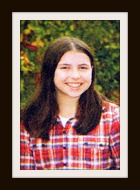
Tess Meisel

Born December 27, 1998 in Los Angeles, Tess was the daughter of Suzanne Tanner and Gary Meisel, of Westport and Los Angeles; sister of Jacob Meisel, 15; granddaughter of Mary Tanner and the late Jack Tanner, of Mashpee, Massachusetts, and Harriette and Emiel Meisel, formerly of Westport and now of San Miguel de Allende, Mexico, and proud owner of her new 7-month old puppy, Celli — named for the orchestra section at Coleytown, where she was to enter 8th grade.

Tess was first and foremost a healer, her family said.  Her tenderness, genuine empathy and radiant smile provided her the tools to help others, which she practiced daily.

Her family added:  A natural giver with a humble heart, she offered random acts of kindness and love to all she encountered.  She never lacked for creativity or ideas and pursued each of her ventures with determination and zest, including a small business she started selling her handcrafted jewelry to raise funds for  polar bears.

In 2010, she won Connecticut’s top environmental award at the state Invention Convention for her design of a reusable pizza box.

Tess enjoyed many activities and hobbies.  She was a member of Coleytown Middle School’s chamber and all-school orchestras, Westport Recreation Soccer, and Coleytown Company, where she most recently participated in “Fiddler on the Roof.”

She also enjoyed rowing crew; riding horses; crafting jewelry made from beads, gems, rocks and sea glass she scavenged, and dining.  She was an avid reader, poet and writer, working on her first novel.

Her family said:  She was a faithful friend to many and an inspiration to all.  Her loving spirit continues to embrace each of us in her aura.

Donations in Tess’s memory may be made to the Tess Meisel Memorial Fund at the Westport Public Library, 20 Jesup Road, Westport, CT, 06880.

Click here to leave an online condolence note.

Antonella Lisanti: Engineer Without Borders

Despite good intentions, many overseas service organizations miss the mark.  They may sweep in, build or fix something or provide a solution to a difficult problem, then leave and move on somewhere else.

Antonella Lisanti’s group — Engineers Without Borders — does good.  But it also makes sure the good survives after it goes.

The 2008 Staples grad — currently a biomedical engineering and pre-med major — has been involved with Yale’s student chapter for several years.  She applied as much for the travel opportunities as anything else.  But after being selected — and getting her hands dirty on a few projects – she was hooked.

Antonella Lisanti builds a latrine with a villager in Kikoo, Cameroon.

A recent experience in Cameroon cemented her belief in the importance of EWB.  The community of Kikoo had always used water from polluted streams.  The result was a continuing plague of waterborne illnesses like gastrointestinal infections and dysentery.

The Yale team designed a water distribution and storage system to alleviate water pollution.  Antonella was involved in latrines.

That’s a lot harder than it sounds.

“We were building latrines with better ventilation, and that are more sanitary,” she explains.  The group spent plenty of time before arriving trying to figure where to place the latrines.  Without cellphone or email access, that’s not easy.

One of the latrines — for an elementary school — was designed with 2 holes:  one for males, one for females.  But when the group arrived, the headmaster said he wanted a 3rd, for teachers.

“There was a lot of negotiating,” Antonella says.  Her group altered their design, reconfigured their supplies, changed concrete slabs, and ultimately provided the village with the latrines it needed — and wanted.

Their work — which included 9 kilometers of PVC piping, and 14 standpipes — did not end there.

“Engineering projects can make people’s lives better,” Antonella says.

“But you can’t go into a developing country with your own agenda.  You can’t just build a latrine; you need training.  And then you have to help the community take ownership of it.”

EWB works with the same communities, year after year.  “They feel these projects are their own,” she says of the villagers.  “We train them on maintenance.  We go back.  We address problems.  We’re really partners with them.”

It's not all work and no play for Antonella Lisanti in Cameroon.

There are over 250 EWB-USA chapters, including 180 on college campuses.  They work on more than 350 projects in dozens of developing countries.

This year, Antonella’s Yale chapter — of which she is now co-president — received EWB-USA’s Premier Project Award.

It’s a tremendous honor.  But Antonella deflects credit, to her fellow volunteers and their mentor, Dave Sacco.  “We learn so much from him,” she says.  “Not just engineering, but thinking on our feet, working with different cultures, learning to navigate community politics.”

Her experience in developing countries has solidified a desire to continue this type of work, focusing on health issues.  After graduating next spring, she hopes to work in the public health sector, before heading to med school.

Antonella’s love for science was nurtured at Staples.  The high school “trained me to be diligent,” she says.  “I learned to stick with things, no matter how difficult — like college, and the trip to Cameroon.”

Westport was “wonderful” to grow up in, she says — “but it’s a small place.”  Going to college made me realize there’s so much more to the world.  I really want to see it.”

College students talk about graduating, and heading out into “the real world.”

Antonella Lisanti has 2 semesters to go.  But in many ways, she’s already there.

(EWB accepts contributions to help fund its projects:  Engineers Without Borders — Yale Student Chapter, PO Box 206615, New Haven, CT 06520.  For more information, email antonella.lisanti@yale.edu).

WTF Transition Team Wants You!

Liz Milwe, Cathy Talmage and Elizabeth Beller have been chosen by First Selectman Gordon Joseloff to serve as a transition team, as the Town of Westport assumes responsibility for Wakeman Town Farm, from Green Village Initiative.

A new board will be appointed once the transition is complete.

The transition team welcomes involvement from the entire community during the transition, and beyond.  Interested volunteers should email Elizbeller@gmail.com

Westporters are encouraged to volunteer for the Wakeman Town Farm transition committee. (Photo/Inklings)

Joey Scores At The Shore

It was the dream summer job:  working at the Compo Beach concession stand.  Back in the day, it was run by Chubby Lane — an outpost of his Post Road hamburger restaurant.

The ramshackle shed — located where the volleyball courts are now — was the place to see and be seen.  (You didn’t even need a sticker; you parked right in front.)

I flipped burgers, fried fries and poured sodas for a couple of teenage summers.  Like I said, it was a dream job — except when Chubby’s kids wandered in at 7:59 p.m., seconds before closing, and ordered food as soon as we’d cleaned the grill.

It’s now a few several many years later.   Chubby’s gave way to Arcudi’s, then another concessionaire no one remembers.  Since 1989, Joey Romeo has run the place.  He upgraded it from a stand to a restaurant.  He added menu items, lengthened the hours, stretched out the calendar.

But some things never change.  Something about eating at the beach still makes food taste special.  It’s still an insanely weather-dependent business.

And it’s still a great job for high school and college students.

Joey Romeo, by the shore.

Joey comes by his burger chops naturally.  His father ran the food concessions at Cummings Beach and Cole Island in Stamford; his uncle spent many years as the concessionaire at Greenwich’s Tod’s Point.

Growing up, Joey worked at the beaches — and loved it.

He became the 1st tenant after the town of Westport renovated the old bathhouses, and moved the concession stand to its present location.  So far, he’s the only one.

What’s kept him here?  “I love the water.  I love being here in the summer.  I love Compo Beach!” he says.

And beach-goers love Joey.

For one thing, he’s got great food.

For another, he listens to those customers.  Lobster rolls (now one of his most popular items), fish and chips, Boar’s Head cold cuts, portobello mozzarella sandwiches — those and many more selections resulted directly from requests.

To serve those customers, Joey’s now opens earlier (9 a.m.) and closes later (9 p.m.) each summer.  He fires up the grill in late March, and is there on weekends through November — sometimes beyond.

Kelly Petropulos, Paul Van Zanten and Sam Reiner carry on the Compo concession tradition.

The concessionaire is a firm believer in “buy local.”  When area resident Adrian Pace brought over Forte — a new healthy, high-protein gelato — Joey snapped it up.

There’s local art and photography on the walls, local T-shirts and postcards at the counter.

He even sells Melissa & Doug toys.  Hey, they’re local too.

But — behind the lobster rolls and trendy toys — Joey’s is still a beach joint.

“Honestly, I haven’t seen much change — in my customers or employees — over the years,” Joey says.

“If you look around, it’s really no different than it was 20 years ago.”

This doesn’t change either:   talking about the weather.

“The summer started slowly.  We had a wet spring, but since then it’s been very good,” Joey says.

“People complain about the heat, but it’s better than rain.  Any day it’s not raining, I’m happy.”

The same words could have come straight from the mouths of Joey’s father and uncle.

Or Chubby Lane, back when I was working the grill for countless Compo customers.

Plus Chubby’s @#$%^&* kids.

Remembering Manny Margolis

Emanuel “Manny” Margolis died early this morning.  He was 85, and had lived in Westport for 46 years.

Manny Margolis

An attorney with a lifelong devotion to civil liberties and civil rights, he brought a draft refusal case all the way to the U.S. Supreme Court — and won.

As a member of Westport’s Planning and Zoning Commission, Manny was a strong advocate for low and moderate housing regulations.

He and Estelle — his wife of 52 years — spent years at peace vigils in Westport.  They began during the Vietnam War.  For the past 6 years they’ve stood on the Post Road bridge, protesting the Iraq and Afghanistan wars.

Besides his wife, Manny is survived by 5 children and 10 grandchildren.

Services will be held this Friday (August 19, 10:30 a.m.) at the Abraham L. Green Funeral Home in Fairfield.  Shiva will be at 72 Myrtle Ave., Westport, from 5:30 to 7 p.m., Friday through Sunday.  A memorial service will be held later.

In lieu of flowers, contributions may be made to the Connecticut ACLU:  2074 Park St., Hartford, CT 06106.

—————————————————

I would like to write some nice words about a great man.  But Manny’s grandson Jonah did a far better job, a few months ago.  Last December, “06880” ran this tribute from the 17-year-old to his grandfather.  I introduced the story this way:

It’s a standard school assignment:  Interview someone, then write about it.  The idea is to develop interviewing skills, learn history from someone who lived it — and then connect what you learned with the world.

I can’t imagine anyone carrying out that assignment better than Jonah Newman.  The 17-year-old son of Staples graduate Abby Margolis was asked — by his American Protest Literature teacher in California — to find people who had been politically active.

He did not have to look far.  His grandparents — longtime Westporters Estelle and Manny Margolis — define the term.

Here’s part of what Jonah wrote:

As far back as I can remember, Emanuel and Estelle Margolis — my maternal grandparents — have been a part of my life.  Every year my parents, my brothers and I join the rest of the Margolis clan at my grandparents’ home in Westport, Connecticut to celebrate Passover.

The house occupies a special place in my heart — like its own timeless world it remains the same every year, as comfortingly consistent as the presence of the two people who have lived there for five decades.  Perhaps it is because I have known my grandparents for my whole life that until recently, I had rarely thought about their rich backgrounds as political activists.  I discovered that my grandparents, who participated in many of the key social and political movements of the 20th and 21st centuries, are the very definition of living history.

Emanuel Margolis and Estelle Thompson (“Papa” and “Buba” respectively) were both born in New York City in 1926.  Papa, whose father and stepfather were both rabbis, came from a conservative Jewish family.  He was highly academic, and attended University of North Carolina, Harvard graduate school and Yale Law School.

Manny Margolis always appreciated his military service.

When he was only 18 years old, Papa fought in Germany during World War II. He was wounded in the knee at the Battle of the Bulge.  He returned to college after the war thanks the G.I. Bill, and it was at UNC that he began his career as a political activist.

Papa’s experiences in Germany changed his perspective about the world and catalyzed his transformation into a political activist upon his return to the United States. Because of his religious Jewish background, he had never thought about becoming an activist; he had been assured God would make the world better.

“World War II dispelled myths about my life,” he says. “Previously, there had been no reason for me to be involved in political activity because I believed in the power of God to solve the problems of the world.” His view of life was shattered by the reality of war.

He remembers seeing a Reader’s Digest article that said “there are no atheists in foxholes,” and calling it nonsense.  The war had “changed [him] from a religious believer to an atheist.”

With the dissolution of his belief in God came a “great yearning for activism and political activity.” “I now believed,” Papa says, “that the world needed changing, and we could change the world.”

Returning to UNC after the war, Papa found a much greater social awareness at the school.  He began writing for the school newspaper about current issues, and joined several activist organizations on campus.  At one point, Papa and other veterans used the organizational skills they developed in the military to protect a group of desegregationist bus riders from a mob armed with baseball bats and 2-by-4s.

Becoming an attorney after college in many ways inhibited his activism, since the profession demands exclusive and objective devotion to the law. However, Papa notes, “a lawyer can play a very important part in helping ensure the protection of rights.”

Throughout his life, Manny Margolis' opinions were sought after, and respected.

He continued fighting for his political beliefs, specifically human rights.  He repeatedly argued in support of Constitutional principles, in particular the First Amendment.

He even defended the Ku Klux Klan’s right to march publicly, contending that it was expression of free speech. After the U.S. became involved in the Vietnam War, Papa helped young people who had been arrested while protesting the war argue their cases in court, again invoking the First Amendment.

From his marriage to Buba in 1959 until the present day, Papa has persisted in his political activism.  He is a regular columnist for the Connecticut Law Tribune, often writing about political or human rights issues. He has been a dedicated participant in anti-war protests, from Vietnam until Iraq and Afghanistan, with his wife and family.

He believes that the reason so many people support war is because they do not understand it. Having fought in a war himself, Papa firmly believes that “war is a monstrosity” that wreaks emotional damage on all involved, including those on the home front. About the wars in Iraq and Afghanistan, Papa asserts that “even the GI’s do not know their mission…they haven’t the foggiest idea about what they’re trying to accomplish…We’re spending trillions on wars that have no foreseeable ends.”  Though he is 84 years old, Papa’s continued activism supports the principle that humans can indeed “change the world.”

Papa and Buba fervently believe America and the world are fundamentally good.  We just need to fight to keep them that way.

Down By The Riverside

Last week’s “06880” post on “Downtown Activism” really roiled the water.

More than 40 commenters waded into the long-running debate about downtown Westport’s charm (or decrepitude).  Some of the most interesting replies noted the decided lack of advantage we downtown property owners have taken in what really is a spectacular riverside setting.

San Antonio's riverside...

Parker Harding Plaza, for example, snags what could be a wonderful shopping/strolling/dining/hanging out district — think San Antonio’s River Walk — and uses it instead as a parking lot.

It’s not as if people have parked there since, like, colonial days.  Until the 1950s, the Saugatuck River lapped up against the backs of Main Street stores.  Today’s “plaza” is all landfill.

I won’t hold my breath waiting for a River Walk.  (I’m already holding it waiting for the Post Road/Main Street crosswalk to be striped.)

But the comments got me thinking about one of my (many) pet peeves:  Starbucks.

... and Westport's.

No, not the uber-ubiquitous chain itself.  (Though I still maintain that if a “tall”  is the smallest size offered, I am Yao Ming.)

My beef is that our downtown coffee shop is the most poorly designed of all 3,287,682,451 Starbuckses in the galaxy.

Who gets to look at the river?  Not the customers.  The workers baristas.  (Well, they would if we weren’t standing in the way.)

The seating area should face the river.  The serving area should be where the seats are now — that pitch-black, very unwelcoming section in the back.

Or so it seems.  I don’t sit there.  I’m afraid I’ll get mugged.

Which leads to today’s “06880” question:  What other places in Westport — downtown or elsewhere — need a makeover?

Click the “comments” tab.  All ideas will be collected, collated, tabulated, and passed along to the proper authorities.

Who will toss them into the Saugatuck River, never to be seen again.

Please Mr. Postman

Work is proceeding nicely on the new post office in Playhouse Square.

When work is completed, I’m sure it will look much better than the former tenant, Derma Clinic Day Spa.

After all, this is a government project!

Play A Song For Me

I promised myself I would not write about my Staples reunion this weekend.  But:  I can’t help myself.

Sugar pie, honey bunch…

Of course.  Anyone of a certain age (mine) knows without thinking that those are the only words that follow “I can’t help myself.”

Just as everyone at our reunion — or any other one, anywhere, from that era — understands instinctively that the only thing boot heels do is “wander.”  And — as Doctor Doctor Mister M.D. says — all you really need is good lovin’.

Yeah, yeah, yeah.

Brian Keane and Charlie Karp rock on. (Photo/Lynn U. Miller)

One of the many highlights at Saturday’s reunion was the band.  All were members of our Staples Class of 1971.  Billy Sims, Rob McClenathan, Bubba Barton — each with non-music jobs now — joined Mike Mugrage, Brian Keane, Jeff Dowd, Billy Seidman and Charlie Karp to play some of what Cat Mother and the All Night Newboys know is “that good old rock ‘n’ roll.”

Mike toured and performed with James Brown, Ronnie Spector and Orleans. Brian is a multiple Grammy and Emmy Award-winning composer.  Jeff is an opera singer based in Germany.   Billy teaches music at NYU.

Charlie never graduated from Staples.  He dropped out a few weeks into 10th grade, forsaking algebra and gym for touring and recording with guys like Jimi Hendrix and Buddy Miles.  He’s now back in this area, playing with great bands like Slo Leak.

These guys sometimes played together at Staples.  They were in different groups too.

Linda Satin, Carissa Simon, Margaret Hart and Bonnie Housner channel the Supremes. (Photo/Lynn U. Miller)

On Saturday night — with the addition of former Orphenians Bonnie Housner, Margaret Hart, Julie Aldworth McClenathan, Kim Plaut, Linda Satin and Carissa Simon as singers, all of whom had the “Stop!  In the Name of Love” hand motions down pat — they brought us back to a time when music was not only real and good, but a shared experience.

Everyone who went to school in the 1960s and 70s listened to the same songs at the same time.  We heard them on transistor radios, car radios, turntables at parties.

Just a snippet of the most obscure tunes — “I’m Your Puppet,” “Hitchin’ a Ride,” “Indiana Wants Me” — brings back powerful memories of precise places, people and the funny/outrageous/bizarre/typical/illegal things we were doing at those moments.

So as I listened and danced Saturday night — Mustang Sally, you been runnin’ all over town — I said to myself:  “Man, you are one lucky guy to have grown up when you did.”

Jimi Hendrix, back when music was music.

And then I thought about music today.  When the Class of 2011 has its reunion, they will not have actual music to listen to.

Nor will they have classmate bands from high school to play it.

Nor experience the joy of growing up sharing the same music, at the same time and place, during a transformative time in their young lives.

I threw this sad fact out at a friend from Burr Farms, Long Lots and Staples — a guy I haven’t seen in decades, but who because of our time together long ago, I’d reconnected with instantly.

He didn’t buy it.

His kids — in their late teens and early 20s — love the Beatles, Doors and other groups we also loved, he said, back in the day.

Suddenly, I felt fine.

In 2051, I realized, alums attending their own 40th reunions will listen to the same music we did.

Eighty years before.

Remembering Dave Goby

David Goby — a longtime science teacher at Staples High School and Bedford Junior High — died yesterday.  The cause was complications of lymphoma treatment, many years ago.

Dave Goby, in the 1970s. He thought this was a hilarious photo.

After retiring from Staples, Dave taught at Ezra Academy in Woodbridge.  He also founded Merkaz, a community high school for Judaic studies in Bridgeport, and served as director there for 12 years.

He is survived by Ilene, his wife of 43 years; sons Jonathan of Fairfield and Adam of Florida; daughter Robyn of North Carolina, and 4 grandchildren.

Services are tomorrow (Tuesday), 2 p.m. at Congregation B’nai Israel, 2710 Park Avenue in Bridgeport.

Contributions may be made to the David Goby Merkaz Fund, c/o Merkaz, 4200 Park Ave. Bridgeport, CT 06604.

—————————————–

Starting in 1975, Dave taught in Staples’ Alternatives program.  An interdisciplinary project that reached out to alienated, disaffected youngsters, it lasted only a few years.

However,  its impact on the students — and teachers — who participated was enormous.   In 2004, I interviewed Dave about Alternatives for my book “Staples High School:  120 Years of A+ Education.”

Dave said:

There were so many disenfranchised kids who were not functioning well in school, because of emotional, family or learning problems.  Every school deals with those kids in a different way.  A lot of schools give them detentions or suspend them, but that doesn’t solve the underlying problem.

Most of what we tried to do involving traditional academics didn’t work.  So we had to be creative, to disguise the social studies, English, science or math, and teach it through the back door.  We didn’t necessarily work on each discipline each day.

It wasn’t easy.  We were really looked down on – not by the faculty; they said they admired what we were doing, and couldn’t do it themselves – but by the other kids.  They thought our kids were the dregs of the school.

We were very successful, but we became the dumping ground for all kids who had any problems.  We didn’t solve problems overnight.  It took a lot of hard work, a long time for kids to settle down.

It didn’t last long, in part because so many kids had emotional and special ed issues.  Then the state mandates for special education were handed down, and more and more kids suddenly became officially mandated to the special ed program.

Our program decreased in direct proportion to the rise in special education.  We saw that special ed would eventually absorb our kids, so rather than die a slow death, we decided to end it on our terms.  We died a graceful death, with dignity.

But the program worked.  So many kids came back later, and said it kept them in school.  They may not have loved Alternatives, but they liked it better than the rest of school.

And they told us it looked like we really cared. We gave them a lot of individual attention.  We had community meetings, and we met individually with them a lot. We learned a lot about kids that way.

It was absolutely right for the times.  And today — if you’re diagnosed with a special ed condition, you’re covered.  But if you’re just a troubled kid who could fall through the cracks, there’s still a need for an alternative school.  Kids haven’t changed that much.

Message From Michael

In the wake of the recent controversy involving Green Village Initiative and the Wakeman Town Farm, Mike Aitkenhead asked “06880” to pass these words along:

I would like to express how deeply moved my wife Carrie and I have been by the flood of support we have received from the community.  It has affected our lives in ways I cannot fully express in words.

Ironically, it has taught us the true meaning of what we first set out to create here at the Wakeman Town Farm:  community.

On behalf of my family, we thank you.

The Aitkenhead family